
Mid Jurassic (Bathonian) of Southern England
The remains of dinosaurs, crocodilians, pterosaurs, plesiosaurs and turtles are known from a large number of localities in the Bathonian of Gloucestershire and Oxfordshire
The GCR sites, New Park Quarry
The remains of dinosaurs, crocodilians, pterosaurs, plesiosaurs and turtles are known from a large number of localities in the Bathonian of Gloucestershire and Oxfordshire
The GCR sites, New Park Quarry
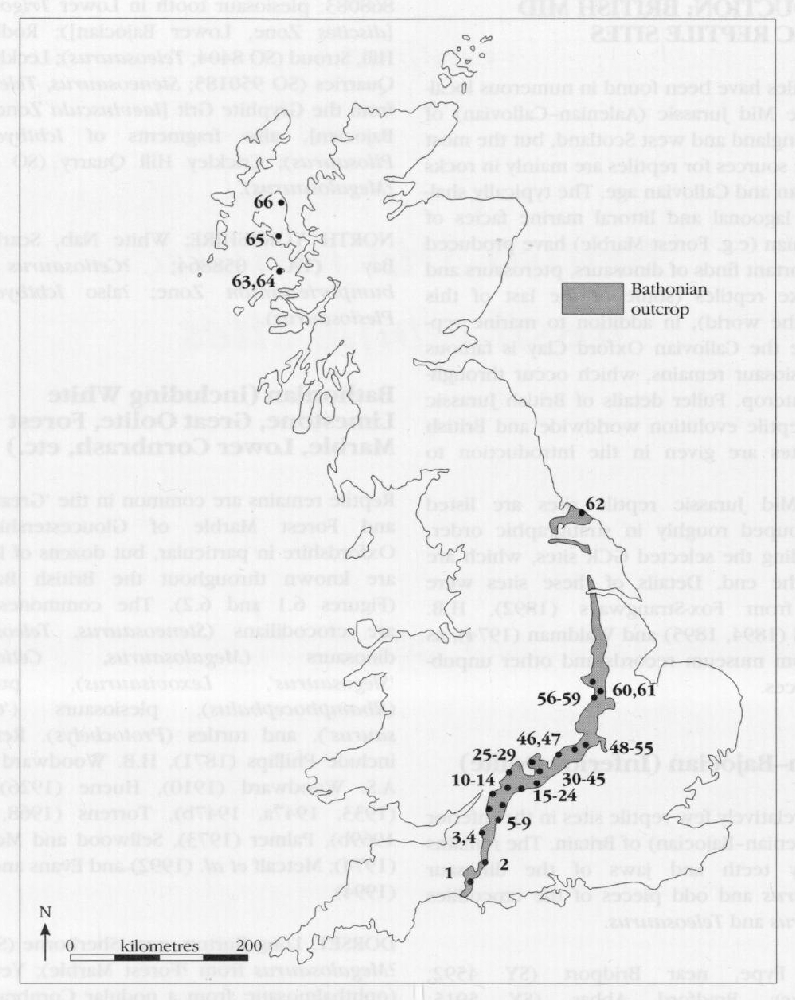
(Figure 6.1) Distribution of British Bathonian tetrapod localities. Dorset: Long Burton (1), Watton Cliff (1a), Swyre (1b); Somerset: Closworth (2); Avon: Bath (3); Wiltshire: Avoncliff (4), Bradford-on-Avon (5), Frankley (6), Box Tunnel (7), Atford (8), Malmesbury (9), Leigh Delamere (9a); Gloucestershire: Minchinhampton (10), Sapperton Tunnel (11), Avening (12), Cirencester (13), Tarlton Clay Pit (13a), Sevenhampton (14), Chedworth (15), Stanton (16), Bibury (17), Naunton (18), Kyneton Thorns (19), Huntsman's Quarry (20), Eyeford (21), New Park Quarry (22), Oakham (23), Longborough Road Quarry (24); Oxfordshire: Chipping Norton (25), Sarsden (26), Over Norton (27), Sharp's Hill (28), Temple Mills Quarry (29), Enstone (30), Stonesfield (31), Slape Hill (32), Glympton (33), Bladon (34), Hanborough (35), Enslow Bridge (36), Bletchingdon Station (37), Shipton Quarry (38), Kirtlington (39), Hampton Common (40), Fritwell (41), Littlemore (42), Woodeaton (43), Ardley (44), Stratton Audley (45); Buckinghamshire: Stony Stratford (46), Olney (47); Northamptonshire: Blisworth (48), Cogenhoe (49), Northampton (50), Kingsthorpe (51), Rushden (52), Thrapston (53), Ilchester (54), Oundle (55); Leicestershire: Essendine (56), Belmesthorpe (57); Cambridgeshire: Peterborough (58), Botolph's Bridge (59), Orton Longueville, Peterborough (60), Stilton (61); Yorkshire: Scarborough (62); Hebrides: Eigg (63), Muck (64), Elgol, Skye (65a, b), Bearreraig, Skye (66). Based on information in Evans and Milner (1994), Metcalf et al. (1992), and original.
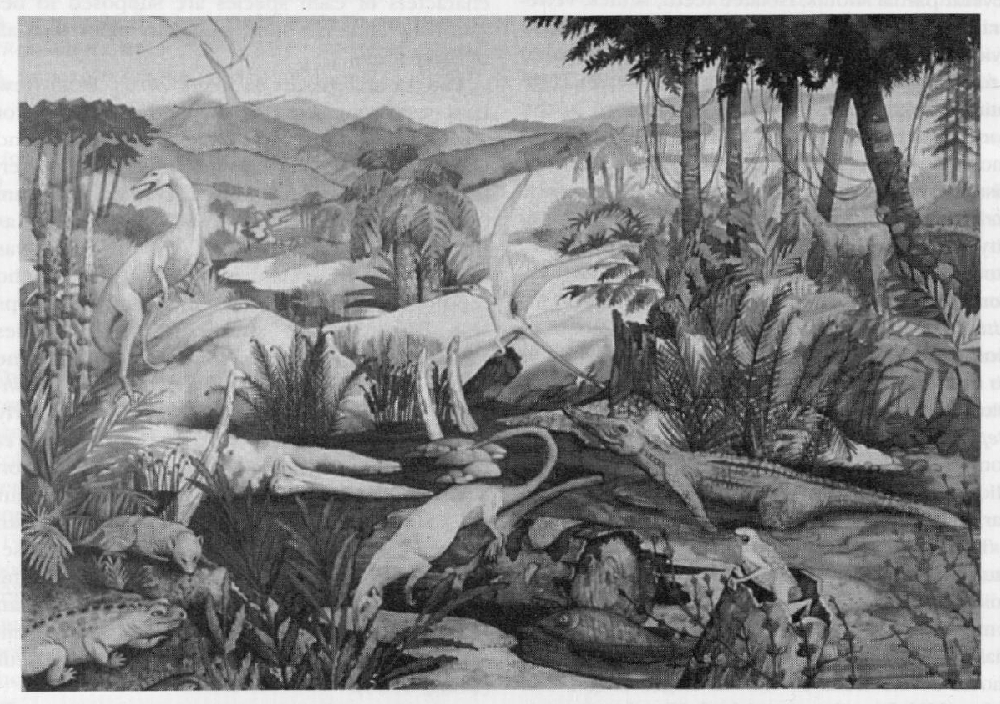
(Figure 6.5) Scene in Early Bathonian times, showing a small lake in Gloucestershire surrounded by seed ferns and conifers. Fishes (Lepidotus) live in the water, and frogs (Eodiscoglossus) disport themselves around the sides. Dinosaurs include some of the earliest stegosaurs and maniraptorans (?), plated and small carnivorous dinosaurs respectively. A carcass of the large sauropod, Cetiosaurus, is rotting in the water, and Megalosaurus scavenges. Lizard-like animals, crocodiles, pterosaurs, mammals and tritylodont mammal-like reptiles complete the scene. Based on a restoration painting by Pam Baldaro, showing the scene at Hornsleasow Quarry, Gloucestershire. Reproduced with permission of the University of Bristol.