16 Holwick Scars
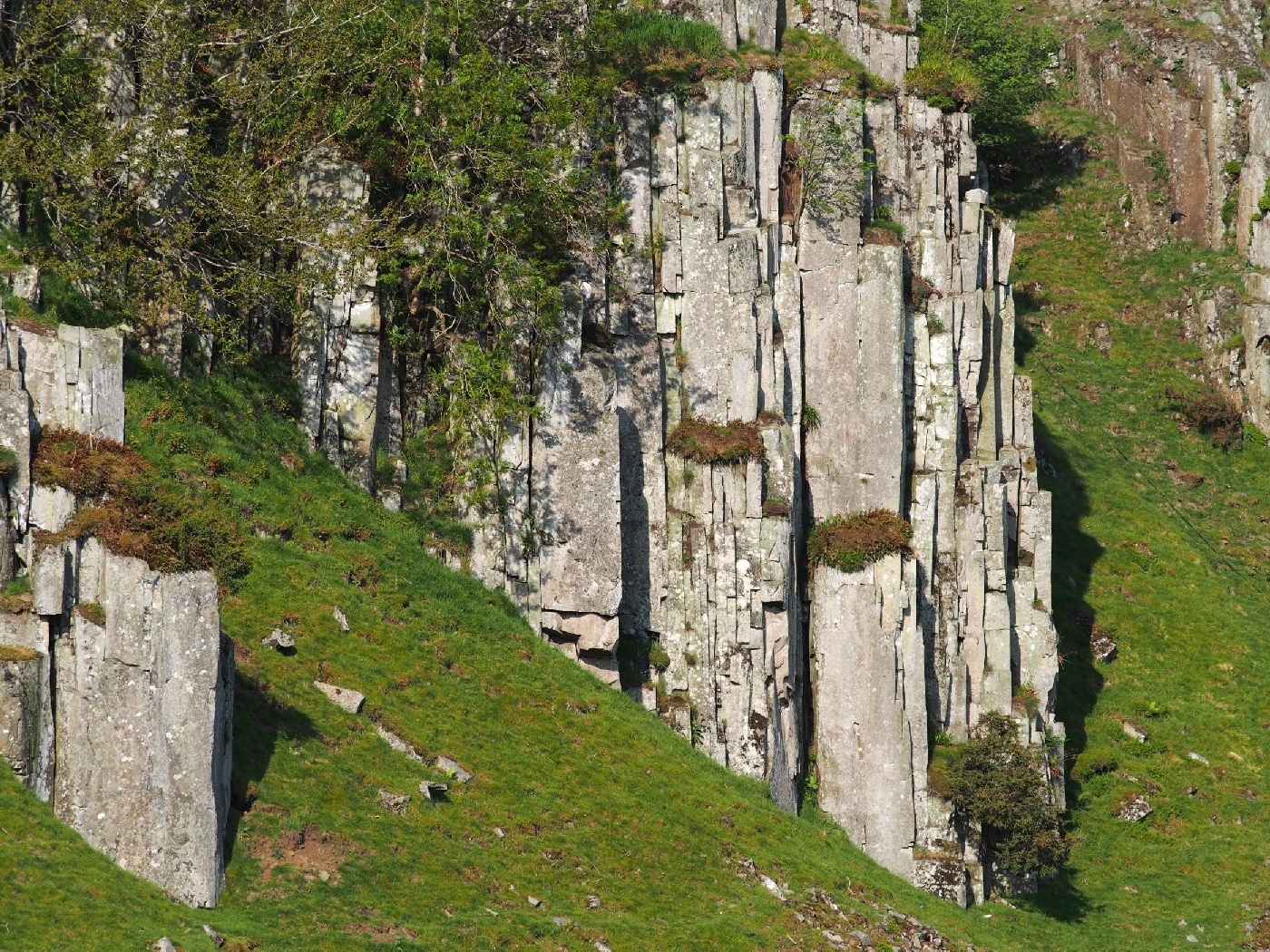
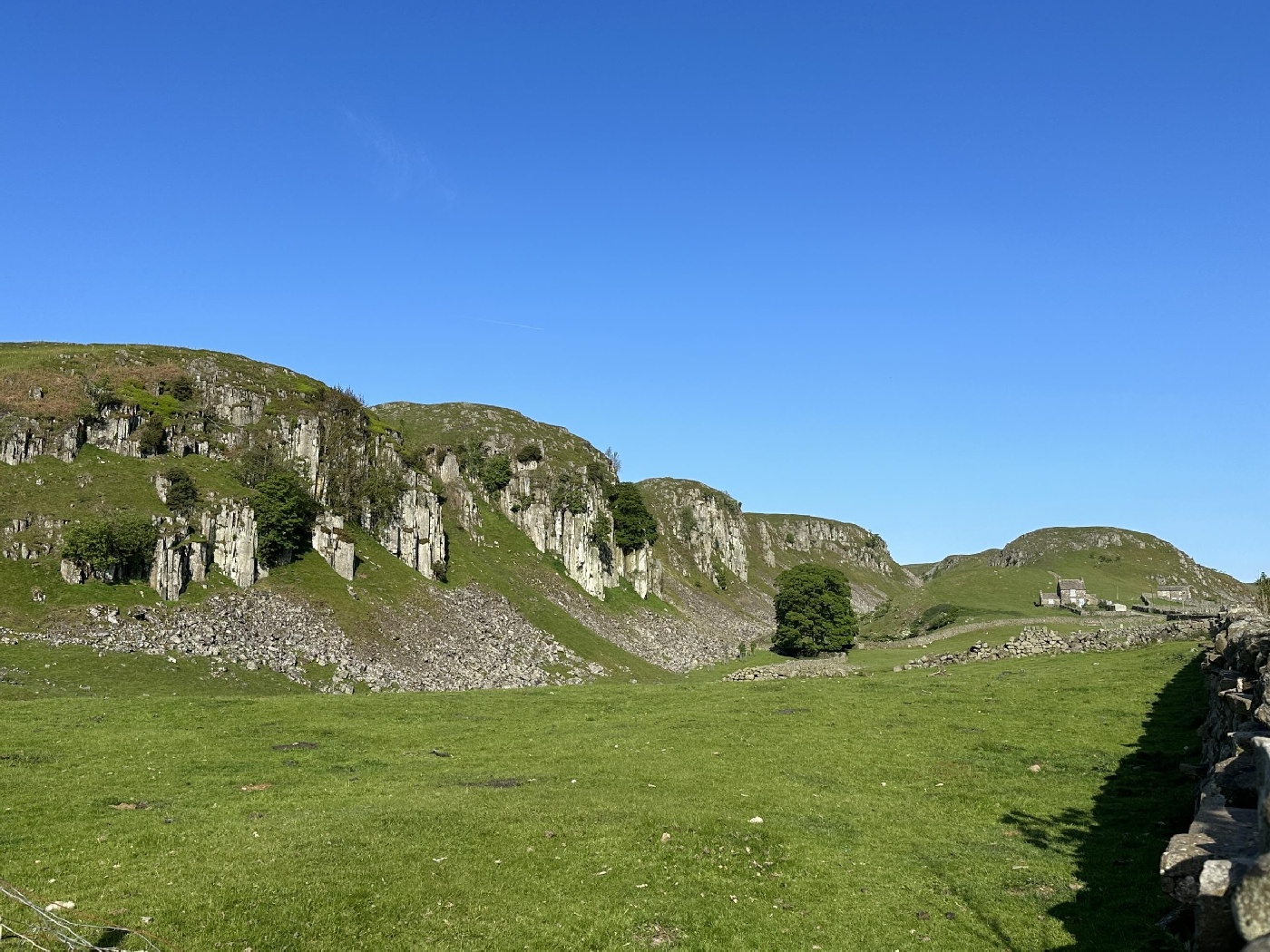
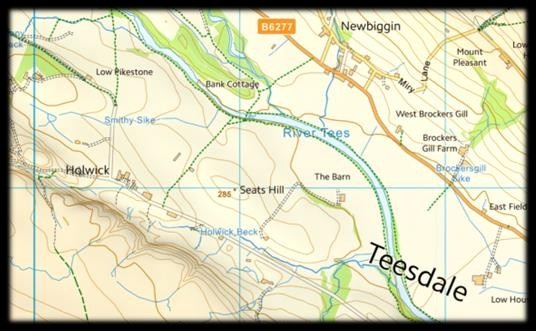
These dramatic, north facing cliffs with their rolling top are one of many places in Teesdale where the Whin Sill stands out in the landscape.
It stands out because the rock is hard and resists erosion. You can see that durability well here and in the cliffs at Cronkley Fell and the waterfalls of High and Low Force and Cauldron Snout. Quarrymen named the Whin Sill; whin because it is so hard and, when you hit it, that’s the sound it makes, and sill because it’s horizontal. For geologists the Whin Sill is special – this is the original sill in Earth Science and gave the name ‘sill’ to all other similar rock formations worldwide. The Whin Sill is made of a rock called dolerite. It was injected horizontally between older (
The Scars owe their current shape not just to the relative hardness of the rock, but also to a geological fault, plus millions of years of erosion. Only 20,000 years ago glaciers and their meltwater were scouring out the valley of the Tees, and as the scree slopes at the foot of the Scars show, weathering of the cliffs continues today. When the ice finally melted away around 12,000 ago Teesdale was again colonized by plants and trees. Some of those early plants continue to grow here today making Teesdale a renowned botanical hotspot. Around 8000 years ago our ancestors returned to live here too and the land below the cliffs has many signs of human occupation.