43 Durham Cathedral
Is there an English cathedral with a more dramatic location? Or one with such a wonderful symmetry between the building and the bedrock it stands on.
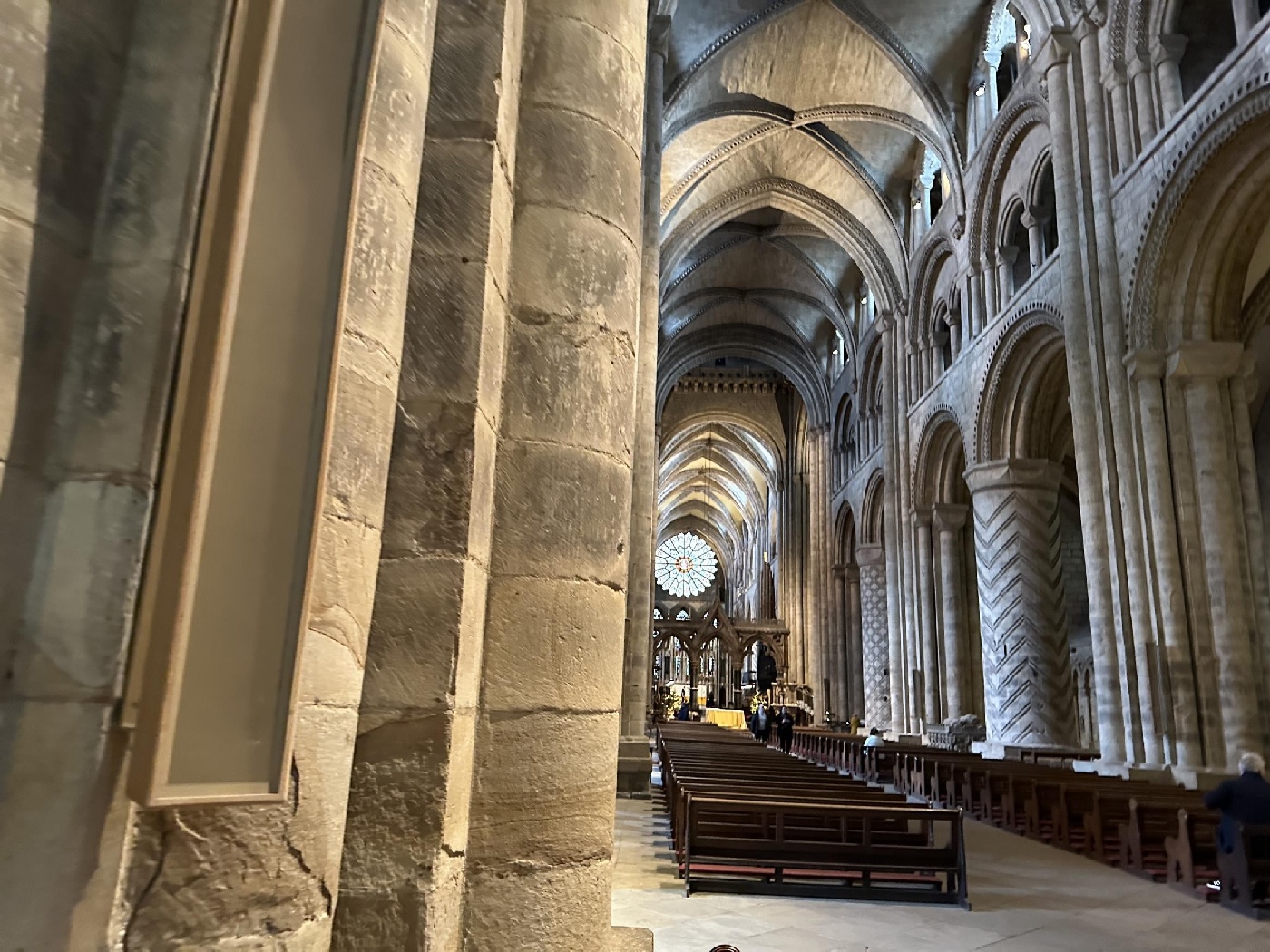
Directly beneath the Cathedral walls and pillars is solid sandstone bedrock, there was no need of a manmade foundation. Much of the building is constructed of the same sandstone, quarried less than 500 metres away across the river. The rock is called the Low Main Post, a Carboniferous sandstone that 315 million years before was sand in a river delta. It takes its name from the coal seam below it and provided a strong roof for those mining the coal across the Durham and Northumberland. But here beneath the Cathedral this coal seam remains intact; subsidence beneath their mother church was not something even coal-owning Bishops would countenance. You can see the natural sandstone in the cliffs beside the river and the way the layers in it here and in the Cathedral’s stone blocks slope at a variety of angles; an indication of their origin as river sands. The Low Main Post was strong but it was not a stone that could be finely carved and so the pillars and arches are simple but strikingly bold. While sandstone dominates there are many other different stones in the church. Some are local like the columns and slabs of black fossiliferous Frosterley ‘Marble’, a Carboniferous limestone from Weardale. There are Carboniferous stones from the south of the county too: Bede’s tomb is ‘marble’ (limestone) from Egglestone and 20th century external building repairs used sandstone from Barnard Castle. Other stones are more exotic, pale limestones from Purbeck, alabaster from the Midlands, the Neville Screen of Jurassic limestone from Caen and the imported serpentines, marbles and lapiz lazuli inlays of the incongruous Victorian pulpit.
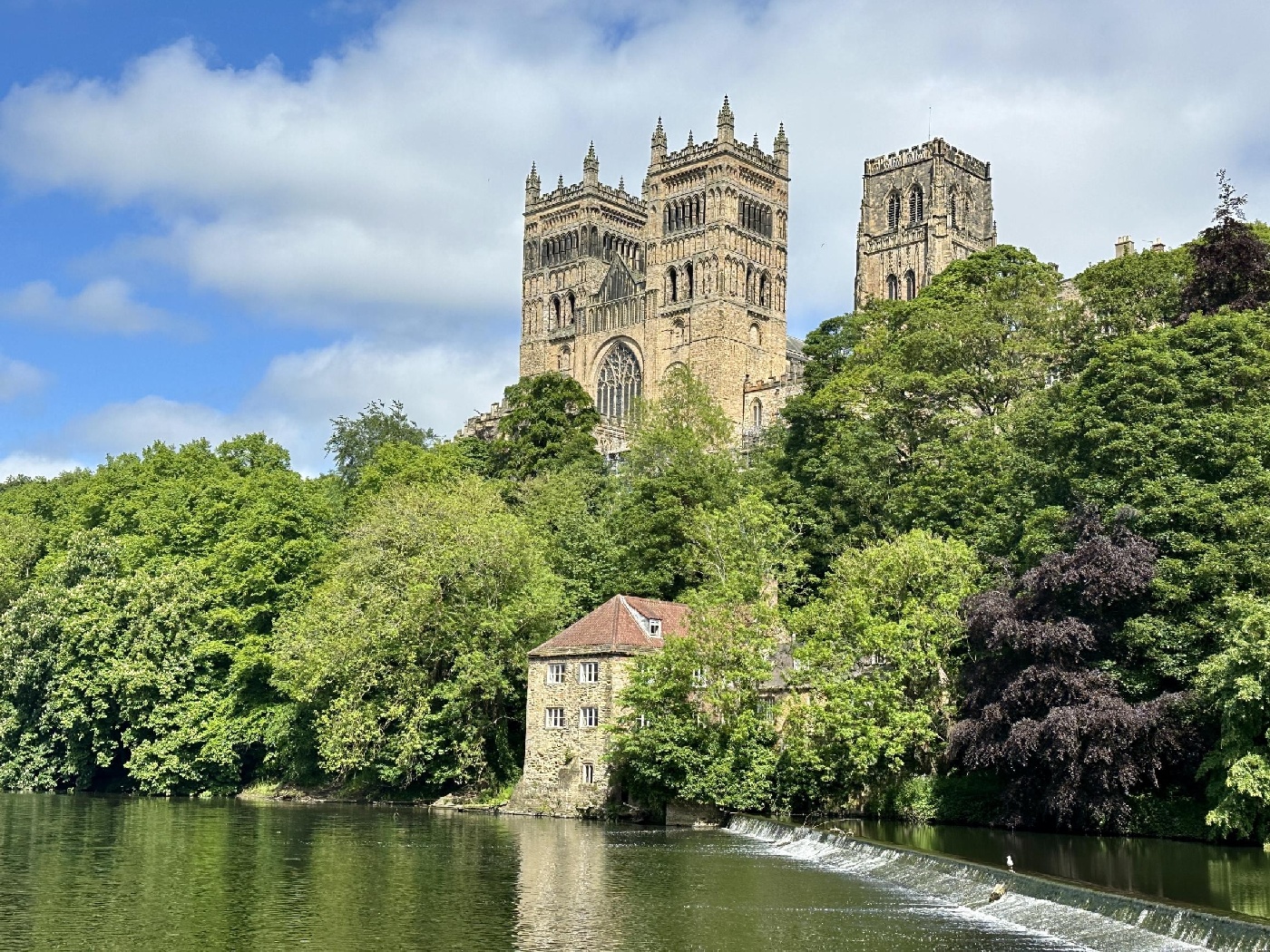
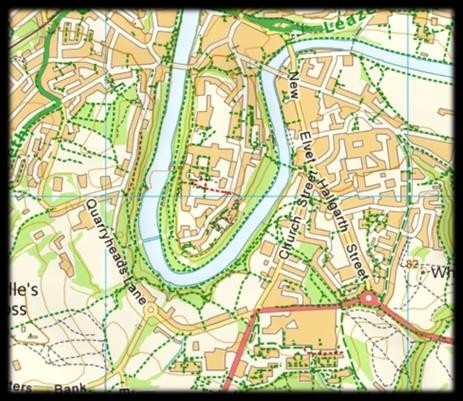
The gorge and river meander that creates the peninsula and give the Cathedral and castle their dominance over the City of Durham are many millions of years younger than the sandstone they cut through. They owe their origin to huge amounts of meltwater rushing down the valley as the last ice sheet melted less than 15,000 years ago. The river is a lot more peaceful today, take the path beside it and then head up the winding street to the Cathedral; you will be walking up the same road the people used to haul the stone from the quarry to build the Cathedral almost 900 years ago.
(Map 43) The cathedral is a short uphill walk from bus and train services [NZ 273 420].
(Figure 99) Durham Cathedral, interior view.
(Figure 100) Durham Cathedral and the Old Fulling Mill from the south bank of the River Wear In Spennymoor Town Hall there is a small museum, a tribute to the lives of those who worked in Durham’s mines.