Harker, A. 1904. The Tertiary igneous rocks of Skye. HMSO for the Geological Survey.

The Tertiary igneous rocks of Skye

By Alfred Harker, M.A.., F.R.S., With Notes By C. T. Clough, M.A., F.G.S.

Memoirs of the Geological Survey of the United Kingdom.

Published By Order Of The Lords Commissioners Of His Majesty's Treasury.

Glasgow: Printed For His Majesty's Stationery Office By James Hedderwick & Sons At "The Citizen" Press, St. Vincent Place.

And To Be Purchased, Either Directly Or Through Any Bookseller, From John Menzies & Co., Rose Street, Edinburgh, And 90 West Nile Street, Glasgow; Or Edward Stanford, 12, 13, And 14 Long Acre, London, W.C.; And Hodges, Figgis & Co., Ltd., 104 Grafton Street, Dublin.

1904.

Price, Nine shillings

Preface

The Tertiary Volcanic region of the West of Scotland is well known to be of exceptional interest from many points of view, and on this account my predecessor, Sir A. Geikie, determined that a typical portion of the region should be mapped and described in great detail. The district comprising the central mountain group of Skye was selected by him, and the services of Mr. Harker were secured in order that the actual survey and the petrographical work might be carried out by the same officer. The present memoir is, therefore, the result of work which was planned and in great part executed under the direction of Sir A. Geikie, who has himself contributed very largely to our knowledge of the selected area, and who has taken from first to last special interest in Mr. Harker's researches.

The district is one which has attracted the attention of many distinguished geologists from the days of Macculloch down to recent years. The main outlines of the geology are, therefore, familiar to students of the science, but in view of the publication of this volume some of the salient features of the development of research may here be referred to. Macculloch's classic work showed that the basalts of the plateaux and the eruptive masses pierce and overlie the Oolitic strata, and are therefore younger than the Jurassic rocks. The discovery of plant remains at Ardtun, in Mull, announced by the Duke of Argyll in 1851, marked an important advance, for they were regarded by Professor E. Forbes as proving the Tertiary age of the basalts with which they are associated. At the same time Forbes was led to the conclusion, from the evidence at Loch Staffin, in Skye, that the basaltic lavas are there contemporaneous with the Oolitic strata. Following the opinion of Professor Forbes, in his earliest investigations Sir A. Geikie inferred that the basaltic lavas of Skye are not younger than some late part of the Jurassic period, and he further contended that the gabbros of that island are of Archaean age from the striking resemblance of the banded types to some of the ancient gneisses of the North-West Highlands. In 1871 appeared Zirkel's valuable description of the petrology of the igneous rocks of Skye. In 1874 Professor Judd published his well known paper, in which he maintained that in the West Highlands there are relics of five great extinct Tertiary volcanoes indicating three periods of igneous activity — the first marked by the extrusion of acid lavas and tuffs connected with plutonic masses of granite, the second by basaltic lavas related to deep-seated masses of gabbro, and the third by minor outflows of lava from sporadic cones. In 1888 Sir A. Geikie embodied the results of his prolonged study of the Tertiary Igneous Rocks of the West Highlands in his monograph, communicated to the Royal Society of Edinburgh, on "The History of Volcanic Action during the Tertiary Period in the British Isles" He therein maintains that the basaltic plateaux are probably due to fissure eruptions; that the basaltic lavas were subsequently pierced by laccolitic masses of gabbro, which produced a certain amount of contact alteration on the previously-erupted lavas; and, finally, that the basic rocks were disrupted by the protrusion of masses of granophyre. These conclusions have been confirmed by Mr. Harker.

In the following pages the rocks are described with reference to their field relations and petrographical characters, due regard being paid throughout to the fact that they form a connected series of igneous products. The area referred to is represented by Sheets 70 and 71 of the one-inch maps, together with parts of Sheets 80 and 81. Sheet 81 has been published, and Sheets 70 and 71 are now being prepared for publication. In view of the complexity of the district and the impossibility of adequately representing the geological features on the one-inch maps, it is proposed to publish four six-inch Sheets (Skye 38, 39, 44, and 45), embracing the most interesting portion of the area.

This memoir has been written by Mr. Harker, and is based principally on the area surveyed by him. During the years 1895–1901 he mapped in detail the central mountain group, a broad belt of the surrounding country, the basaltic plateaux to the west and north-west of the mountainous region, the large island of Scalpay and some of the smaller islands off the East Coast. Mr. Clough has surveyed the south-eastern part of Skye and the island of Soay, a region consisting of older stratified rocks which have been invaded by numerous minor intrusions belonging to the Tertiary series. Messrs. Woodward, Barrow, and Wedd have mapped other portions of Skye, especially those in which Jurassic rocks occur, but where Tertiary igneous rocks are also found. In the following pages Mr. Harker has freely availed himself of the information supplied by his colleagues as to the Tertiary igneous rocks of the areas surveyed by them, and has visited localities of interest which lie outside his own special district.

The petrographical descriptions are based on a large series of specimens, of which more than a thousand have been sliced for microscopical examination. Most of these specimens have been collected by Mr. Harker, but a considerable number have been supplied by Mr. Clough and a few by Mr. Woodward. They include also a number of specimens collected by Sir A. Geikie prior to the detailed survey. Dr. Pollard has made twelve complete and four partial analyses for the purpose of this memoir.

During the progress of the survey Professor Lebour generously placed at our disposal his own manuscript maps of the Broadford and Kyleakin districts, together with five analyses of rocks which had been made for him by Mr. T. Baker, of the Durham College of Science. We are also indebted to Mr. Archibald Livingstone, of the Antrim Iron Ore Company, for the results of the chemical examination of some of the clays in the basaltic series; to Mr. J. H. Player for the partial analysis of another clay; to Professor Sollas for isolating and examining the constituents of some of the rocks; and to Sir J. Norman Lockyer, K.C.B., for photographs of the spectra of certain rocks.

The photographic views given as plates were taken by Mr. R. Lunn, save the frontispiece, which is reproduced by the kind permission of Messrs. Wilson & Co., Photographers, Aberdeen. One sketch was very kindly made for us by Mr. Colin B. Phillip. The other illustrations, including the micro-sections, are by the author; but many of the text figures have been re-drawn by J. D. Bowie, who has also prepared the sketch map prefixed to this volume.

Our thanks are due to the proprietors of estates in Skye, more particularly to Macleod of Macleod and Mr. R. L. Thomson of Strathaird, who have afforded every facility for the survey, and also to numerous residents of humbler station who have given kindly and intelligent help. To Mr. T. A. Falcon, as a frequent companion in camping and climbing in the Cuillins, the author desires to express his indebtedness in many ways. Mr. Falcon's photographs of the mountains have proved of value in deciphering their structure.

J. J. H. Teall, Director. Geological Survey Office, 28 Jermyn Street, London, 12th April 1904.

Contents

Chapter 1 Introduction, and General Relations of the Volcanic Series

Chapter 2 Volcanic Agglomerates, Tuffs, and Conglomerates

Chapter 3 Basic Lavas: General Petrography

Chapter 4 Basic Lavas: Alterations and Metamorphism

Chapter 5 Rhyolitic and Trachytic Lavas and Tuffs

Chapter 6 Peridotites (Earlier Group)

Chapter 7 Gabbros: Field-Relations

Chapter 8 Gabbros: Petrography

Chapter 9 Granites and Granophyres: Field-Relations

Chapter 10 Granites and Granophyres: Petrography

Chapter 11 Invasion of Basic Rocks by the Granite-Magma

Chapter 12 Composite Sills and Dykes: General Features

Chapter 13 Composite Sills and Dykes: Detailed Description

Chapter 14 Basic Sills: the Great Group

Chapter 15 Basic Sills: Minor Groups

Chapter 16 Minor Acid Intrusions

Chapter 17 Basic Dykes: Field-Relations

Chapter 18. Basic Dykes: General Petrography

Chapter 19. Basic Dykes: Tachylytic Selvages

Chapter 20. Basic Dykes: Xenoliths

Chapter 21. Basic Dykes and Sheets of the Cuillins

Chapter 22. Later Peridotites

Chapter 23. Trachyte and Trachy-Andesite Dykes

Chapter 24. Augite-Andesite and Pitchstone Dykes

Chapter 25. General Review of Tertiary Igneous Activity in Skye

Chapter 26 Physical Features and Scenery

Appendix. Bibliography of the Tertiary Igneous Rocks of Skye

Explanation of plates of micro-sections

Index
List of illustrations

List of figures in the text

(Figure 1) Sketch-map to show the distribution of Tertiary igneous rocks in the British Isles

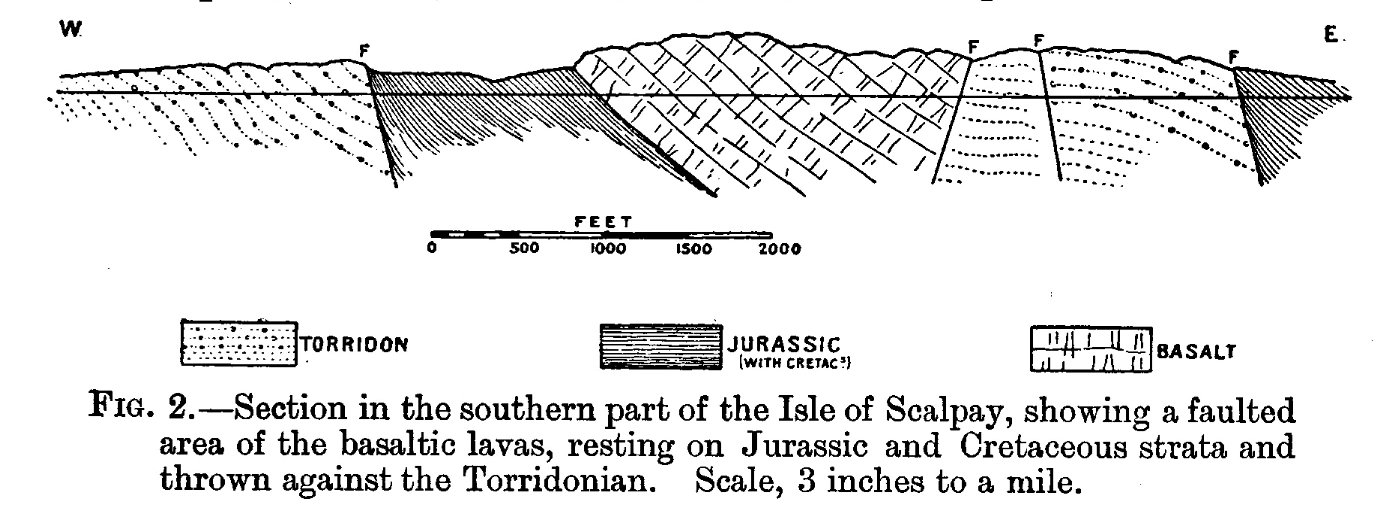
(Figure 2) Section in the southern part of the Isle of Scalpay

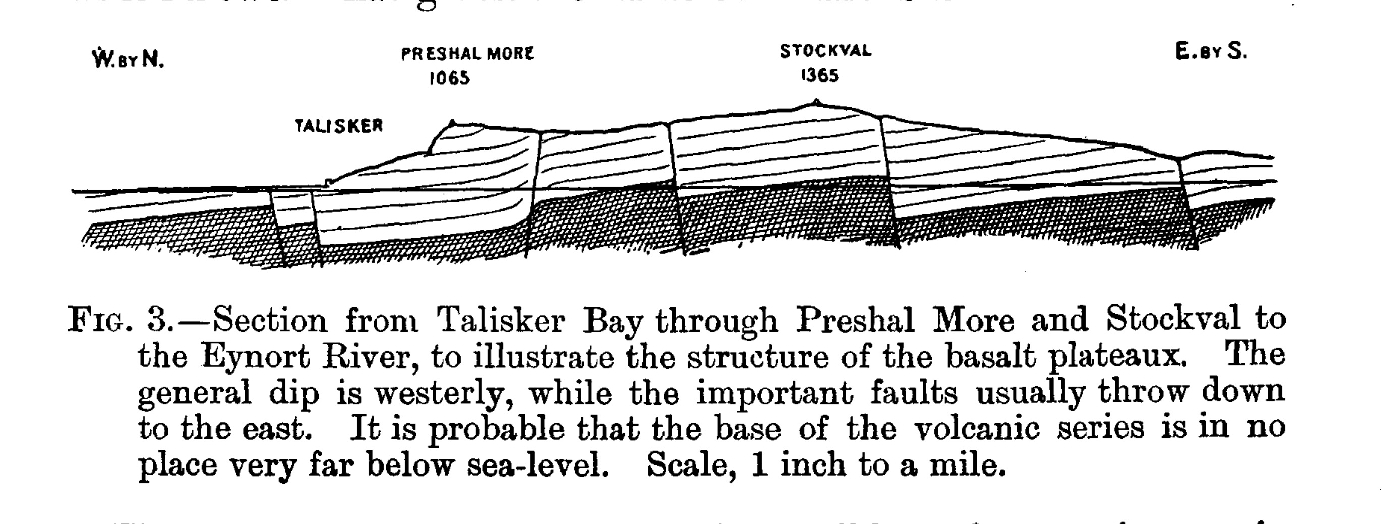
(Figure 3) Section to illustrate the structure of the basalt plateaux
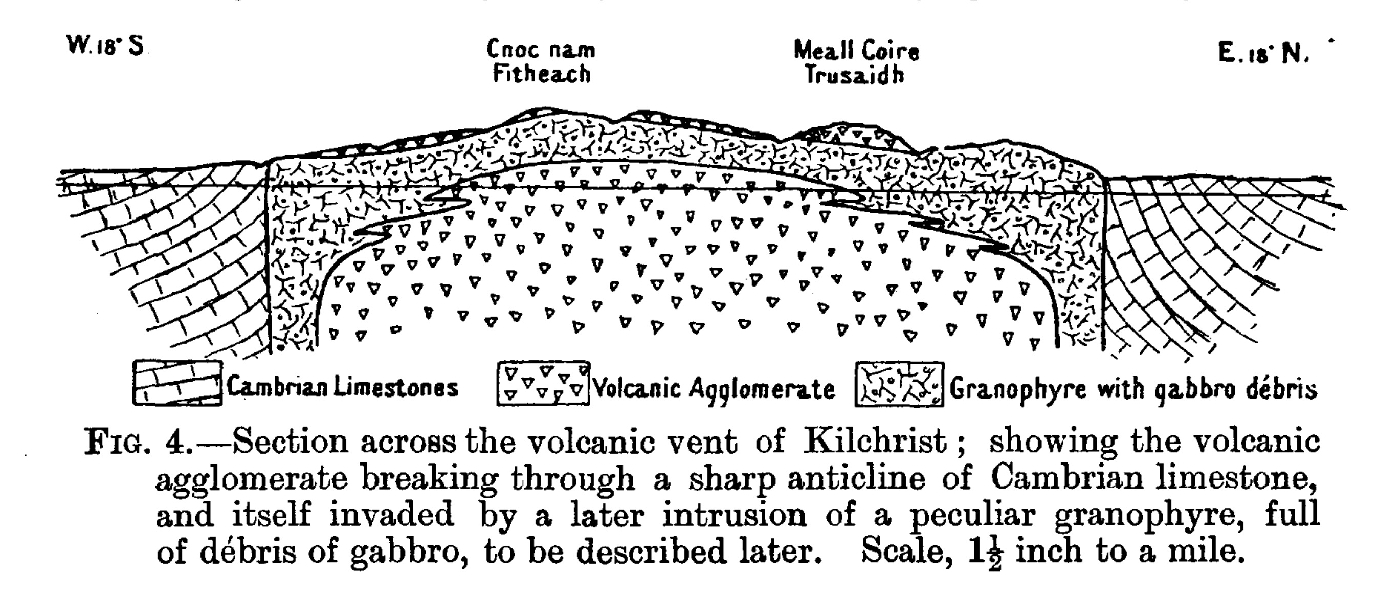
(Figure 4) Section across the volcanic vent of Kilchrist

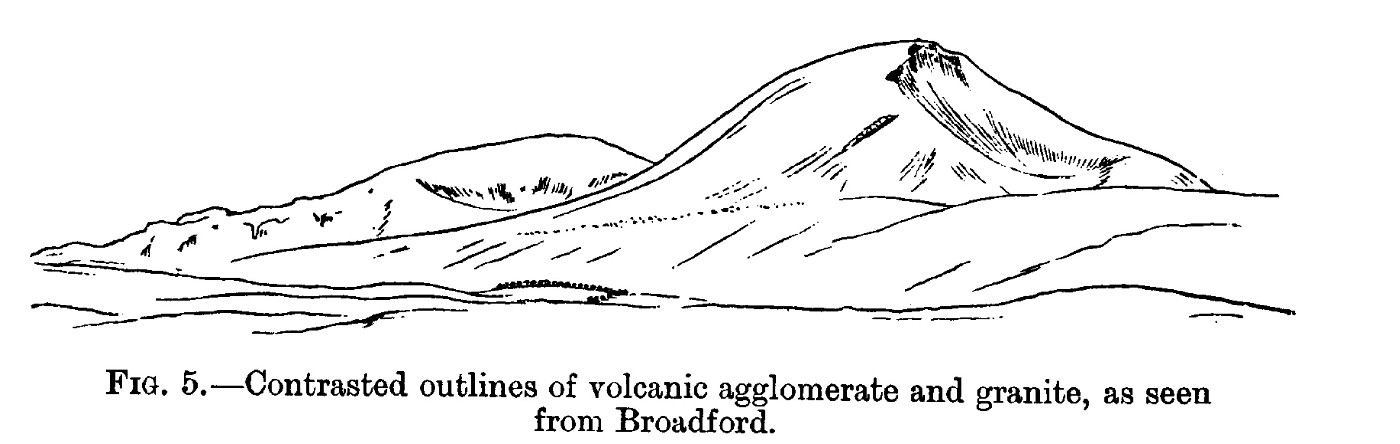
(Figure 5) Contrasted outlines of volcanic agglomerate and granite

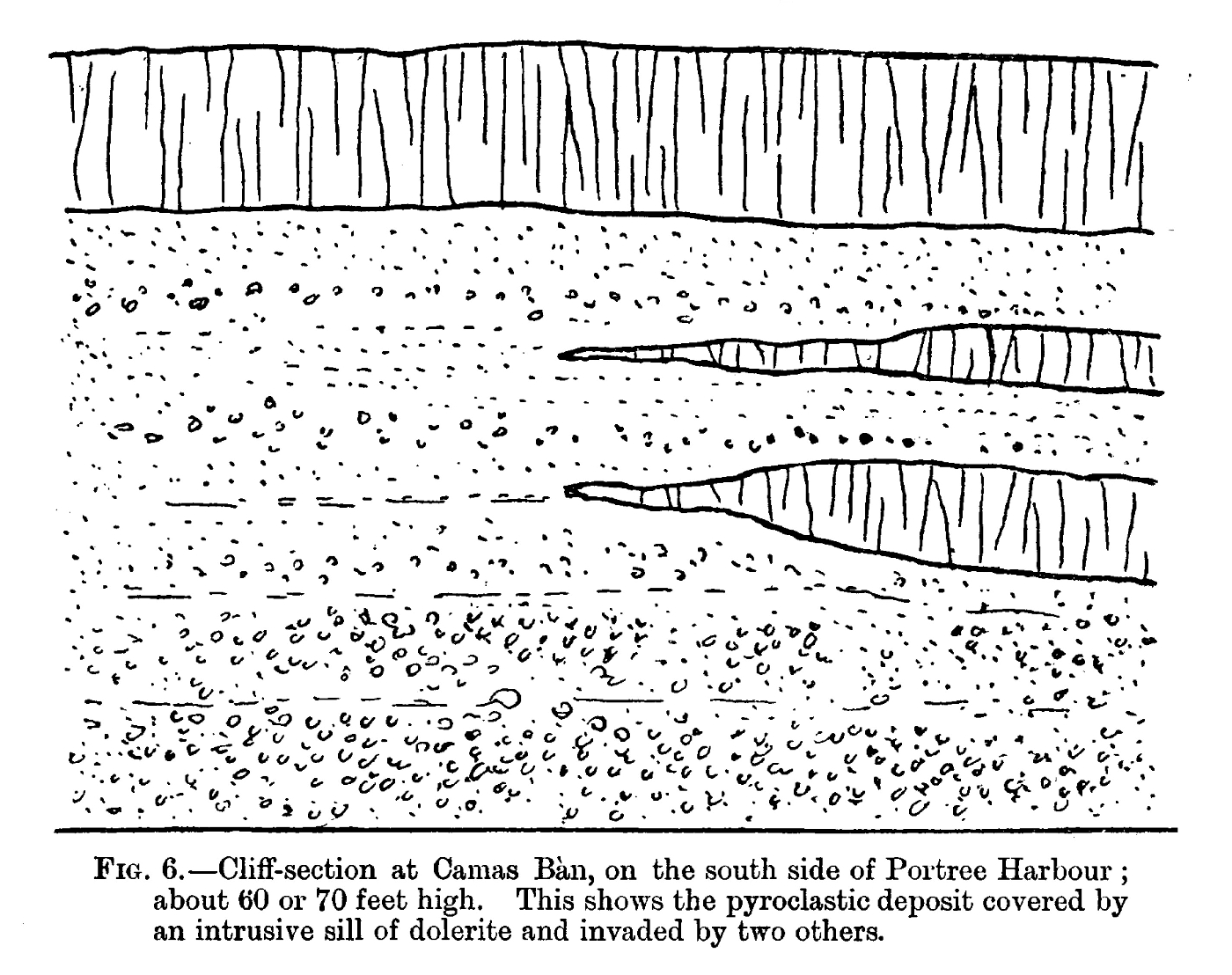
(Figure 6) Cliff-section at Camas Bàn, Portree Harbour

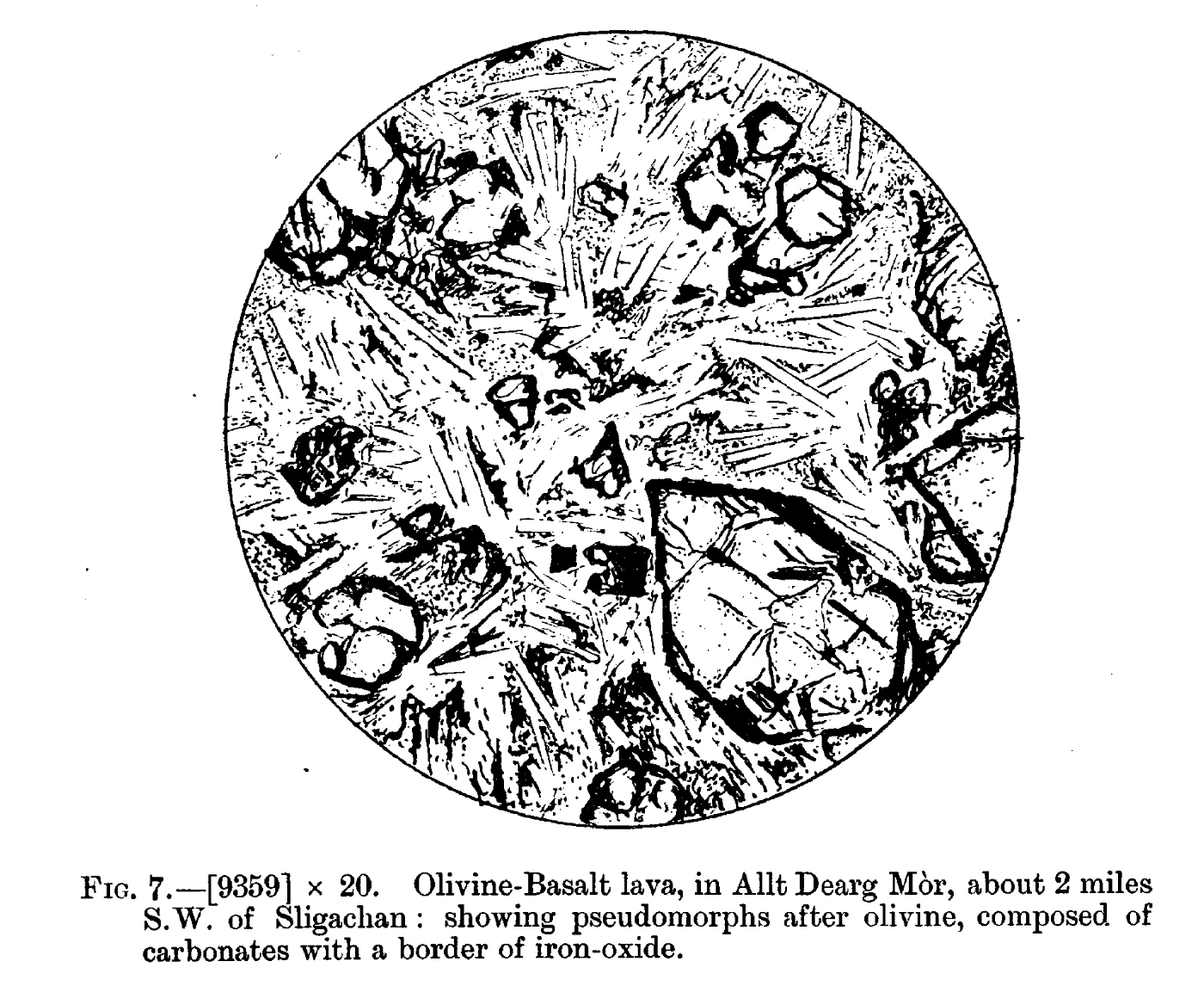
(Figure 7) Micro-section: olivine-basalt lava

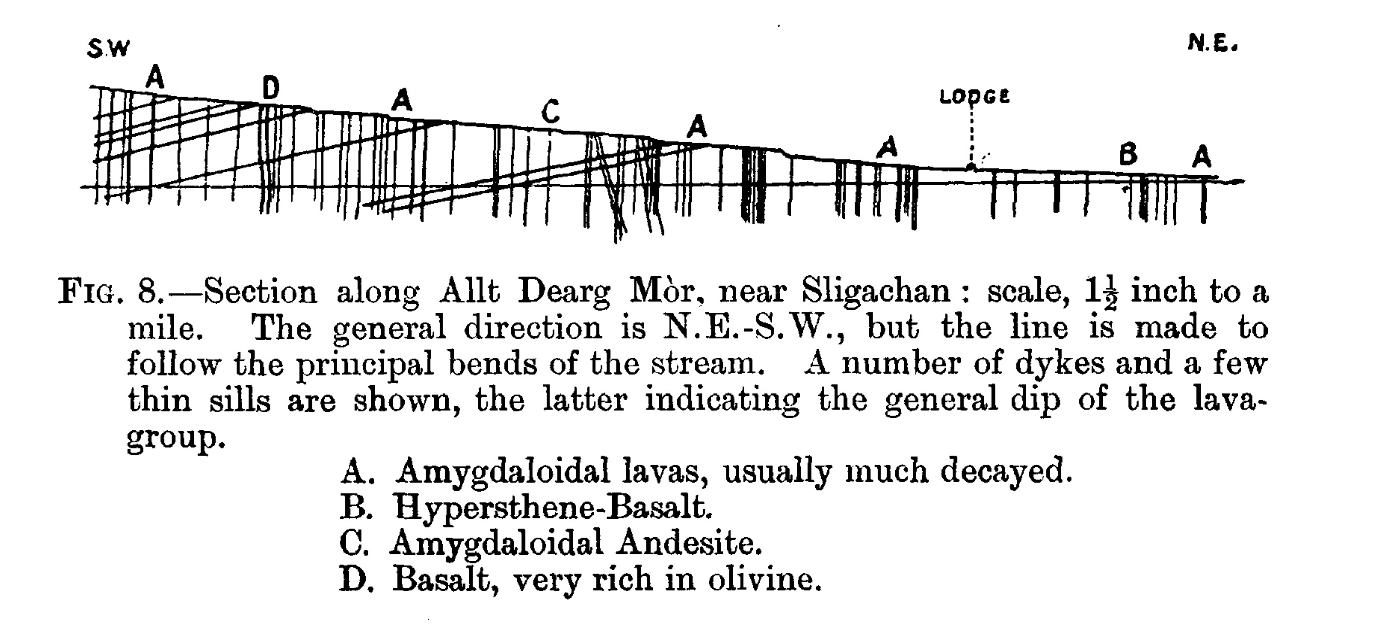
(Figure 8) Section along Allt Dearg Mòr, near Sligachan

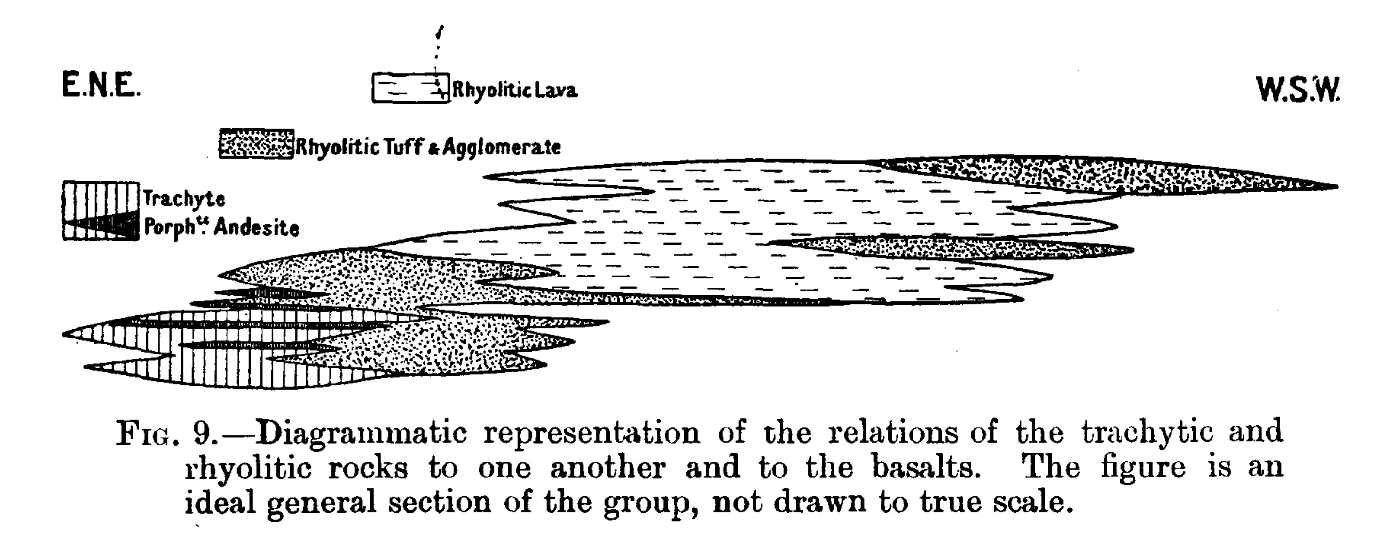
(Figure 9) Diagrammatic representation of the relations of the trachytic and rhyolitic rocks

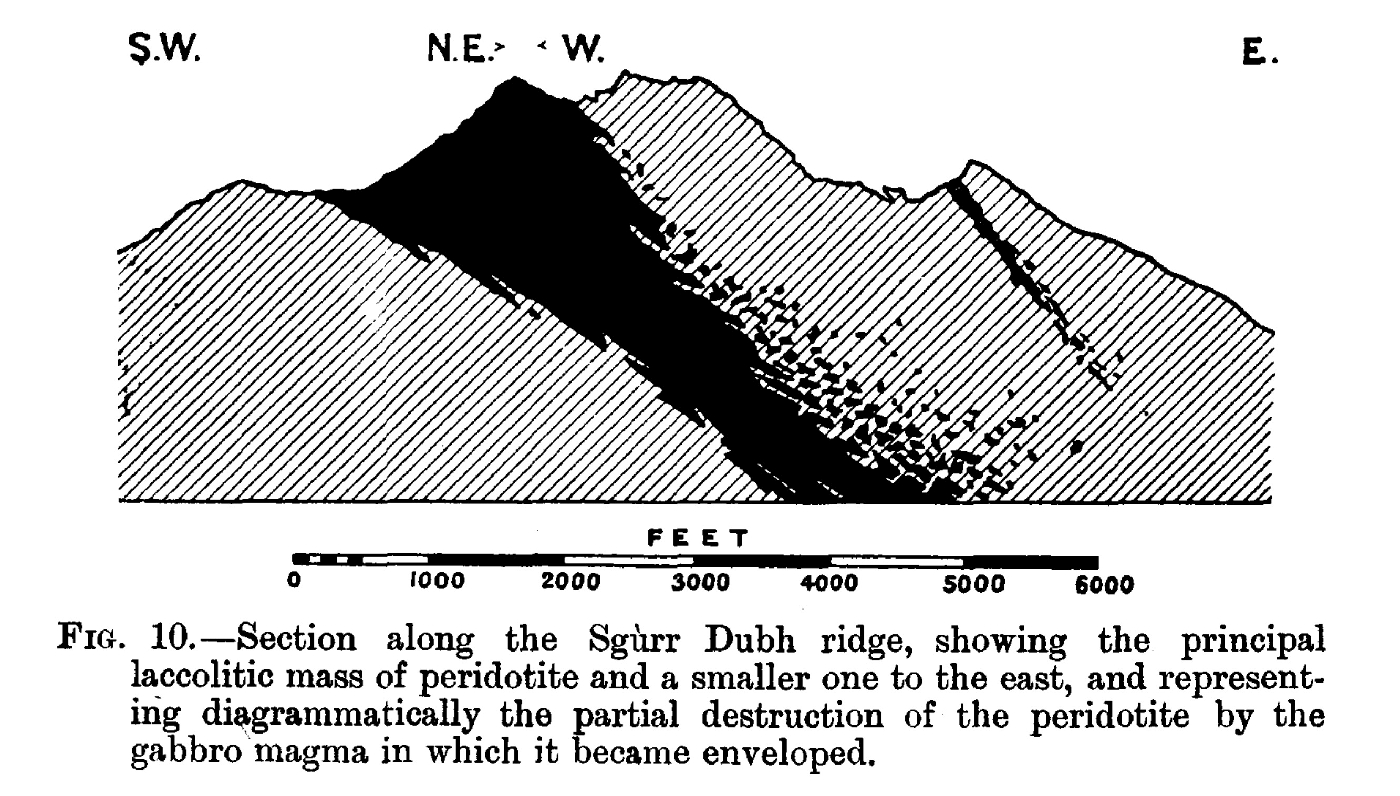
(Figure 10) Section along the Sgùrr Dubh ridge

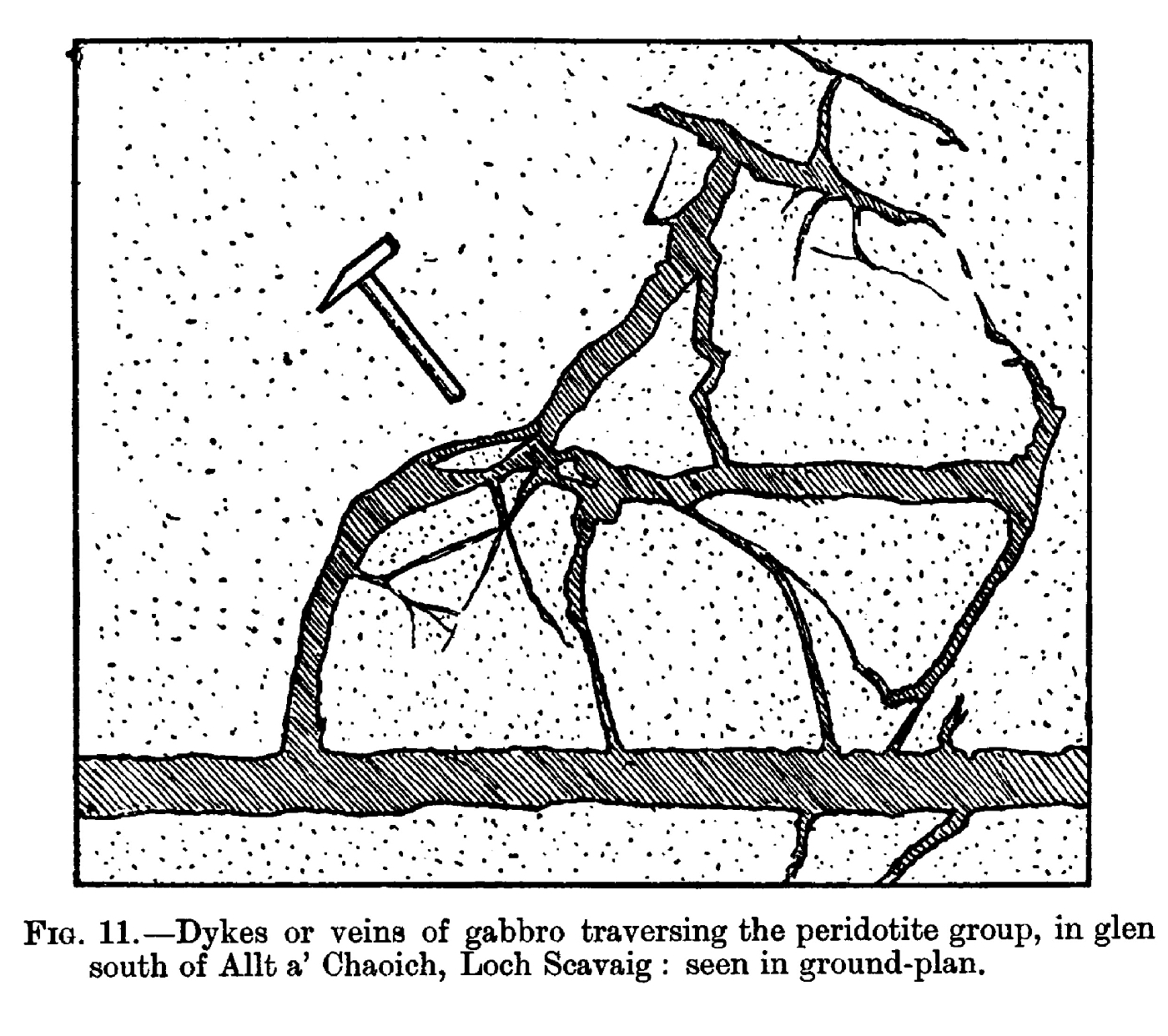
(Figure 11) Dykes or veins of gabbro traversing peridotite

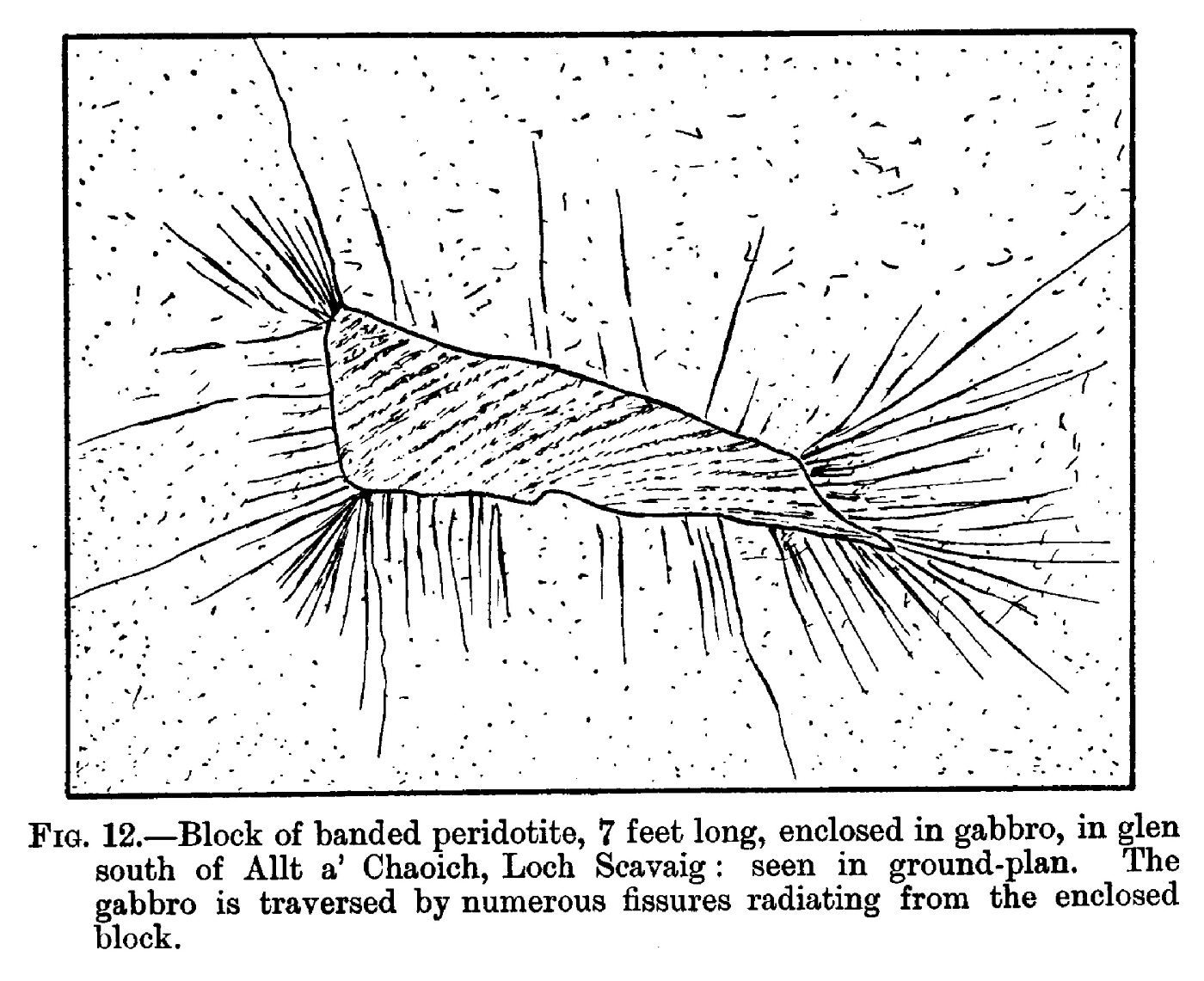
(Figure 12) Block of banded peridotite enclosed in gabbro

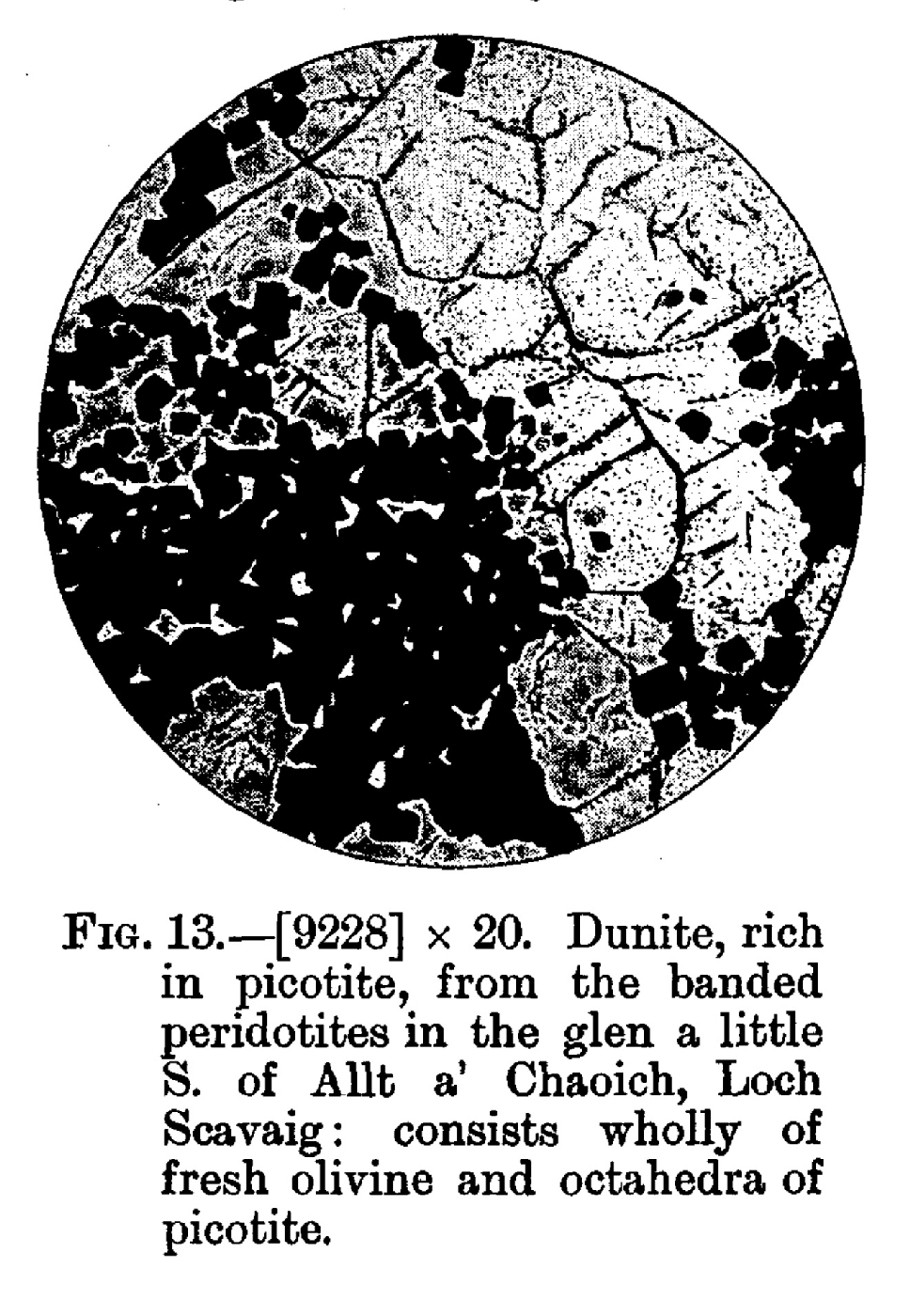
(Figure 13) Micro-section: dunite, rich in picotite

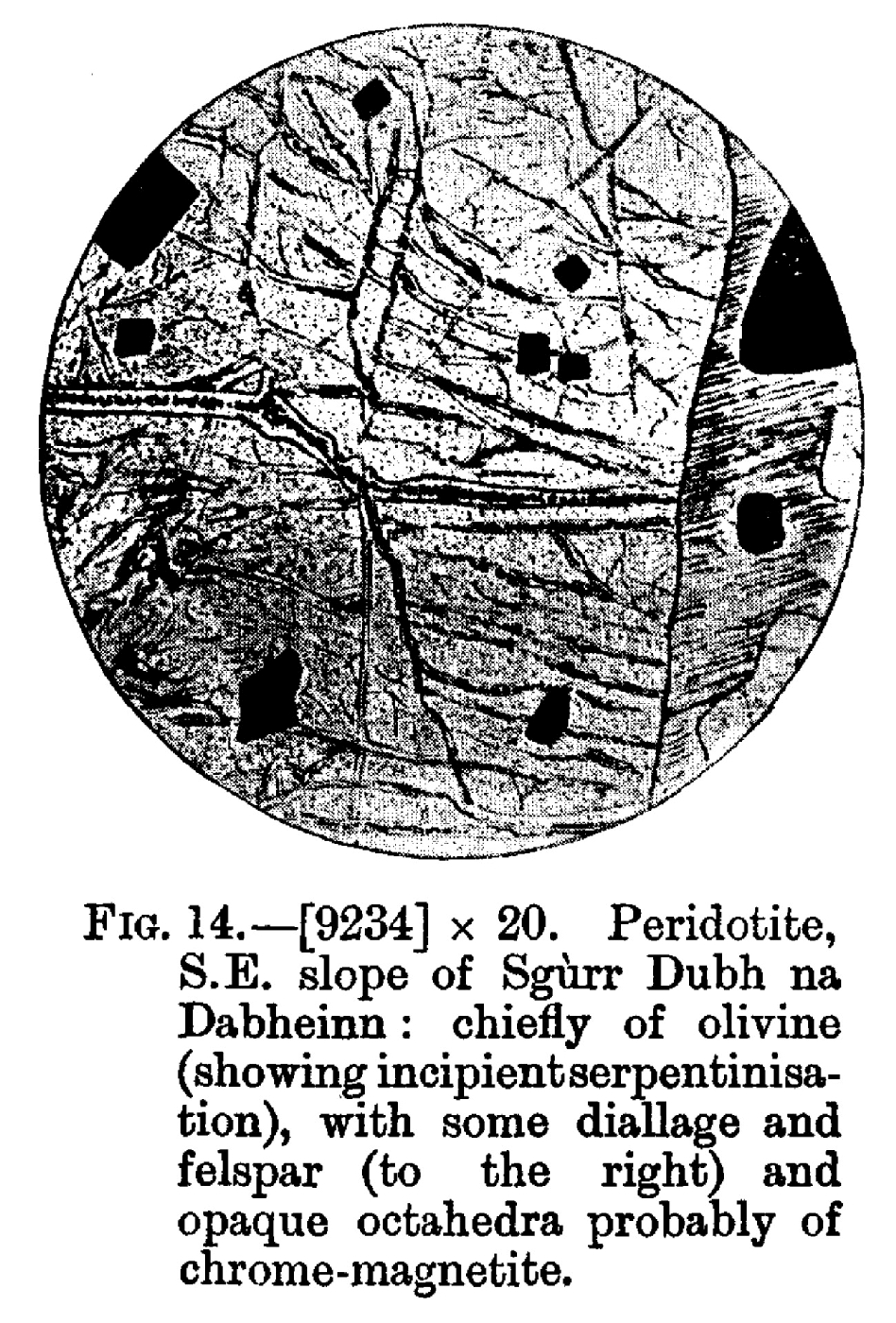
(Figure 14) Micro-section: peridotite

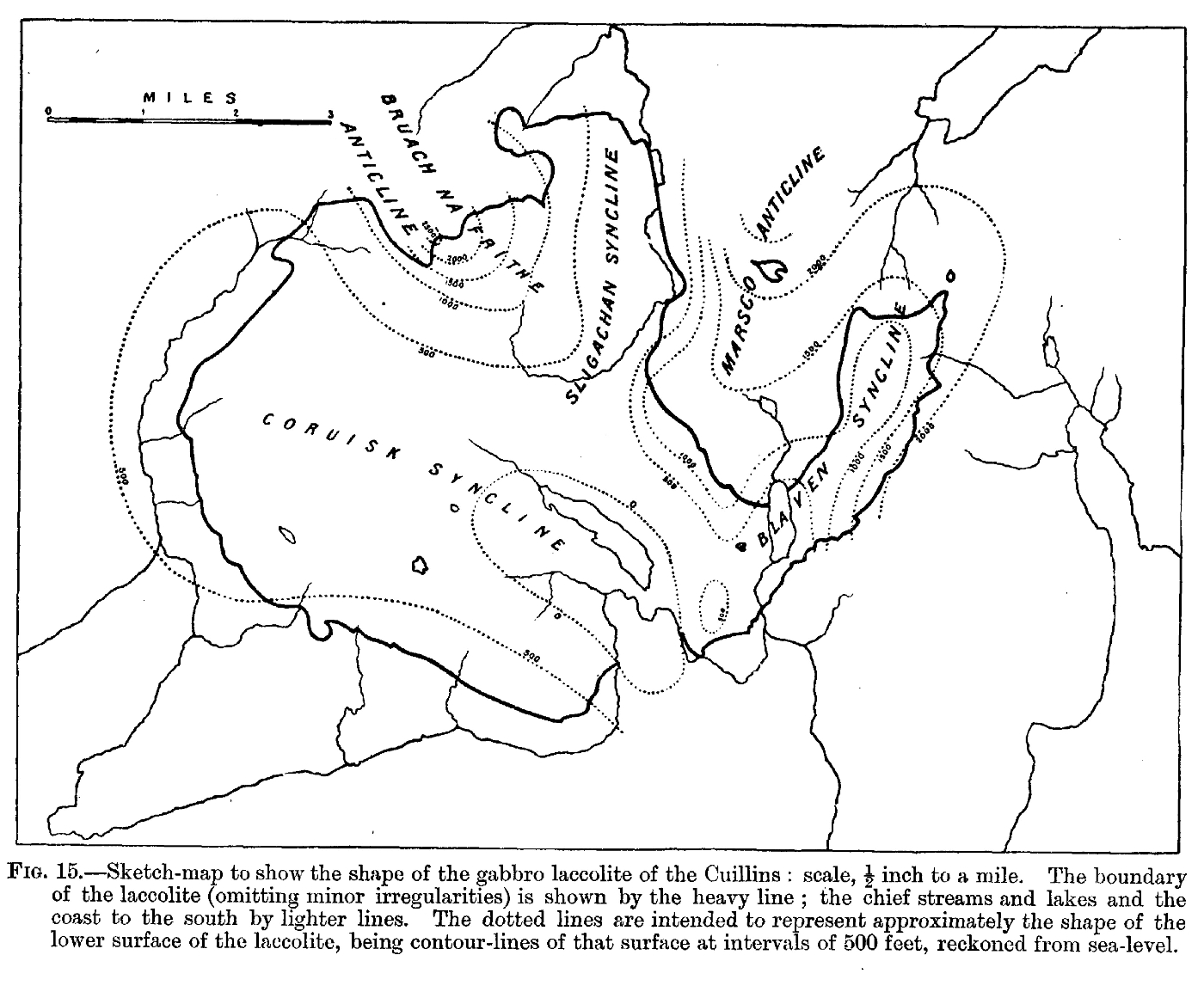
(Figure 15) Sketch-map to show the shape of the gabbro laccolite

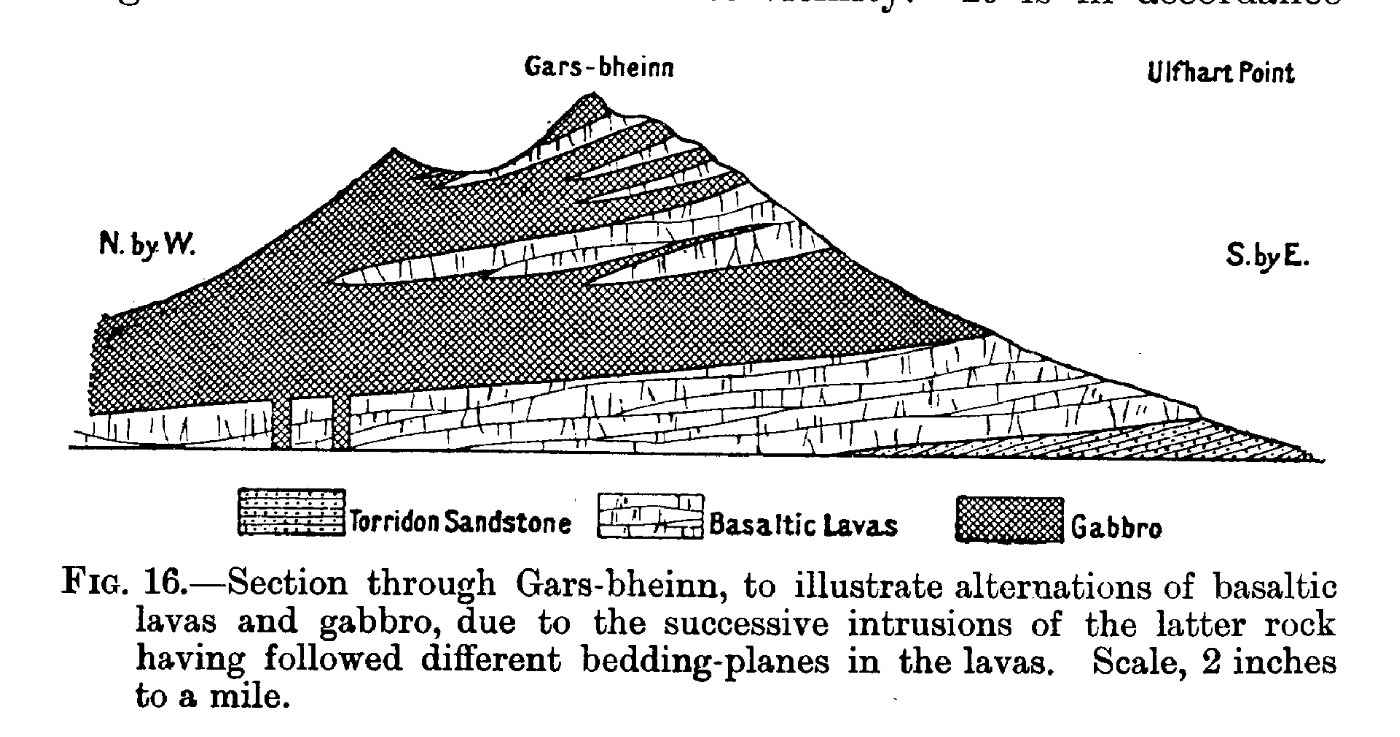
(Figure 16) Section through Gars-bheinn

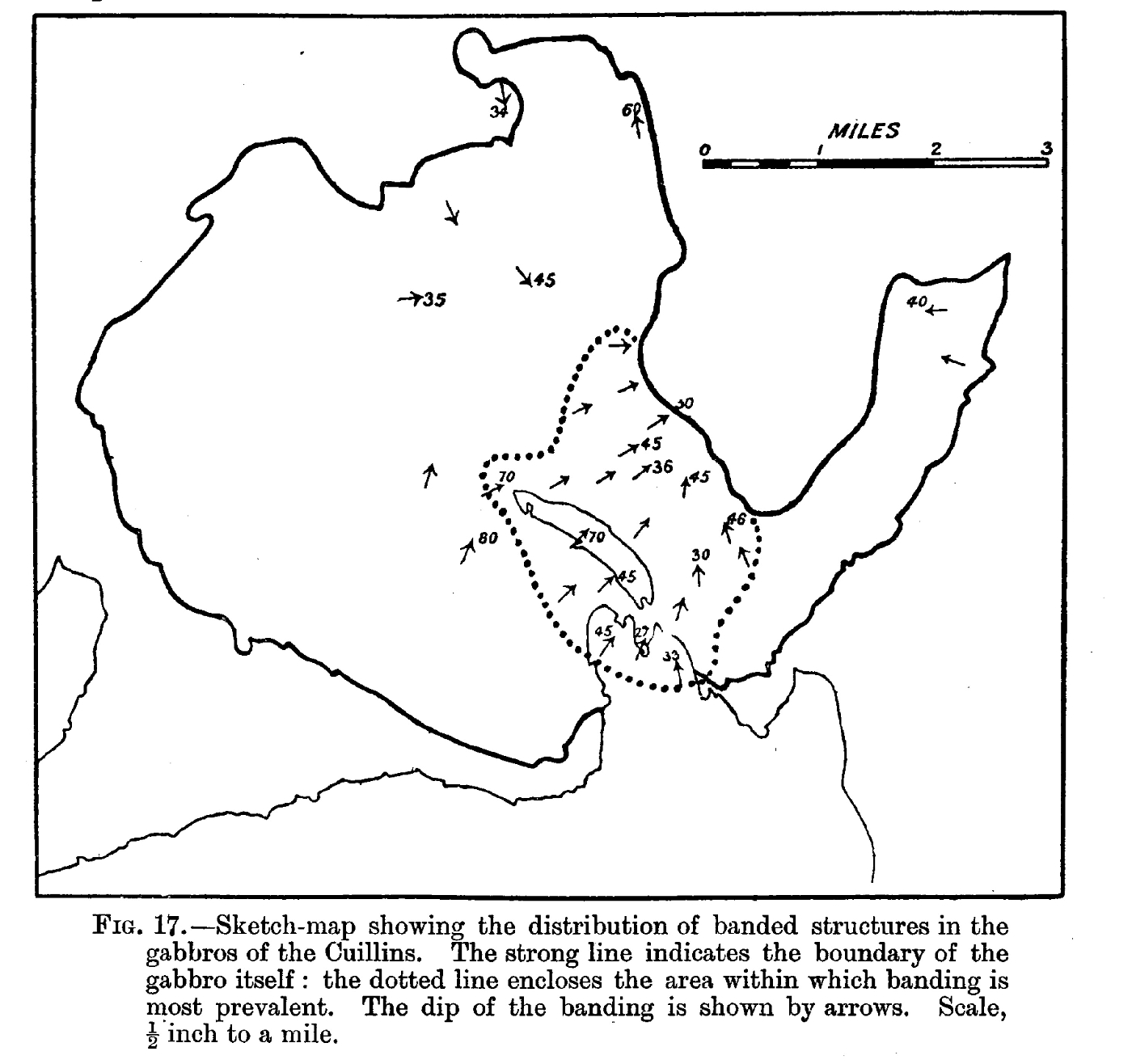
(Figure 17) Sketch-map showing the distribution of banded structures in the gabbro

(Figure 18) Section across Druim an Eidhne

(Figure 19) Ground-plan of a sheet of gabbro and its dyke-feeder at Eas Mòr, Allt Coire na Banachdich

(Figure 20) Map showing a part of the Broadford gabbro boss with patches of the Cambrian limestones enclosed

(Figure 21) Micro-section: olivine-gabbro, showing the ophitic structure

(Figure 22) Micro-section: "granulitic gabbro", probably a highly metamorphosed basaltic lava

(Figure 23) Dykes of banded gabbro in glen south of Allt a' Chaoich

(Figure 24) Secondary twin-lamellation in the felspar of the gabbros

(Figure 25) View from Bealach a' Leitir, showing granite underlying-gabbro

(Figure 26) Section across Glen Sligachan, from Sgùrr nan Gillean to Marsco

(Figure 27) Section through Marsco and Ruadh Stac

(Figure 28) Section through Lochain Beinn na Caillich and towards Broadford

(Figure 29) Map of part of the Beinn an Dubhaich granite, showing its relation to the Cambrian limestones

(Figure 30) Section from Loch Kilchrist to Glen Boreraig

(Figure 31) Relations of granite and marble on the lower slopes of Beinn an Dubhaich

(Figure 32) Section along Beinn na Cro

(Figure 33) Section in the south-western part of Scalpay

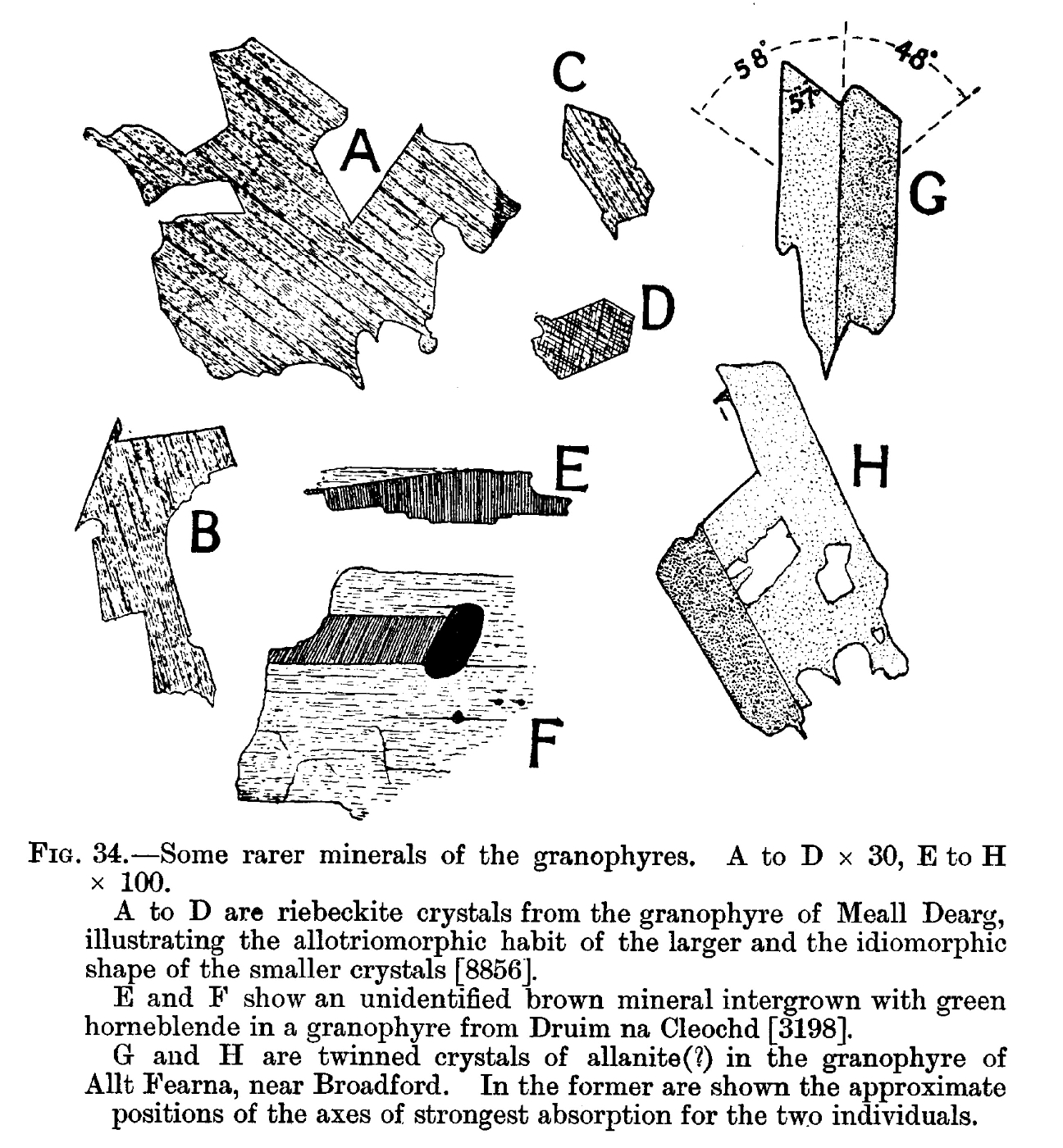
(Figure 34) Some rarer minerals of the granophyres (from micro-sections)

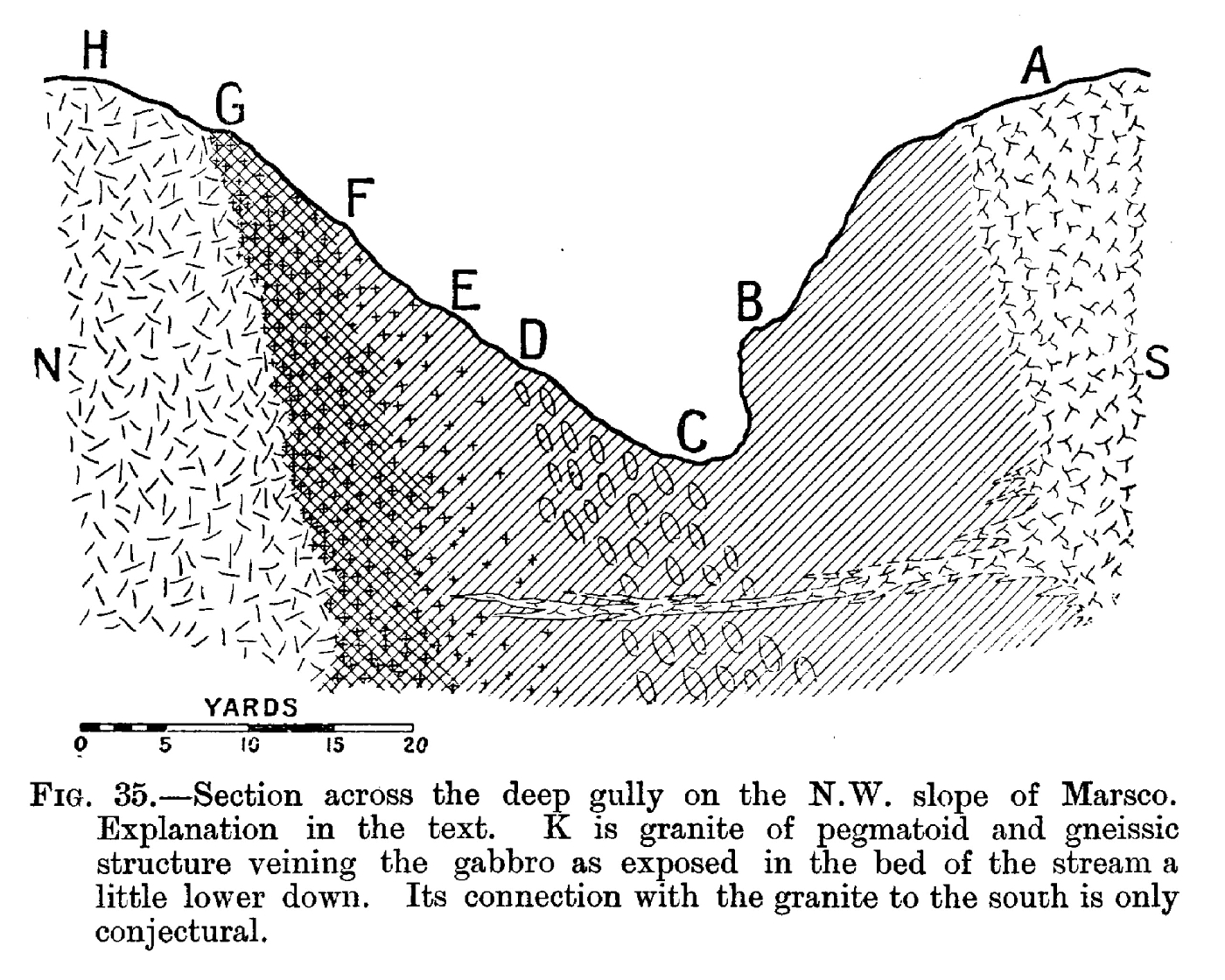
(Figure 35) Section across the deep gully on the N.W. slope of Marsco

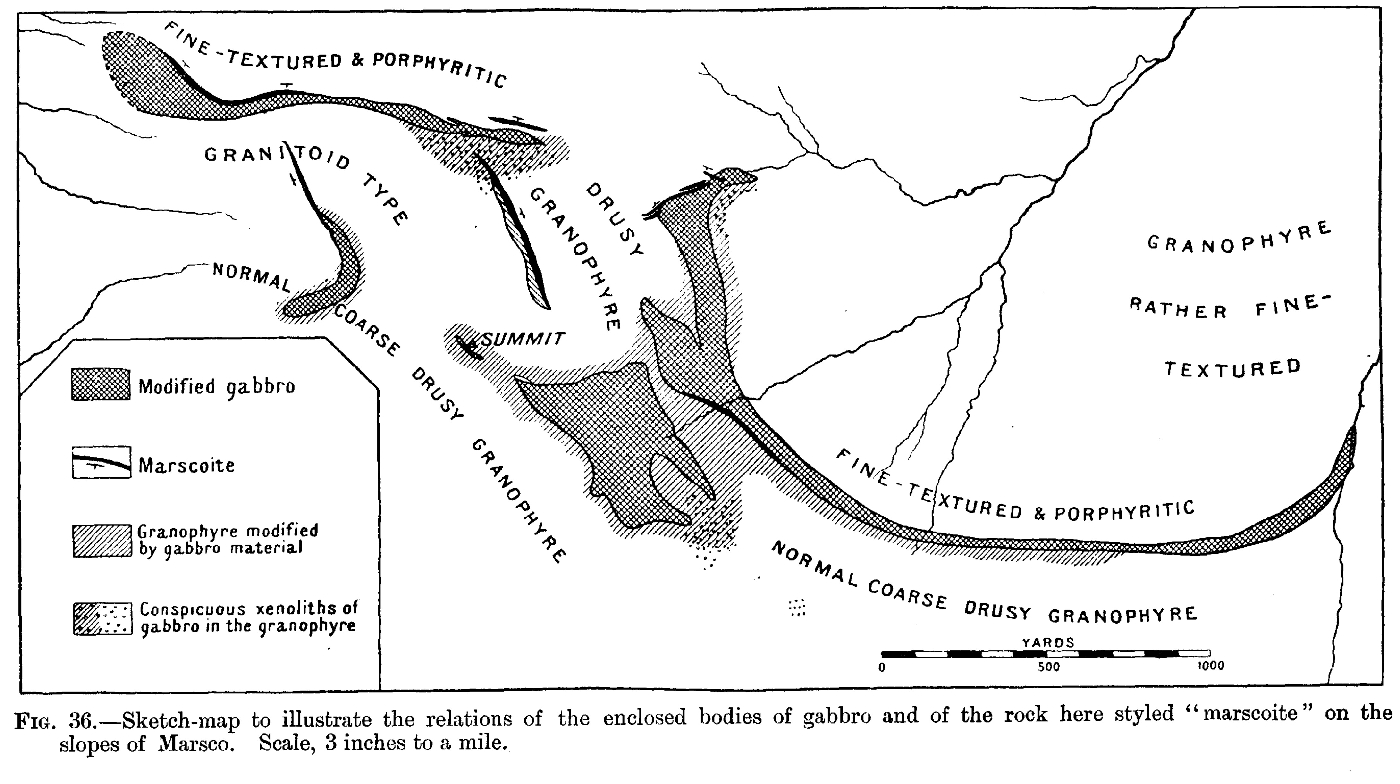
(Figure 36) Sketch-map to illustrate the relation of the enclosed bodies of gabbro, etc., on the slopes of Marsco

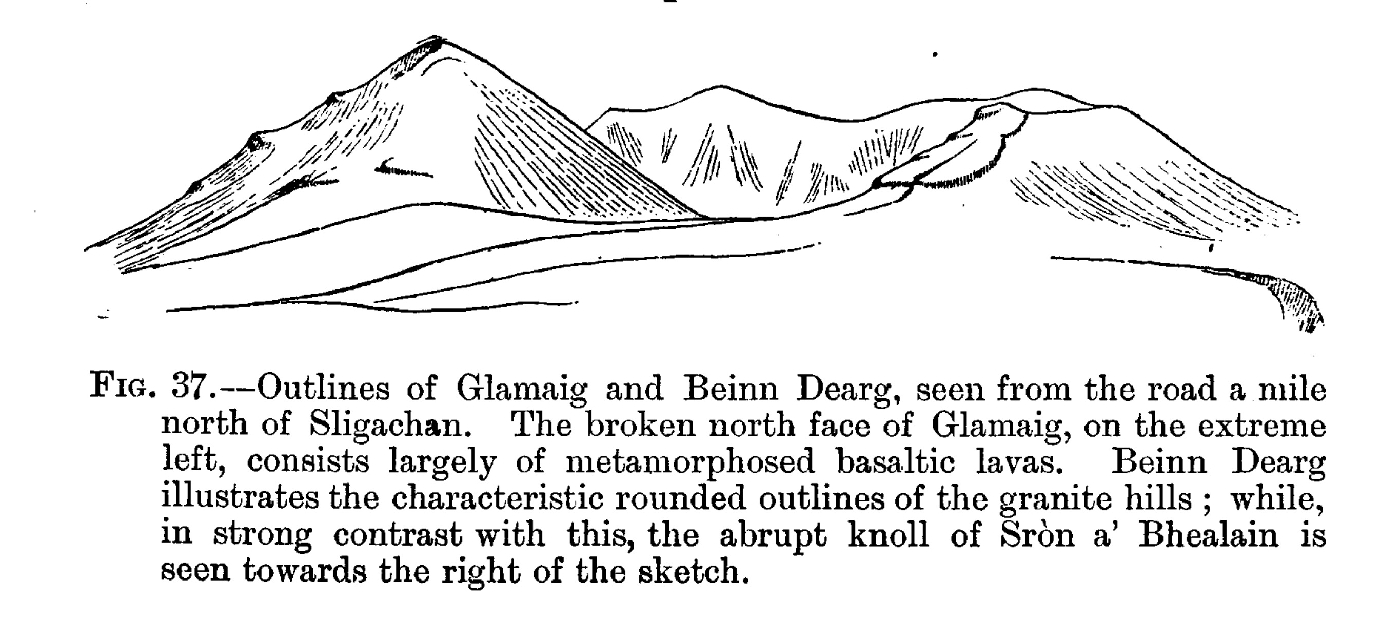
(Figure 37) Outlines of Glamaig and Beinn Dearg, with Sròn a' Bhealain

(Figure 38) Section from Sròn a' Bhealain to Allt Daraich and Glamaig

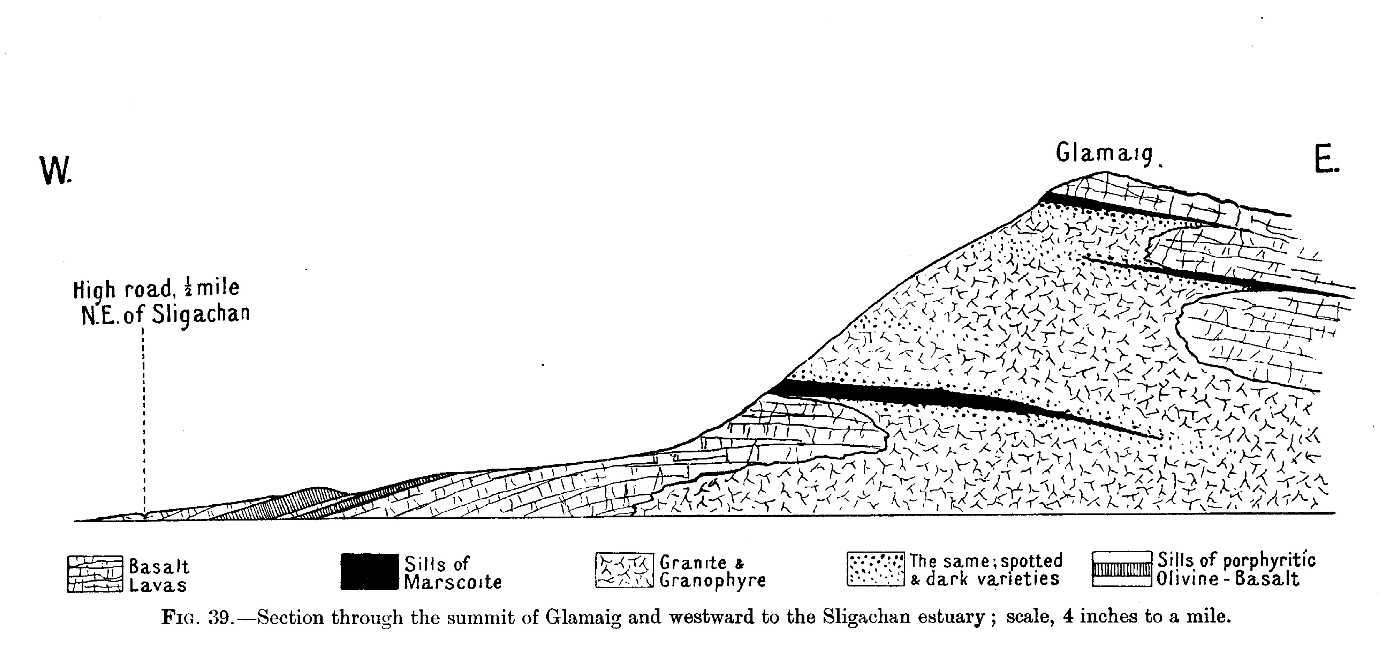
(Figure 39) Section through Glamaig and to the Sligachan estuary

(Figure 40) Ground-plan of part of Allt Daraich, near Sligachan

(Figure 41) Granophyre crowded with xenoliths of marscoite, from Allt Daraich

(Figure 42) Section through Cnoc Càrnach, showing composite triple sills

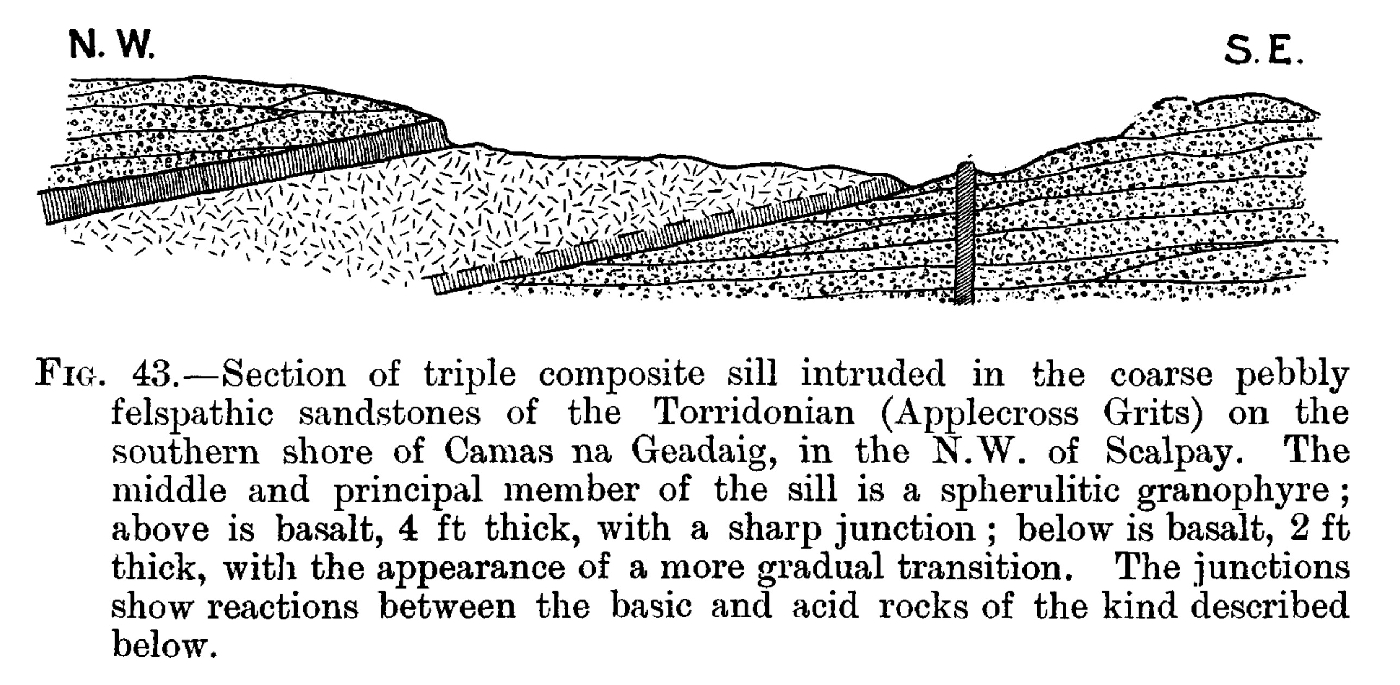
(Figure 43) Section of triple composite sill at Camas na Geadaig, Scalpay

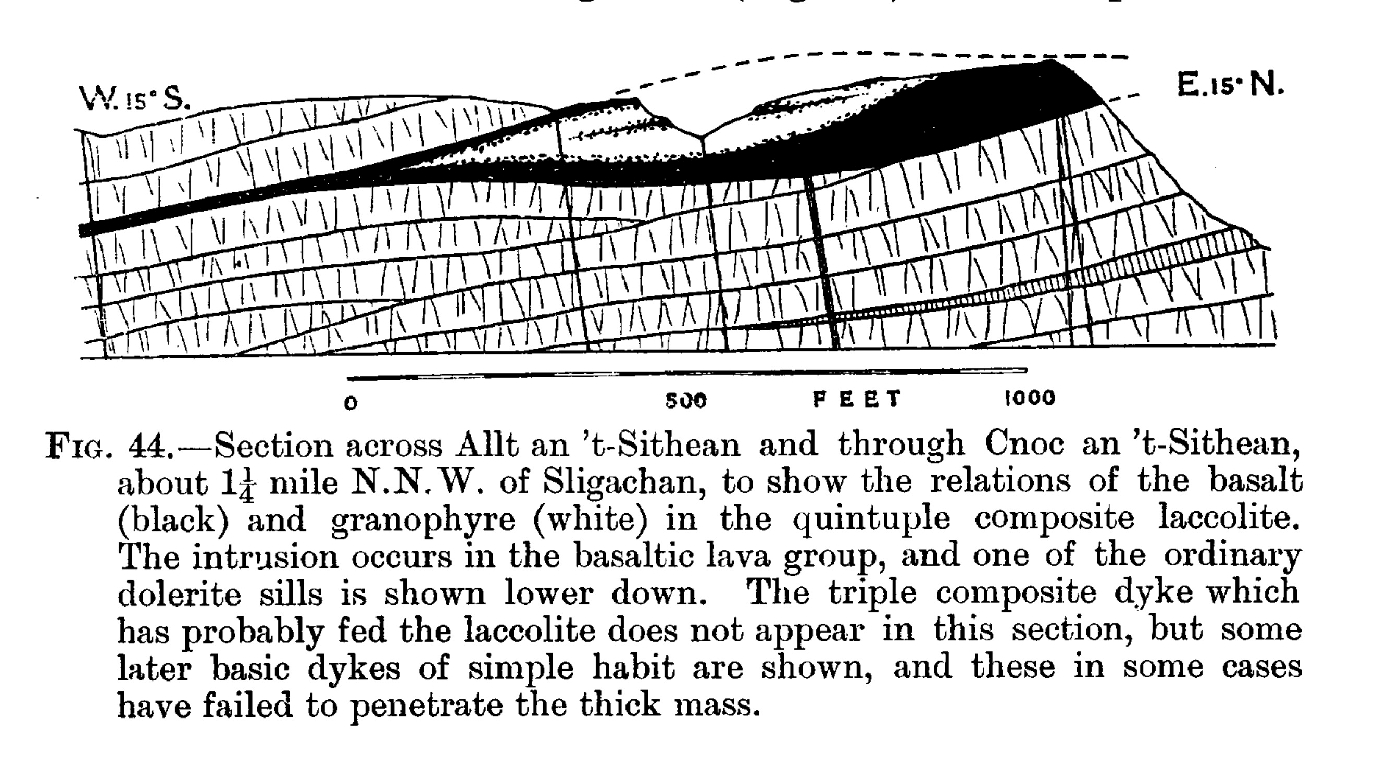
(Figure 44) Section of quintuple composite laccolite at Allt an' t- Sithean, near Sligachan

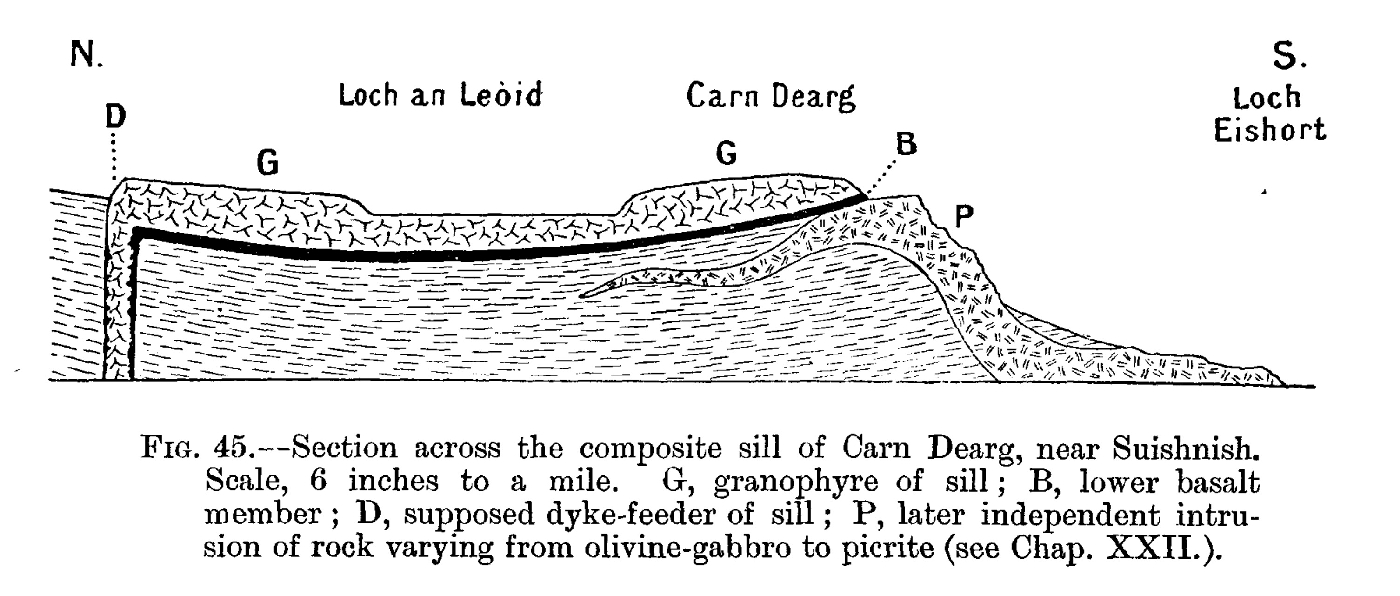
(Figure 45) Section across the composite sill of Carn Dearg, near Suishnish

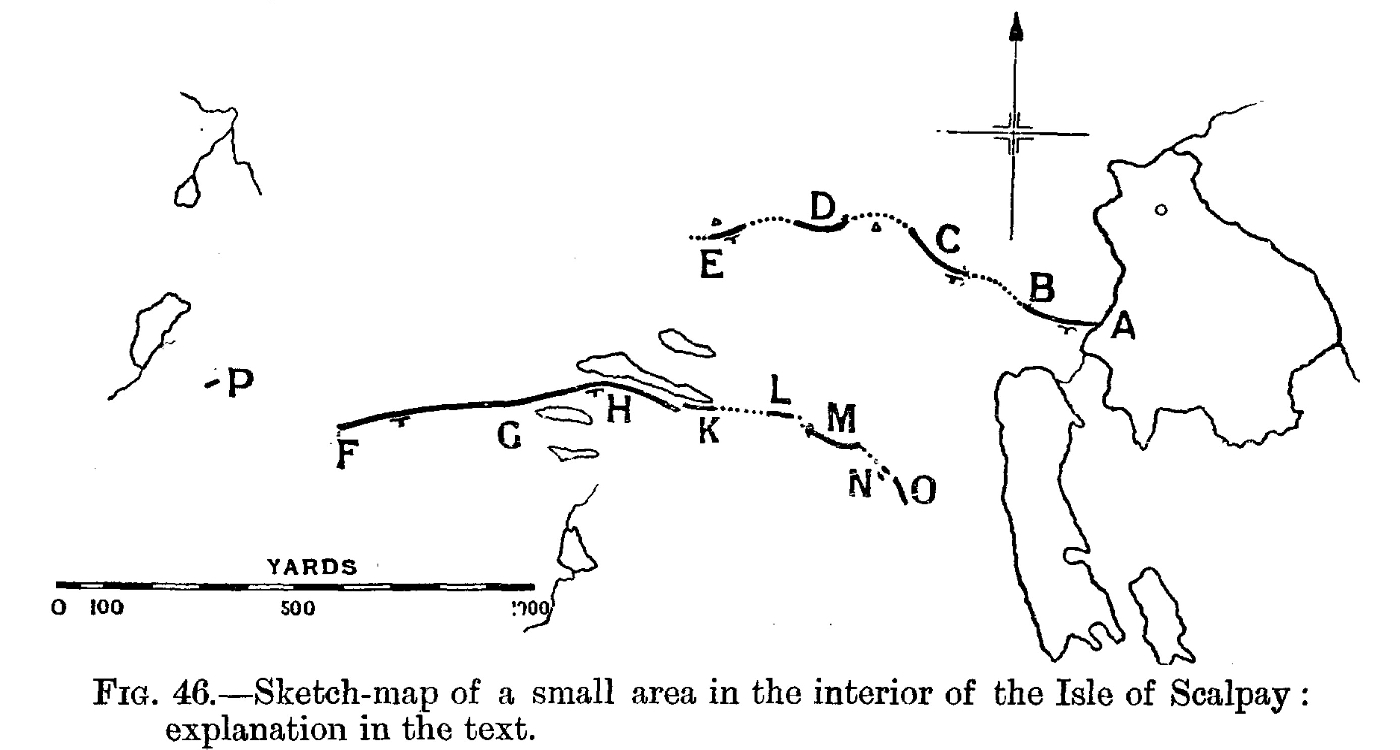
(Figure 46) Sketch-map of a small area in the interior of Scalpay

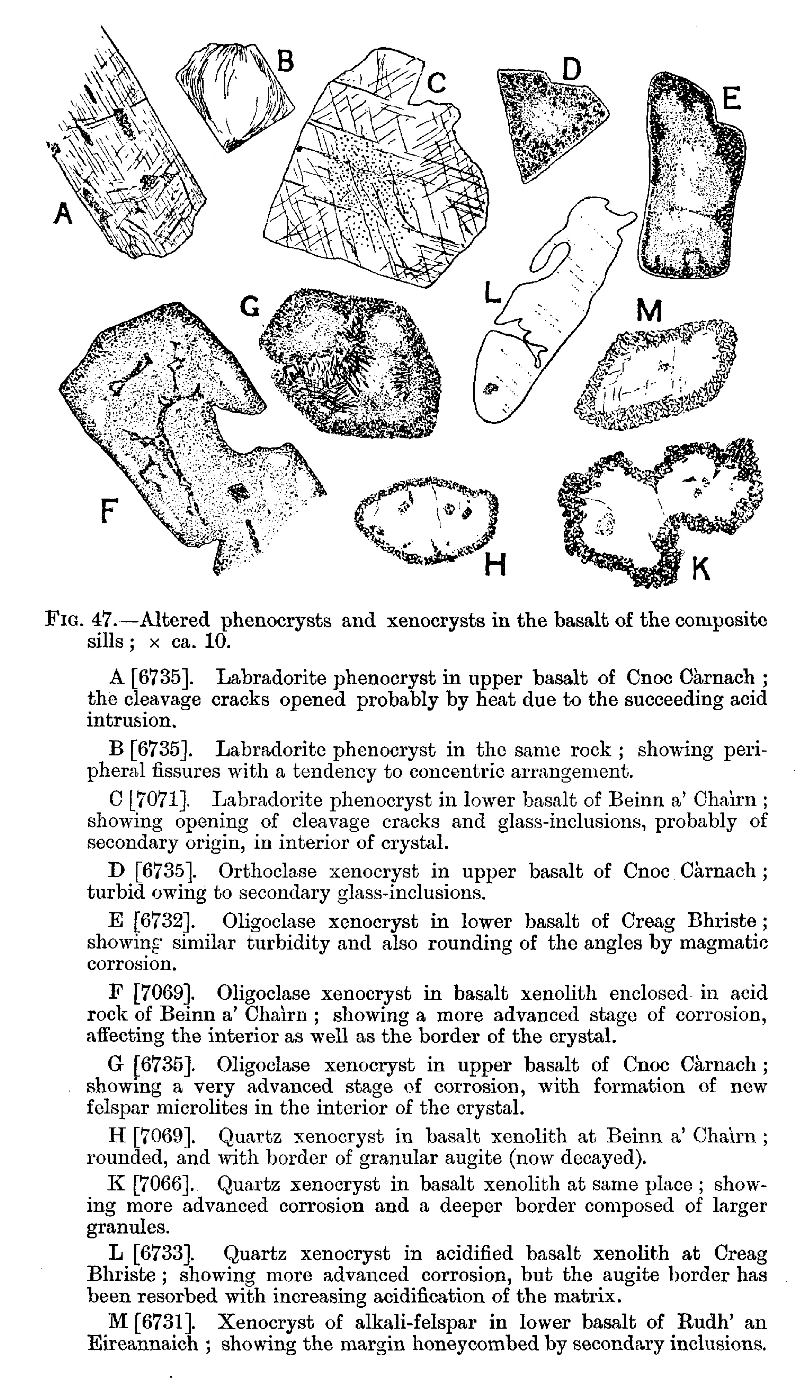
(Figure 47) Altered phenocrysts and xenocrysts in the basalt of the composite sills (from micro-sections)

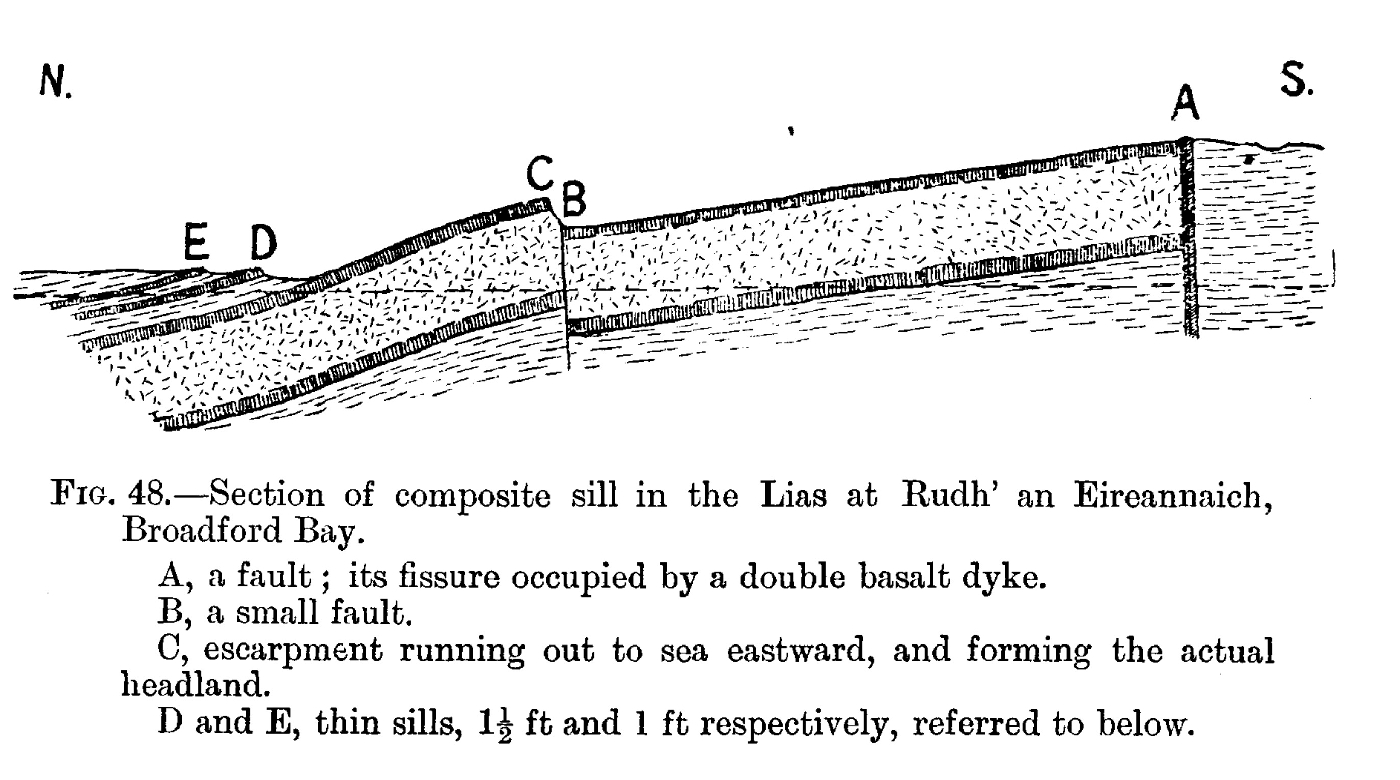
(Figure 48) Section of composite sill at Rudh' an Eireannaich, Broadford Bay

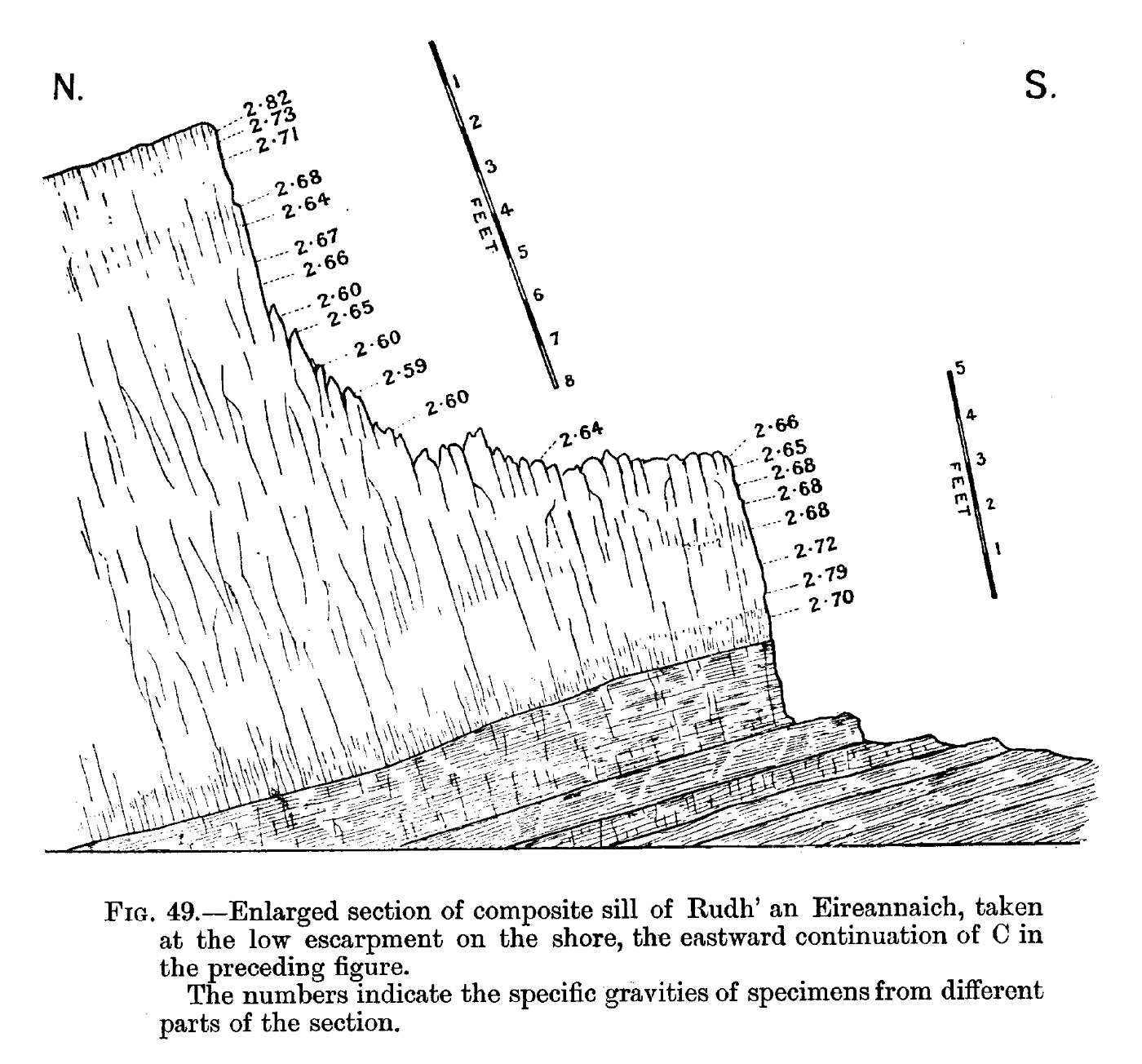
(Figure 49) Enlarged section of composite sill of Rudh' an Eireannaich

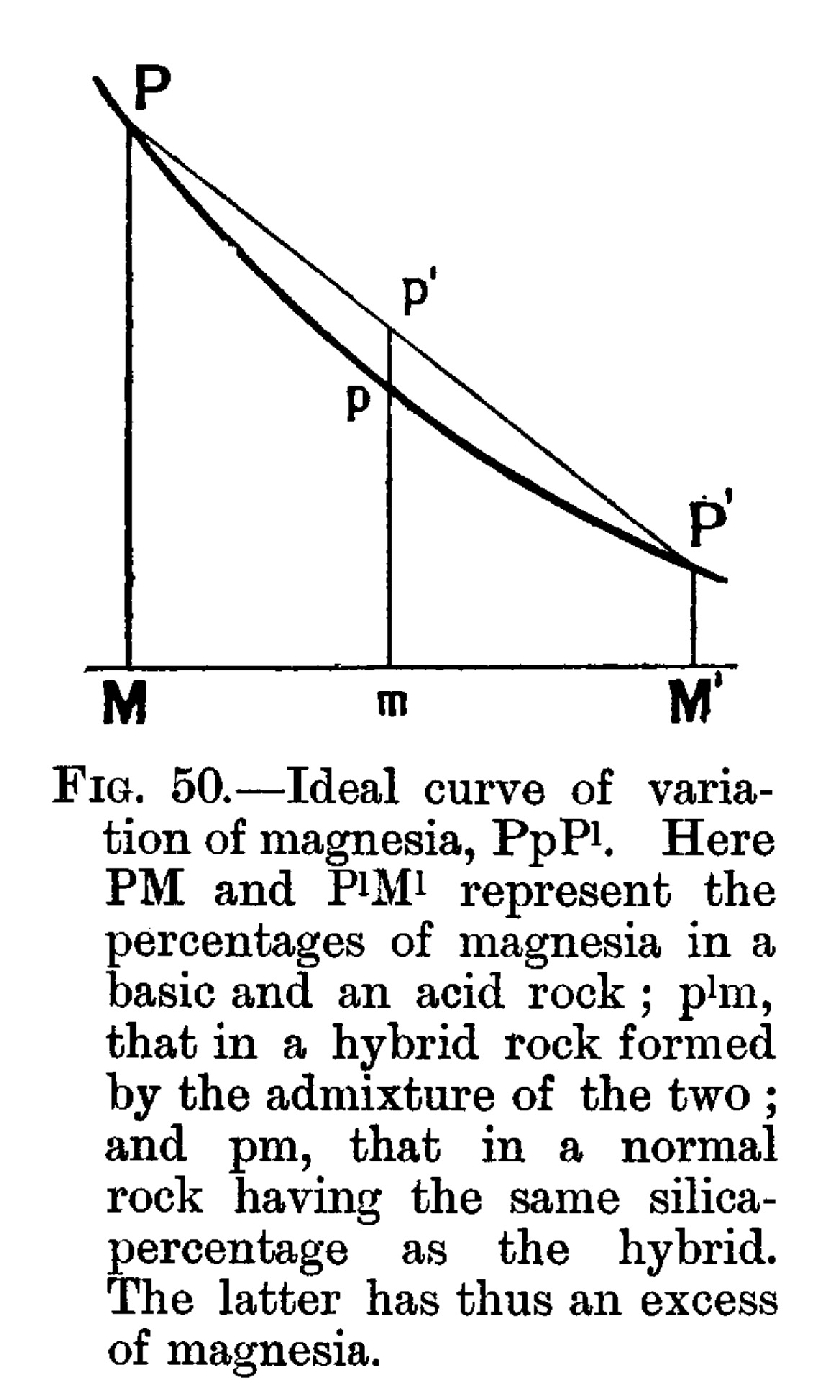
(Figure 50) Ideal curve of variation of magnesia

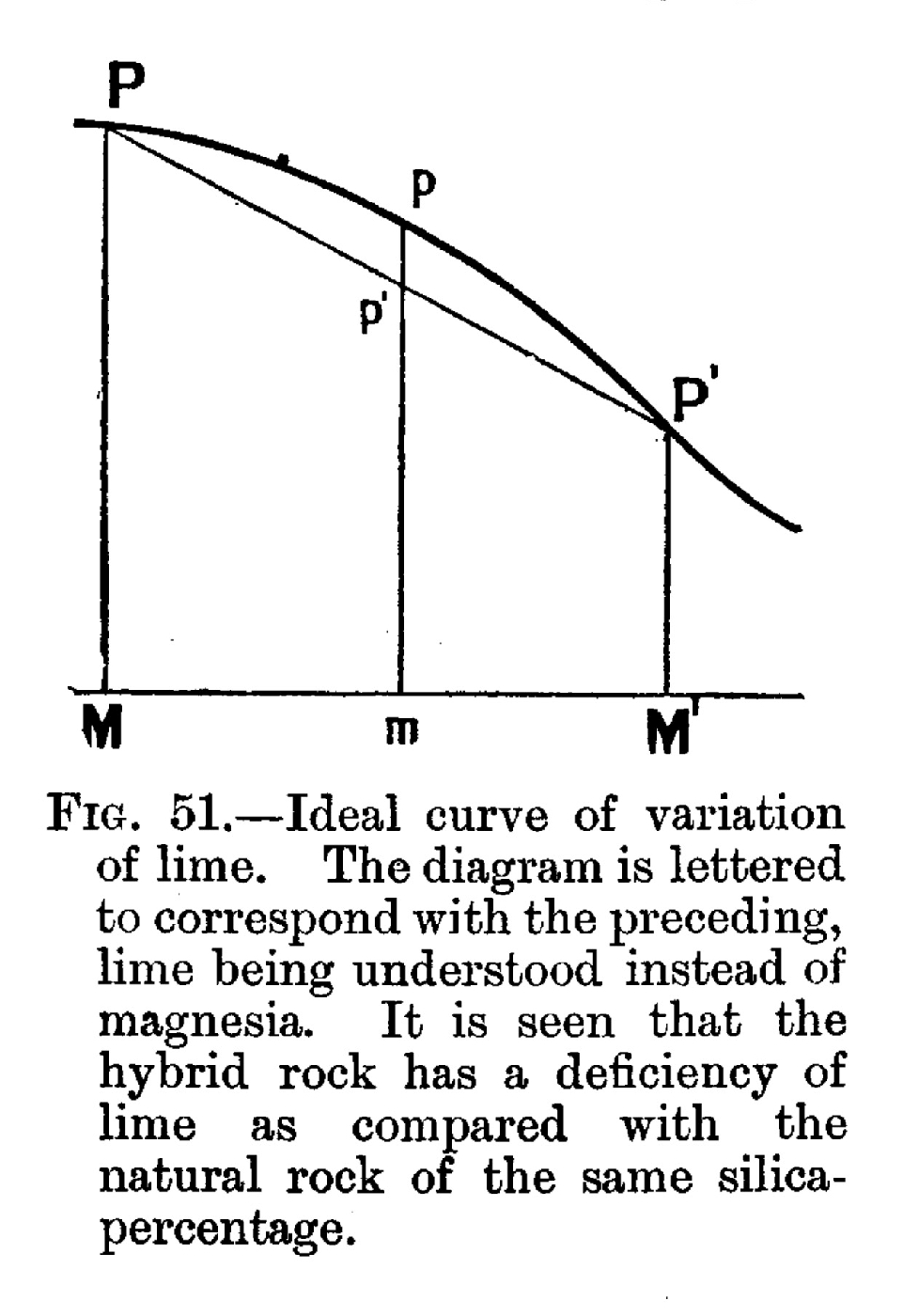
(Figure 51) Ideal curve of variation of lime

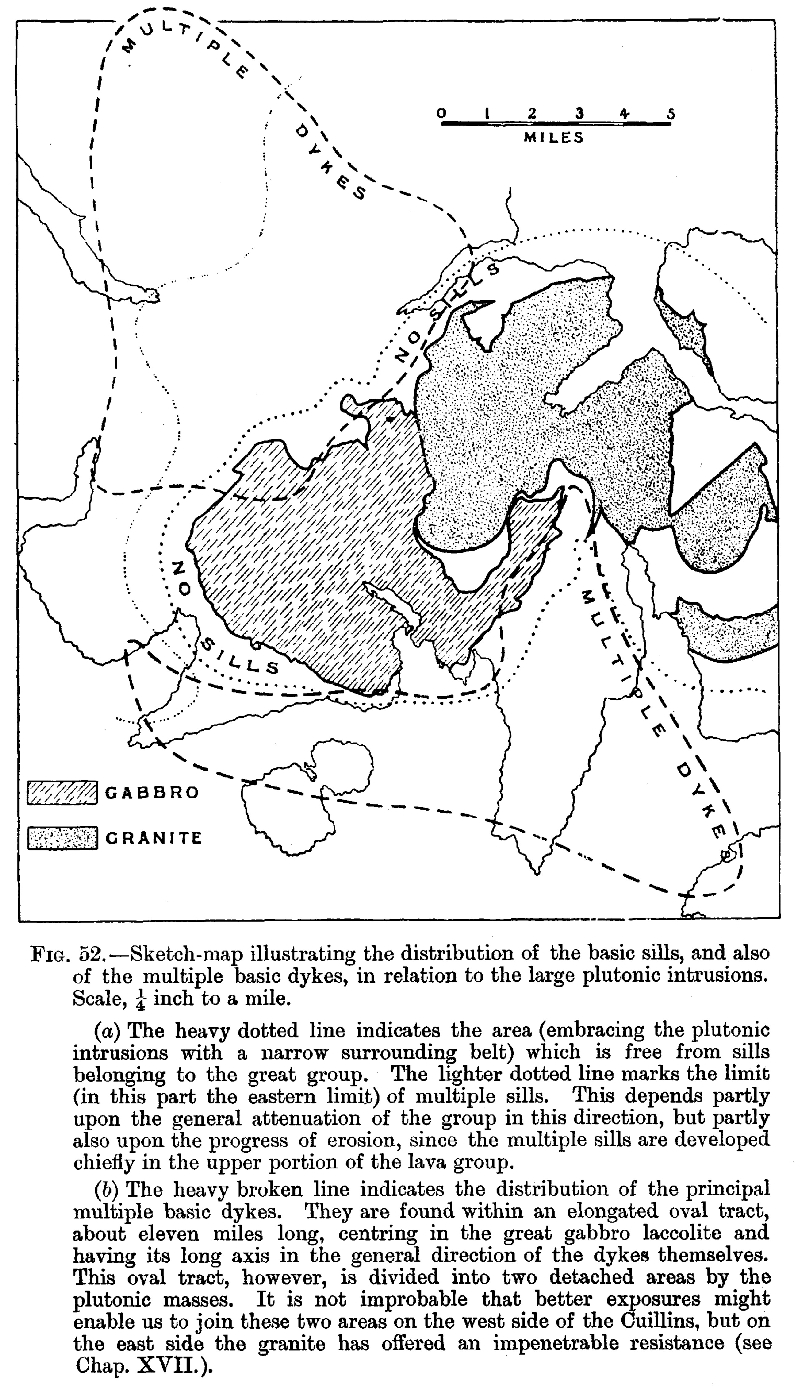
(Figure 52) Sketch-map illustrating the distribution of the basic sills and of the multiple basic dykes

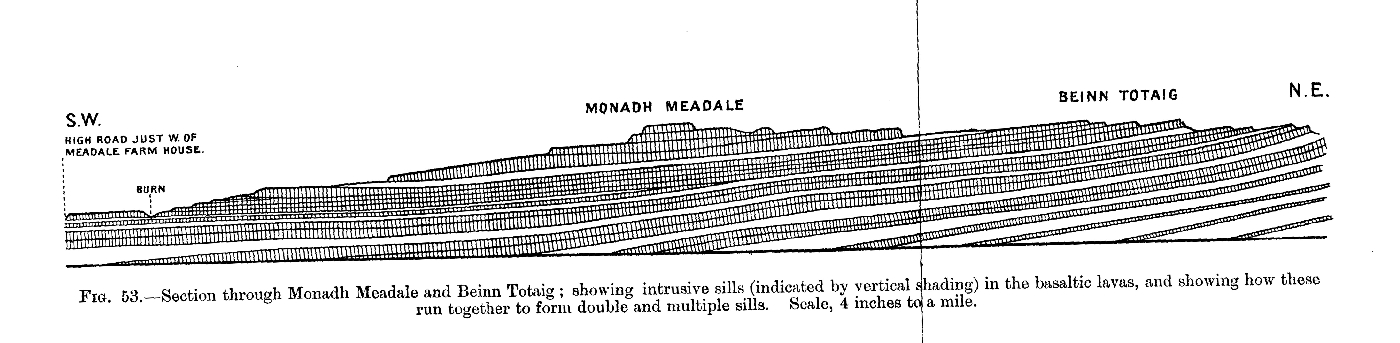
(Figure 53) Section through Monadh Meadale and Beinn Totaig

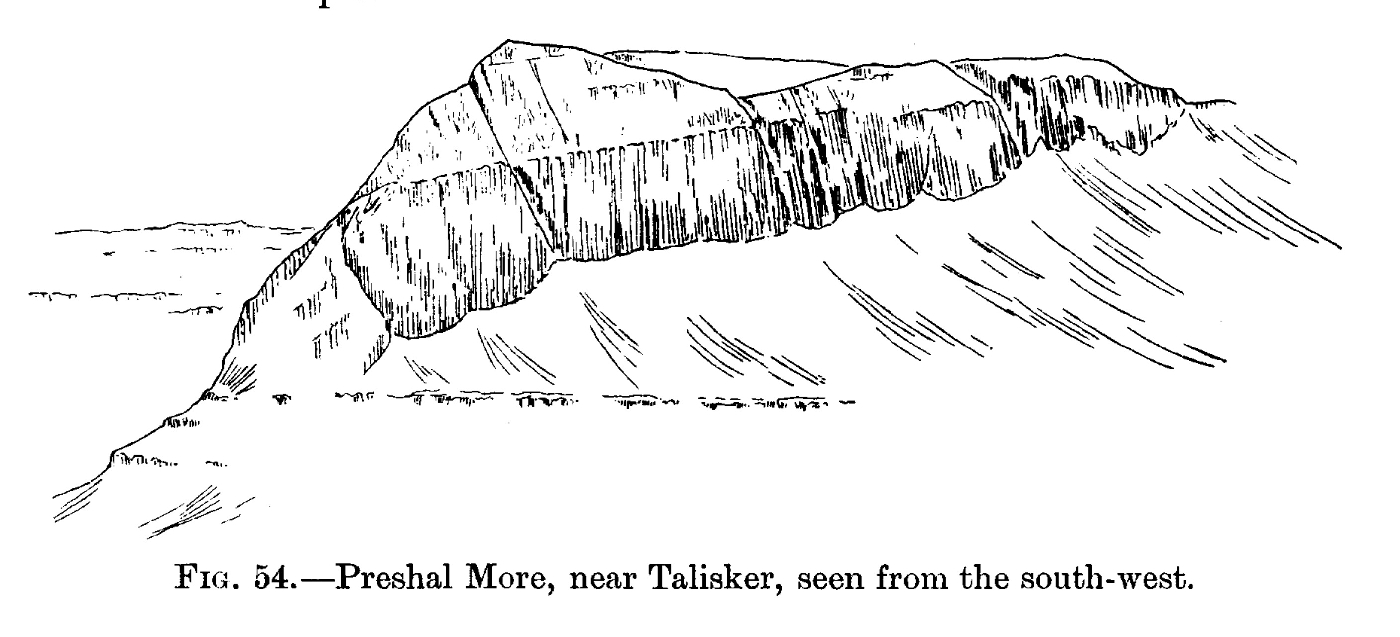
(Figure 54), Preshal More, near Talisker, seen from the south-west

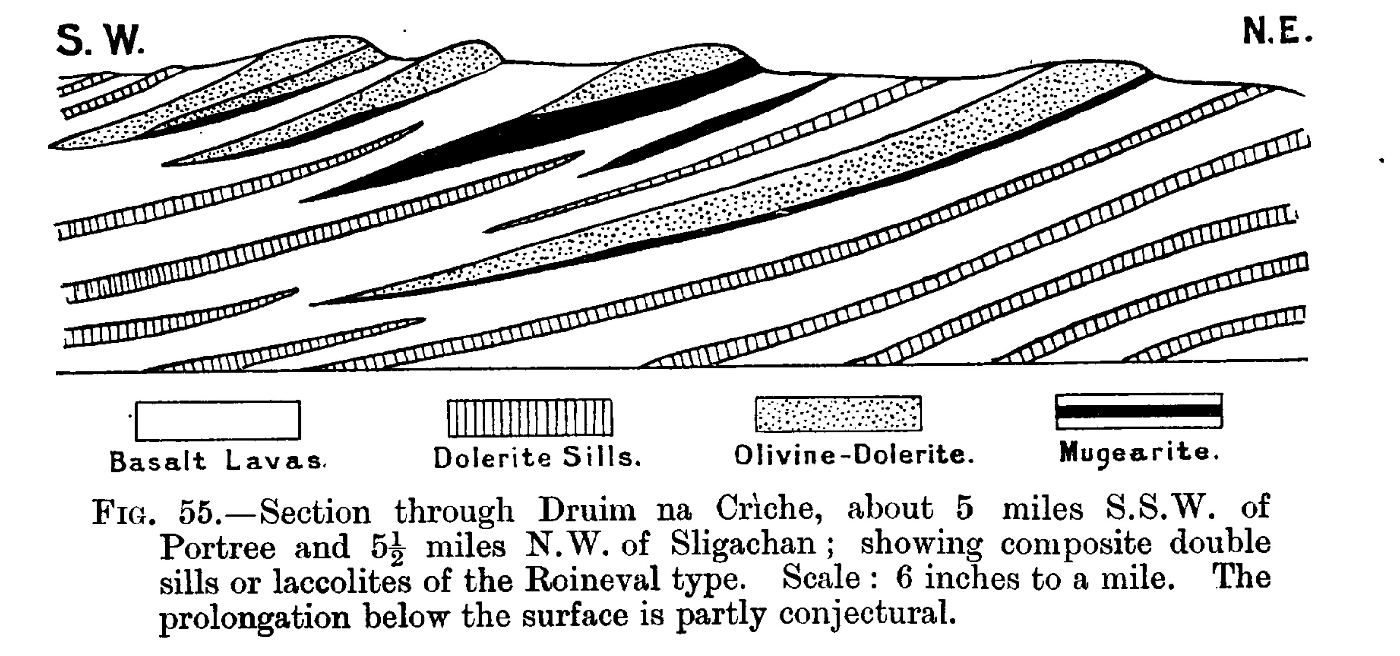
(Figure 55) Section through Druim na Creiche

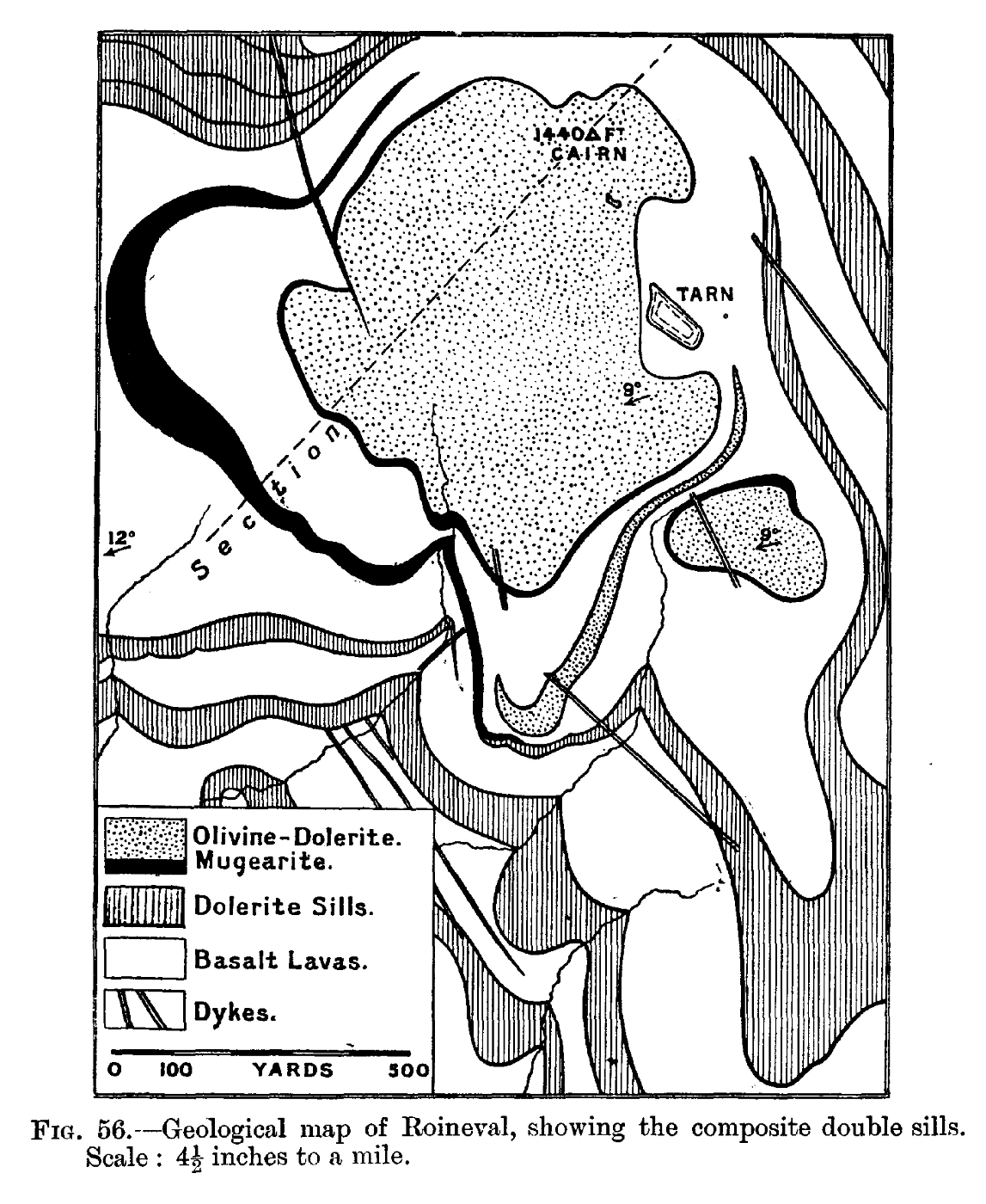
(Figure 56) Geological map of Roineval

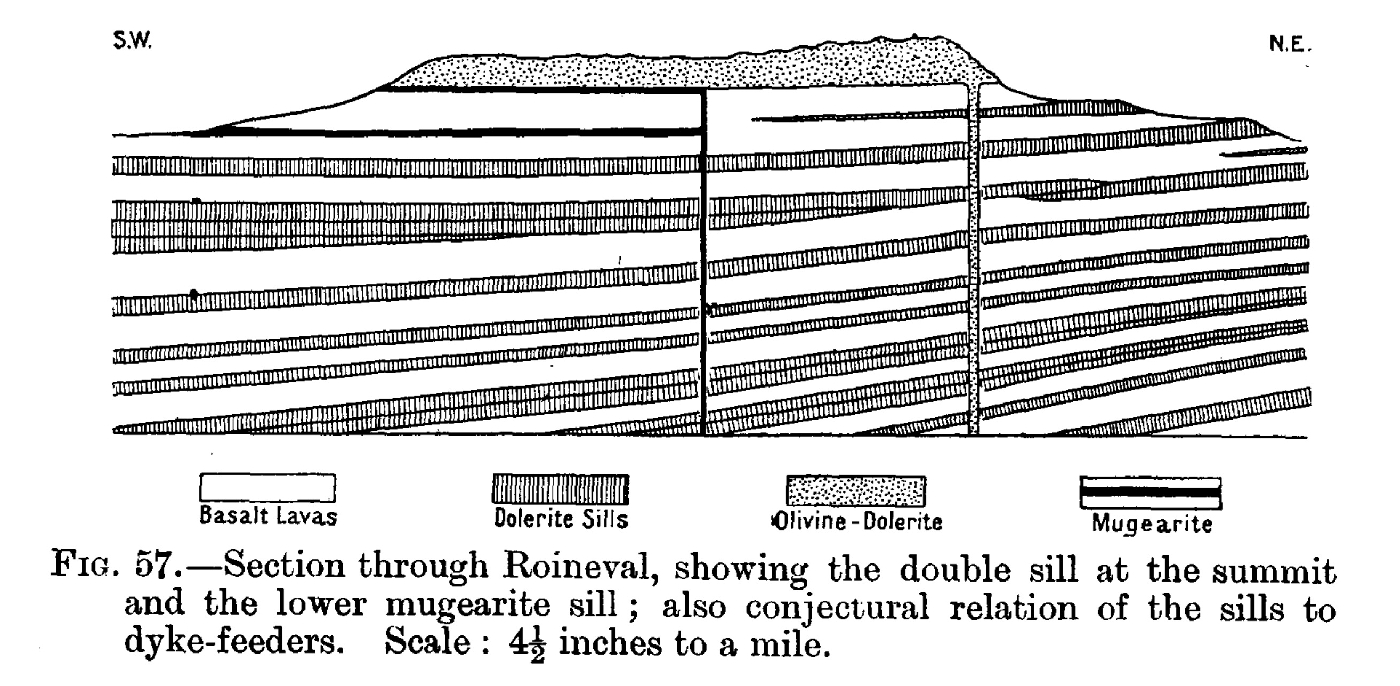
(Figure 57) Section through Roineval

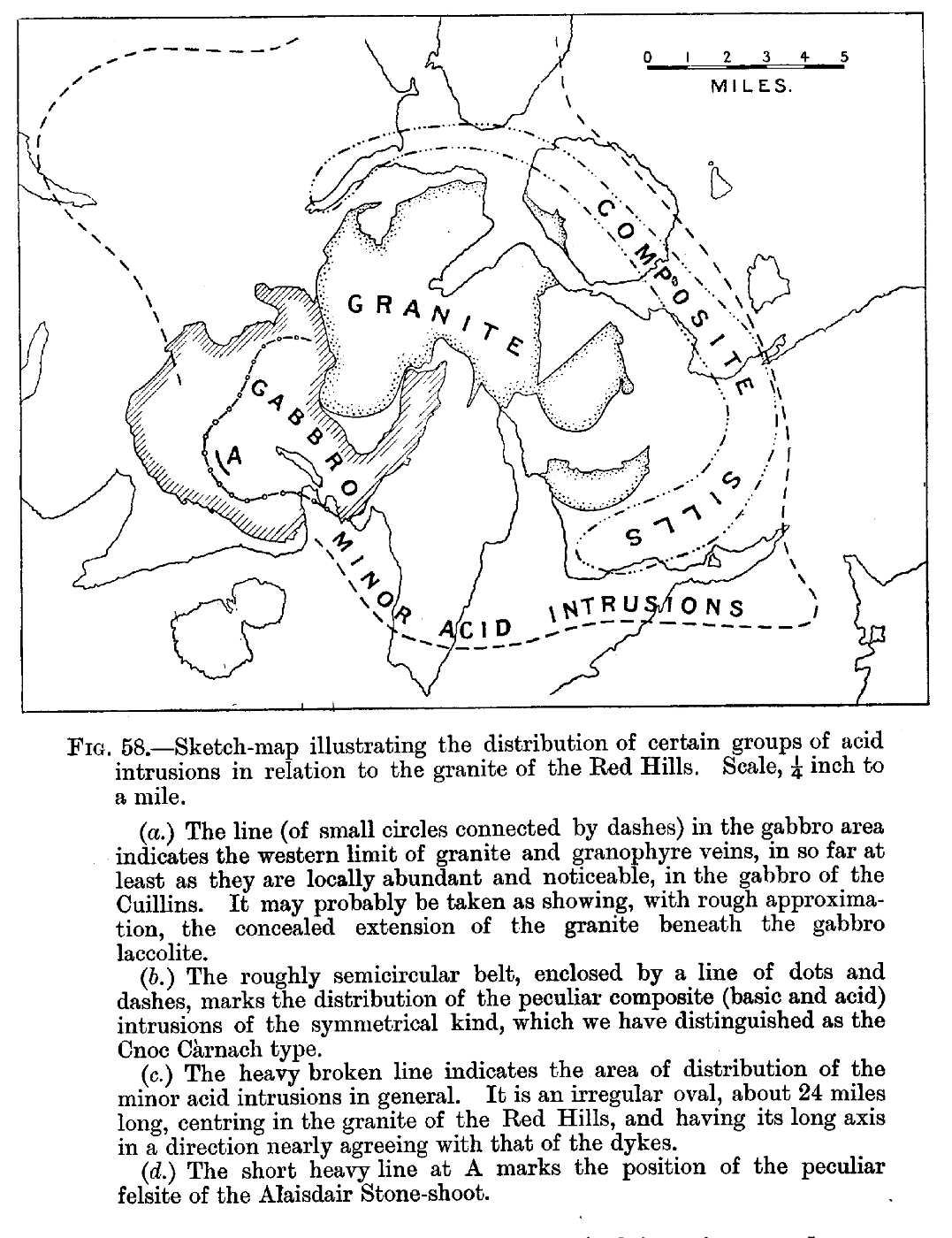
(Figure 58) Sketch-map illustrating the distribution of certain groups of acid intrusions

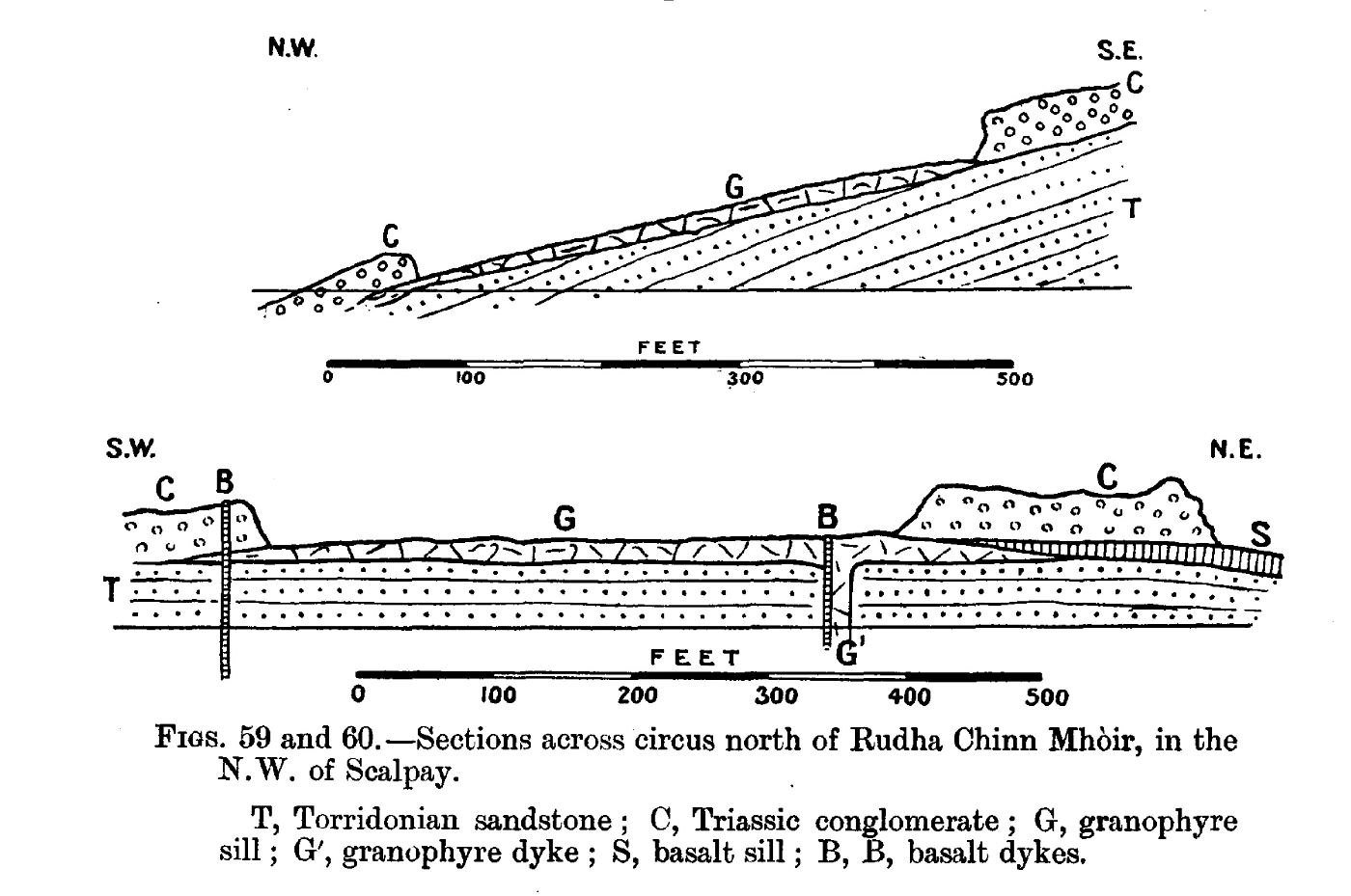
(Figure 59) and 60 Sections across circus north of Rudha Chinn Mhòir, Scalpay

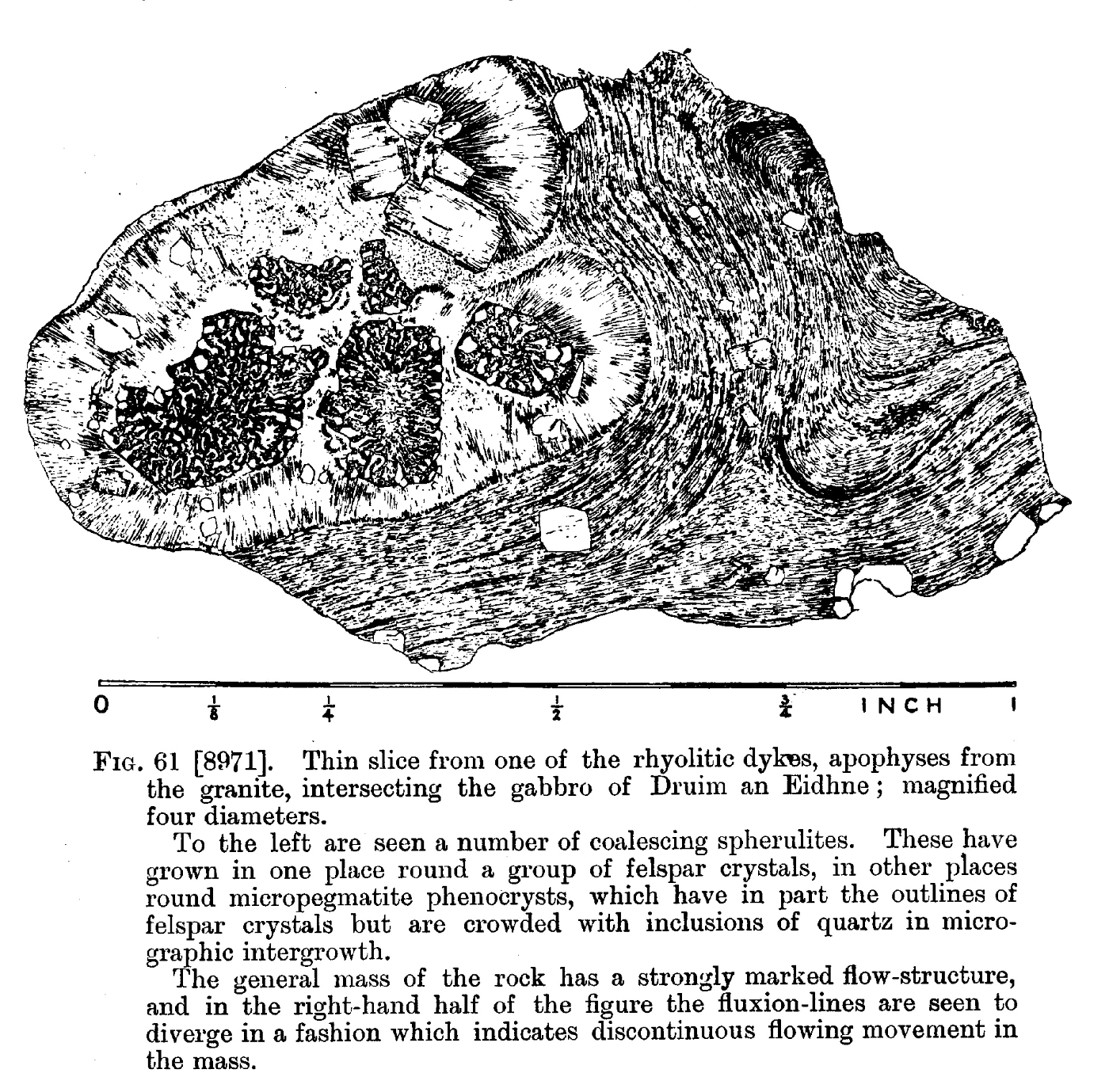
(Figure 61) Micro-section: rhyolitic dyke, Druim an Eidhne

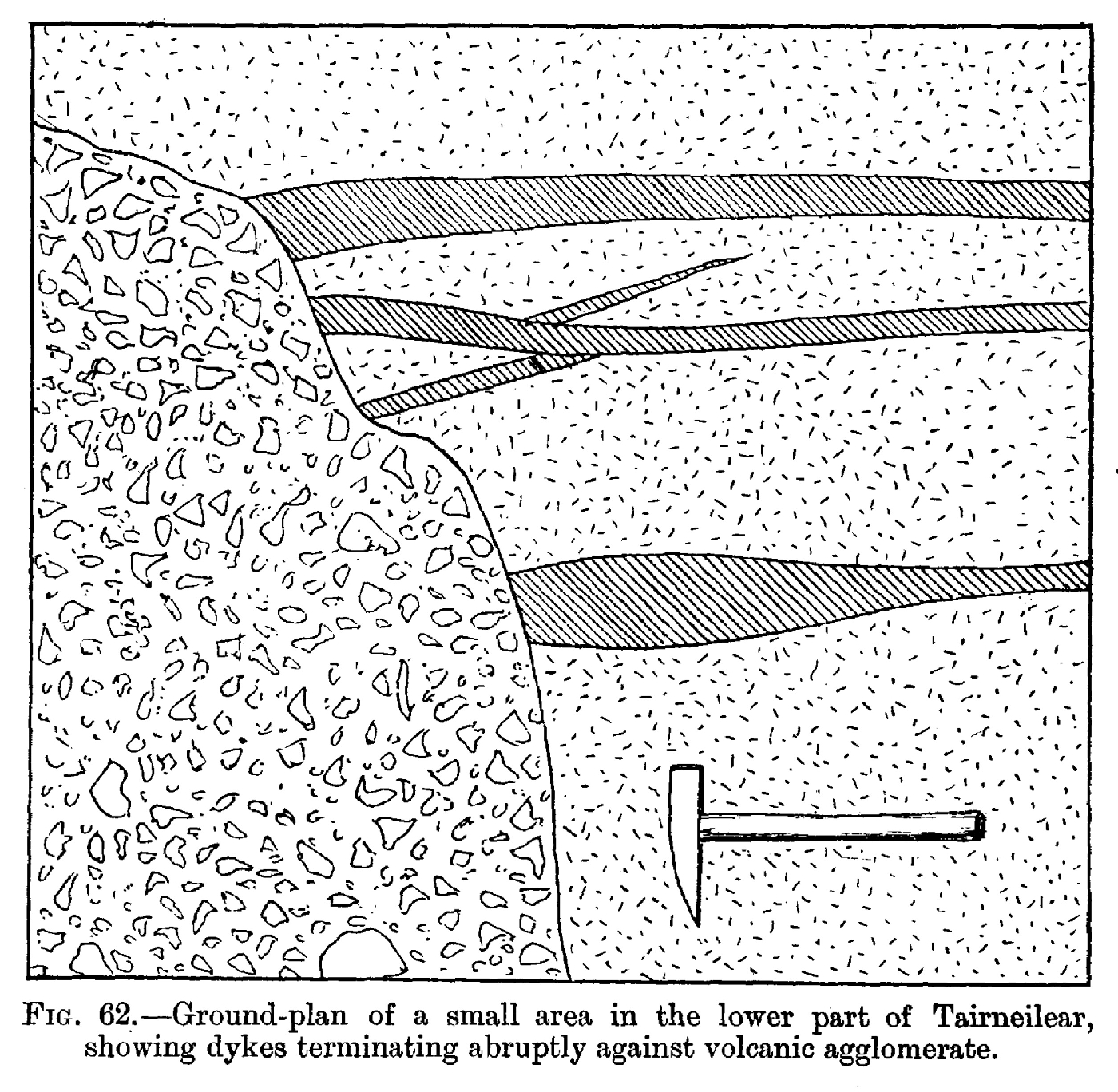
(Figure 62) Ground-plan in Tairneilear, showing dykes terminating abruptly against volcanic agglomerate

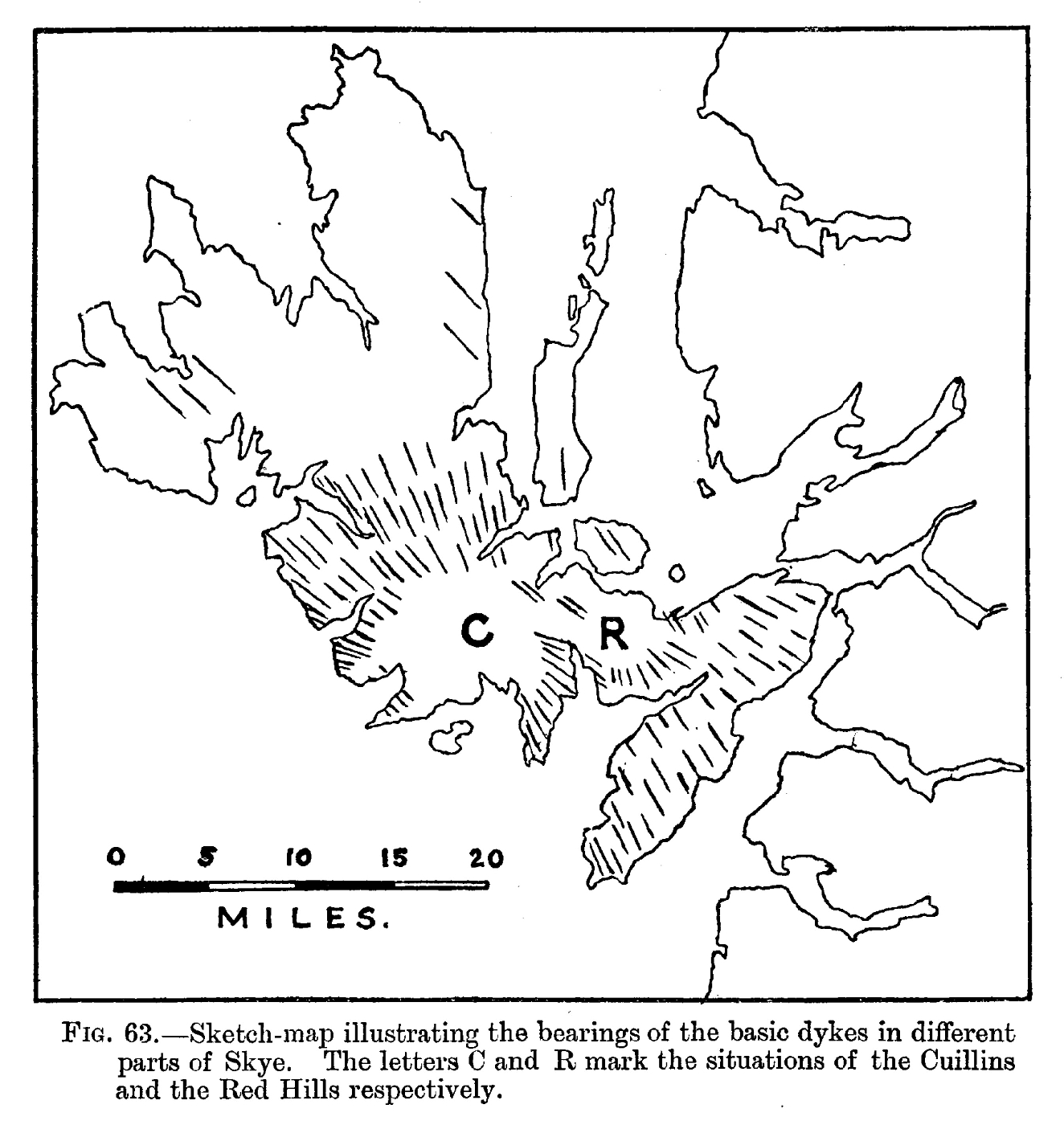
(Figure 63) Sketch-map illustrating the bearings of the basic dykes in Skye

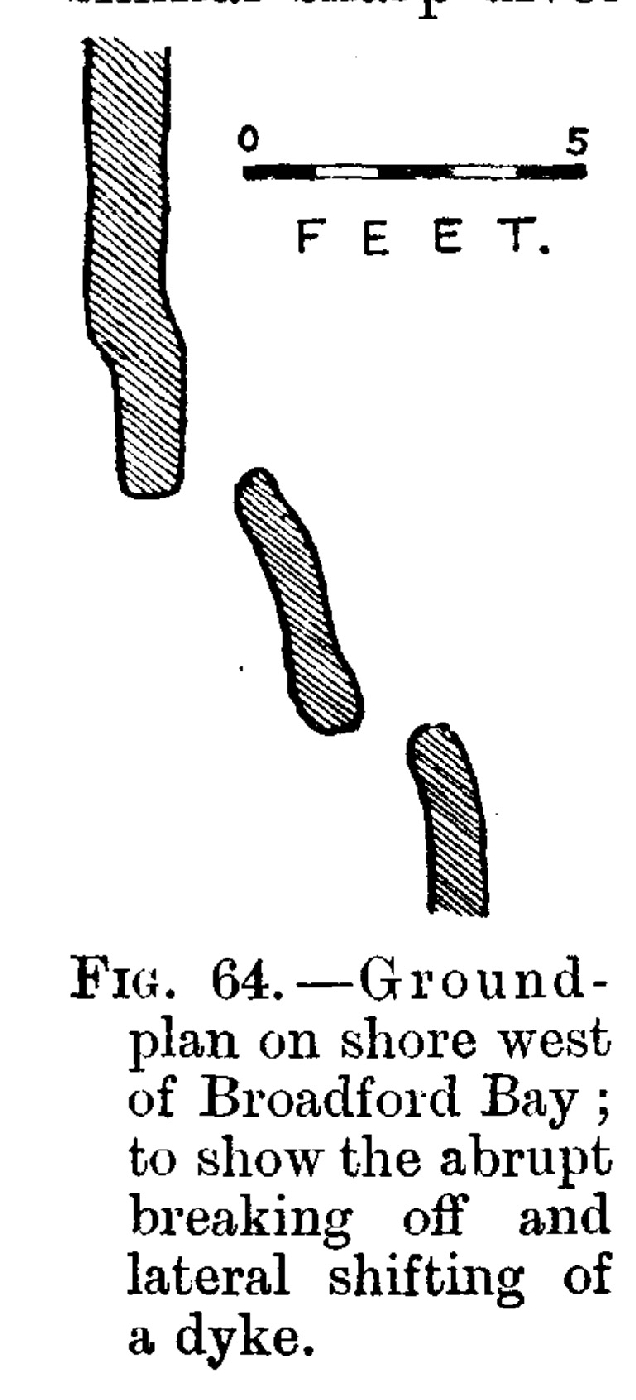
(Figure 64) to 66 Ground-plans on shore west of Broadford Bay, to show lateral shifting of dykes

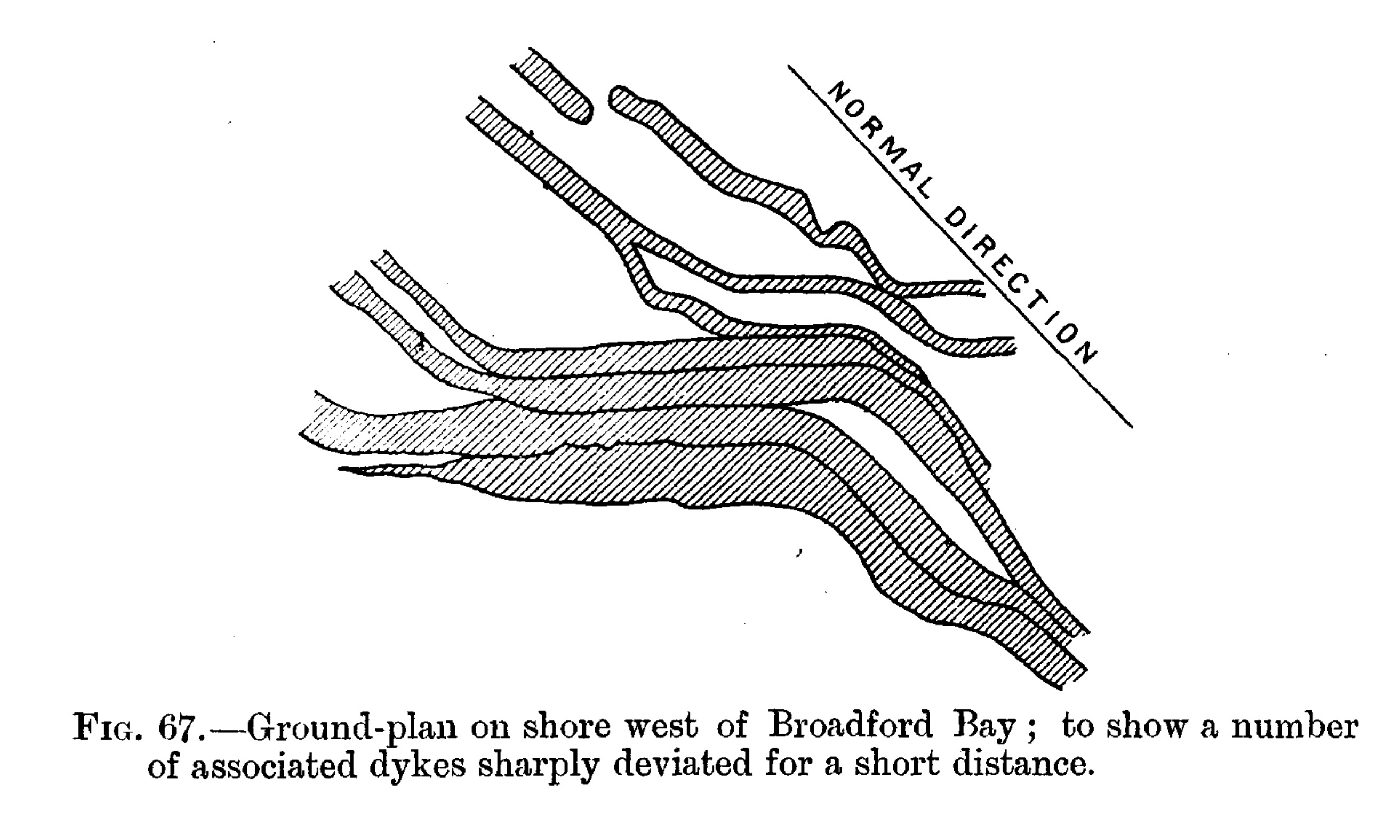
(Figure 67) Ground-plan on shore west of Broadford Bay, to show a number of dykes sharply deviated

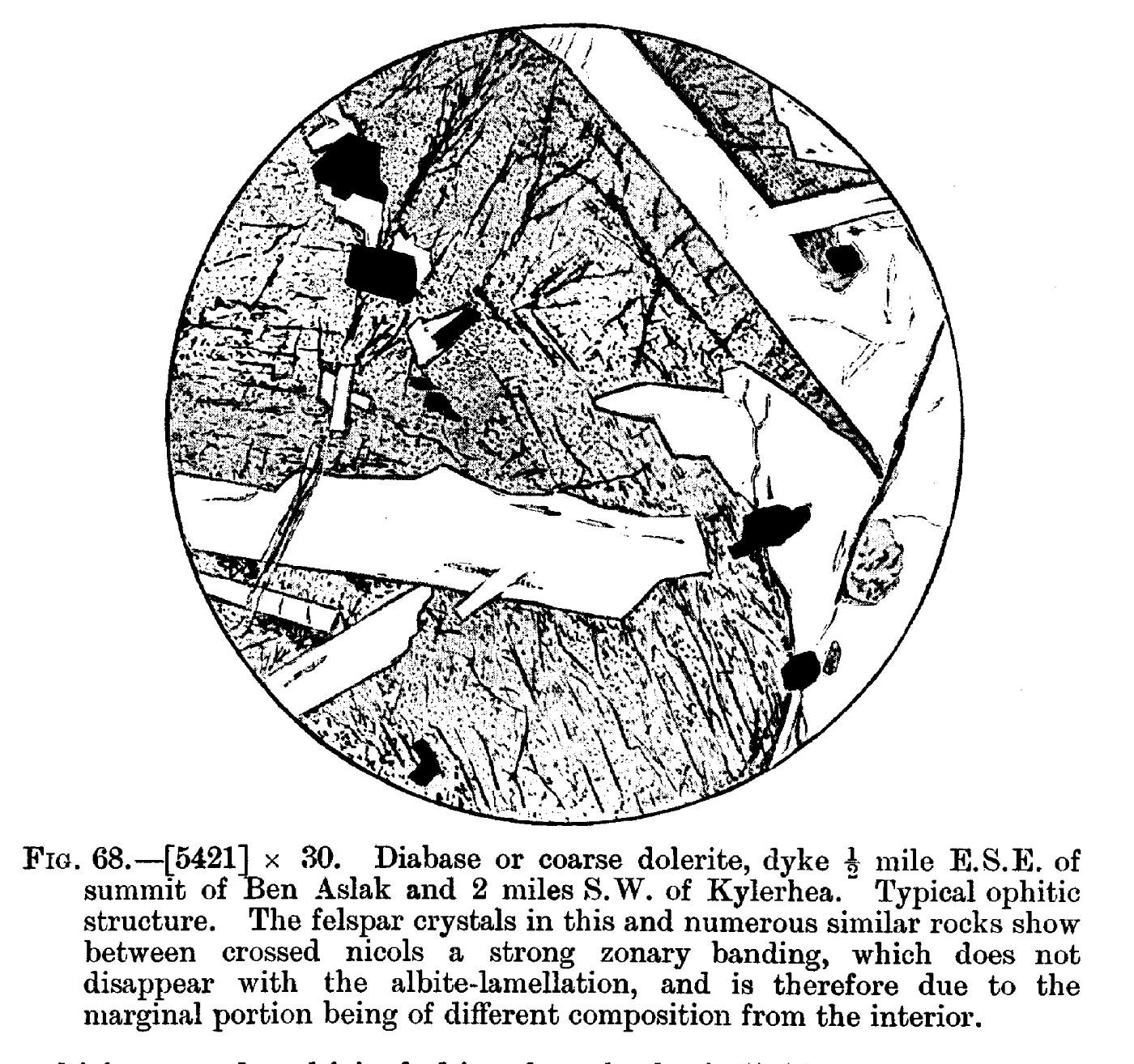
(Figure 68) Micro-section: diabase dyke, Ben Aslak

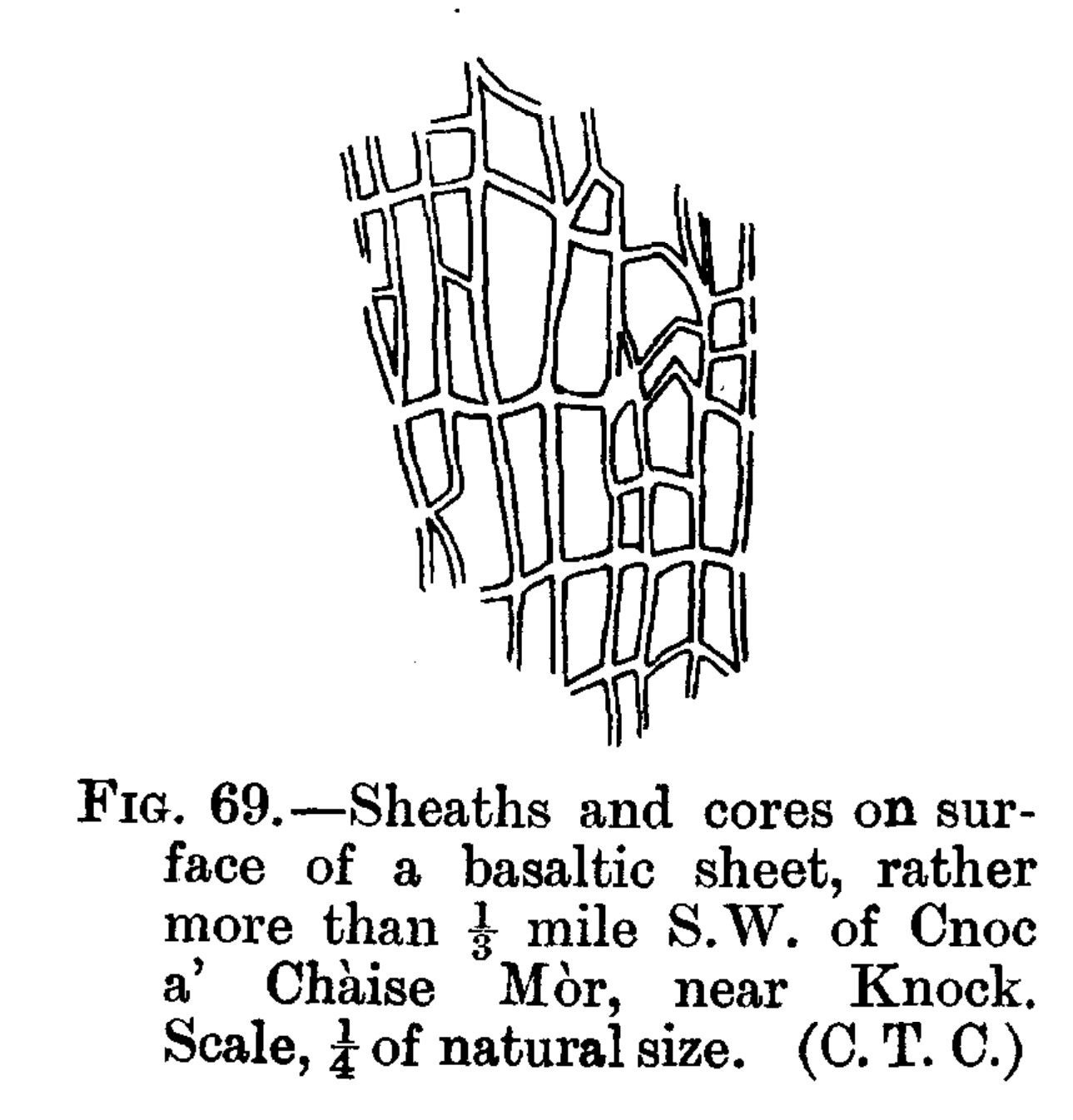
(Figure 69) and 70 Sheaths and cores on surface of a basaltic sheet, Cnoc a' Chàise, near Knock

(Figure 71) Micro-section: margin of small basalt dyke, Ben Lee, near Sligachan

(Figure 72) Sketch-map to illustrate the distribution and inclination of the inclined basic sheets of the Cuillins

(Figure 73) Section across the gabbro area to show the vertical distribution of the inclined sheets

(Figure 74) Section to illustrate the shifting of an inclined basic sheet, Loch Scavaig

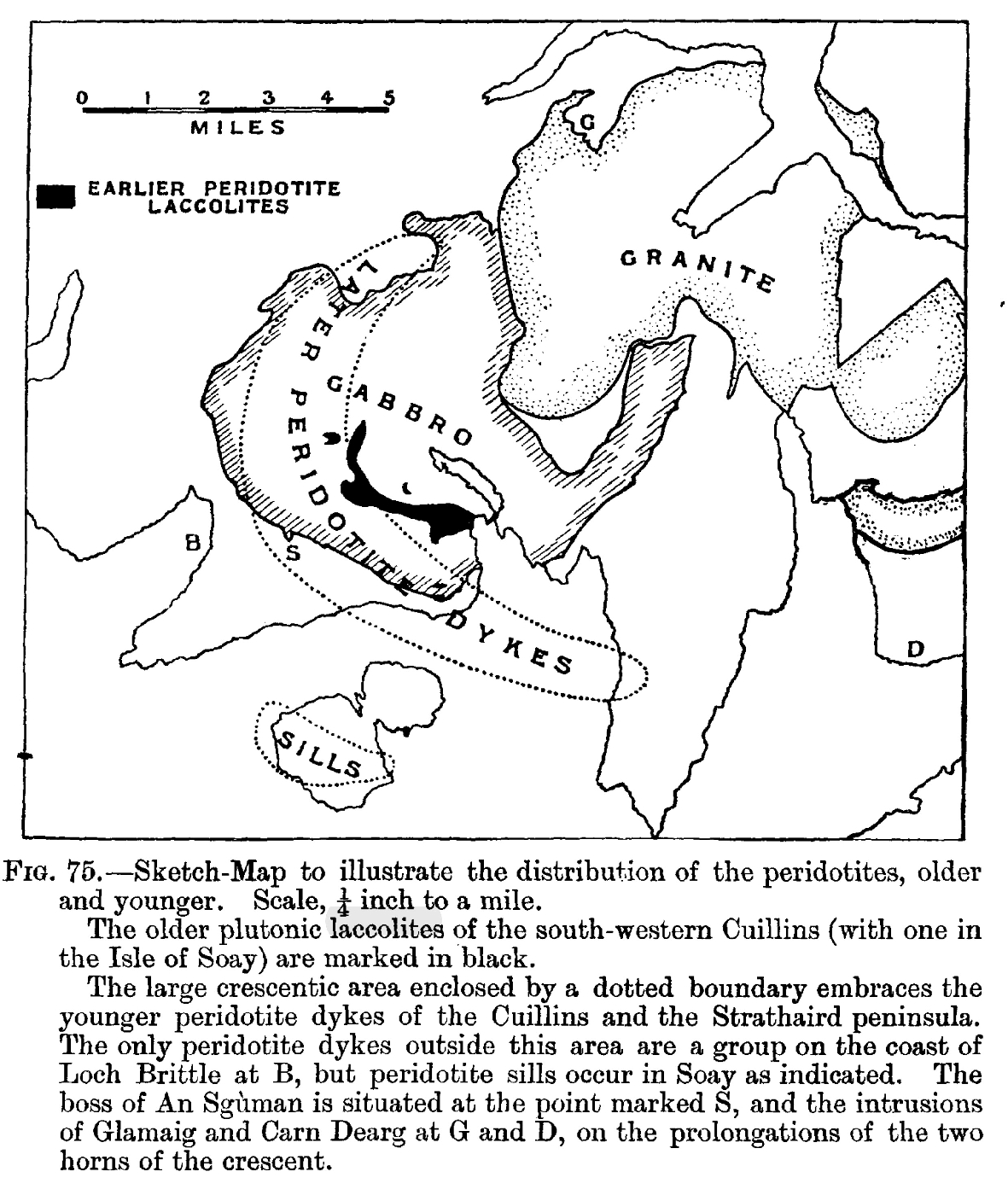
(Figure 75) Sketch-map to illustrate the distribution of the peridotites, older and younger

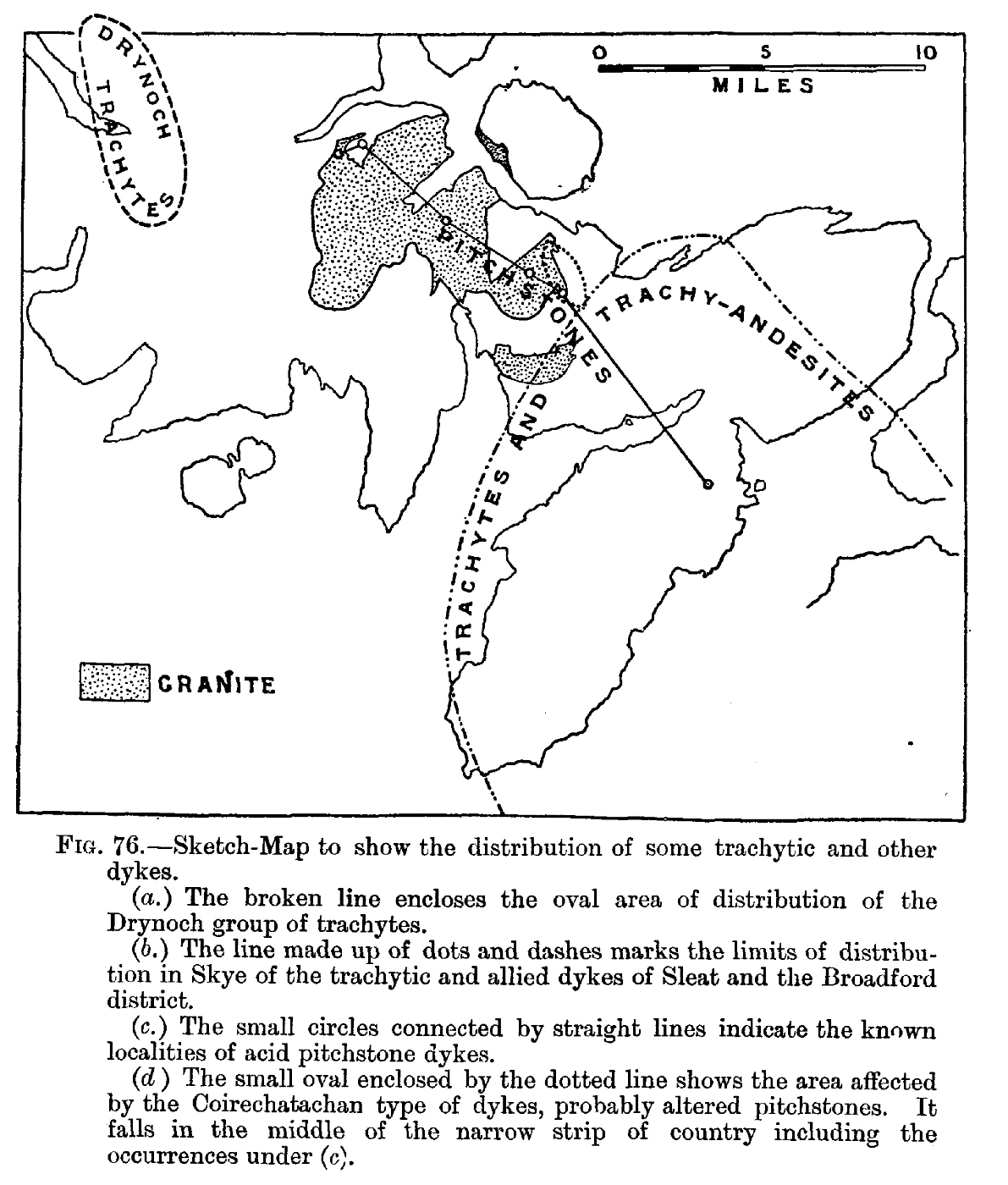
(Figure 76) Sketch-map to show the distribution of some trachytic and other dykes

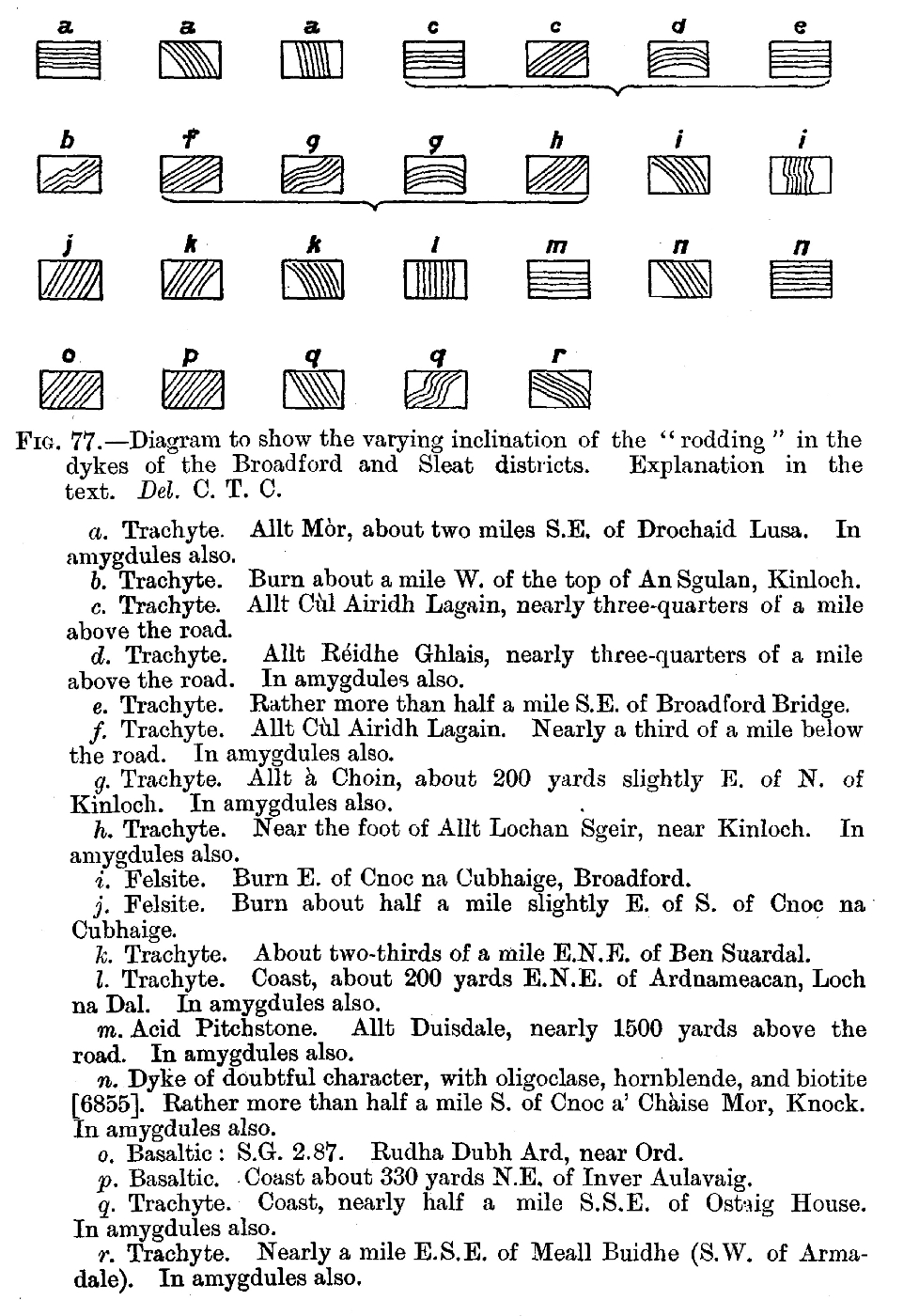
(Figure 77) Diagram to show the varying inclination of the 'rodding' in the dykes of the Broadford and Sleat districts

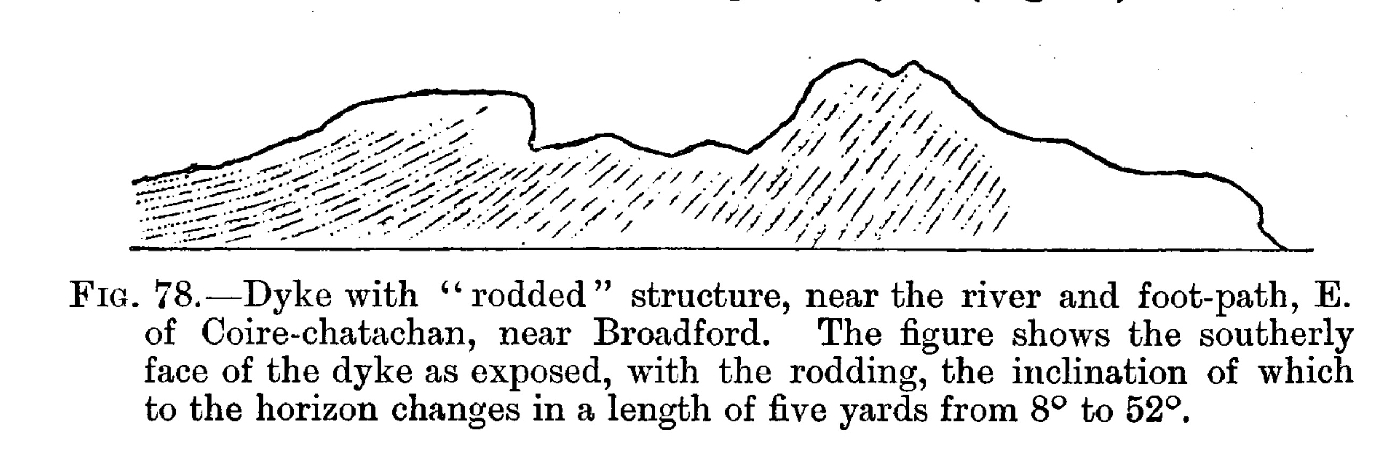
(Figure 78) Dyke with 'rodded' structure, near Coire-chatachan

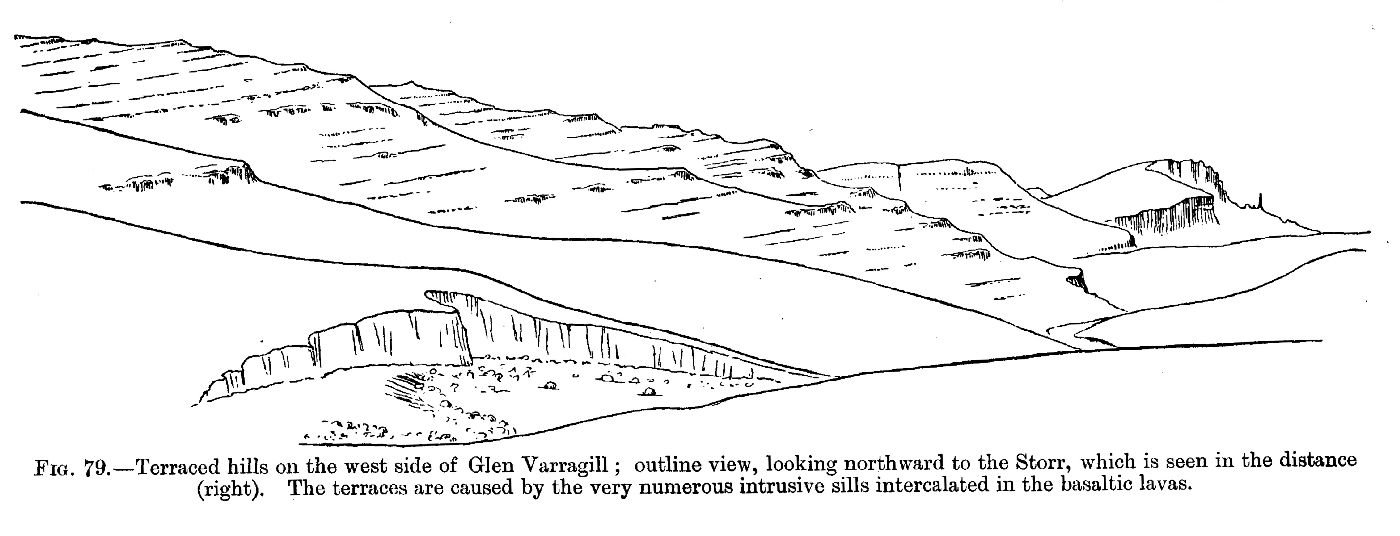
(Figure 79) Terraced hills on the west side of Glen Varragill

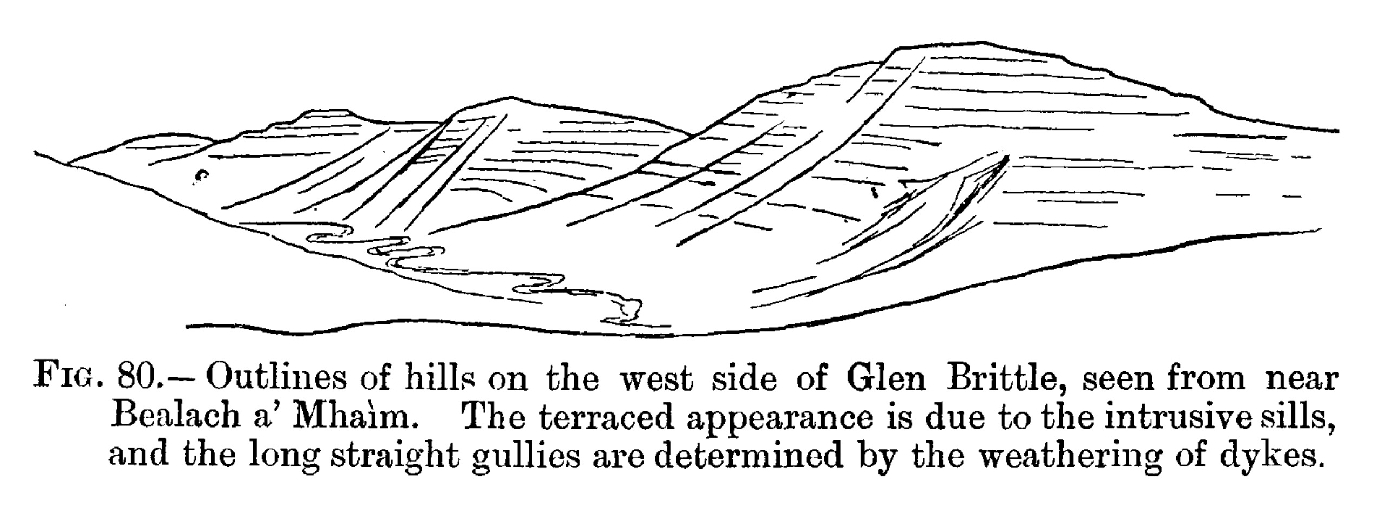
(Figure 80) Outlines of hills on the west side of Glen Brittle

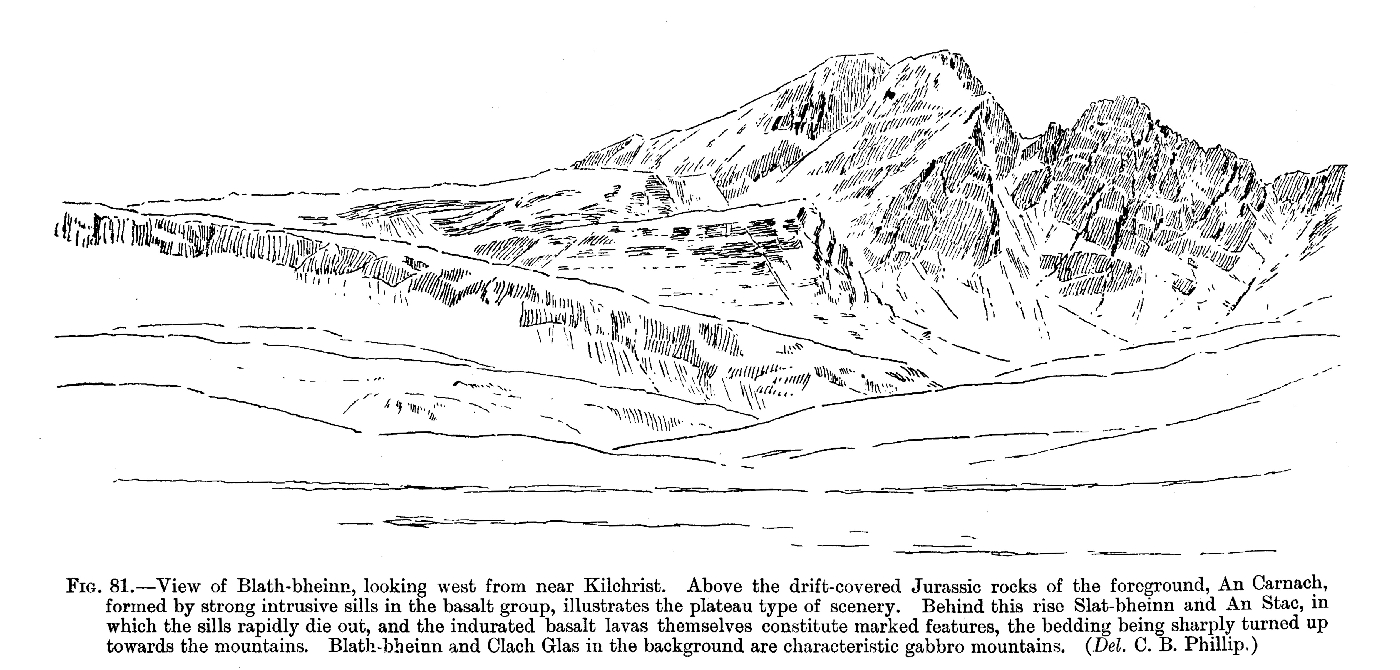
(Figure 81) View of Blath bheinn from Kilchrist

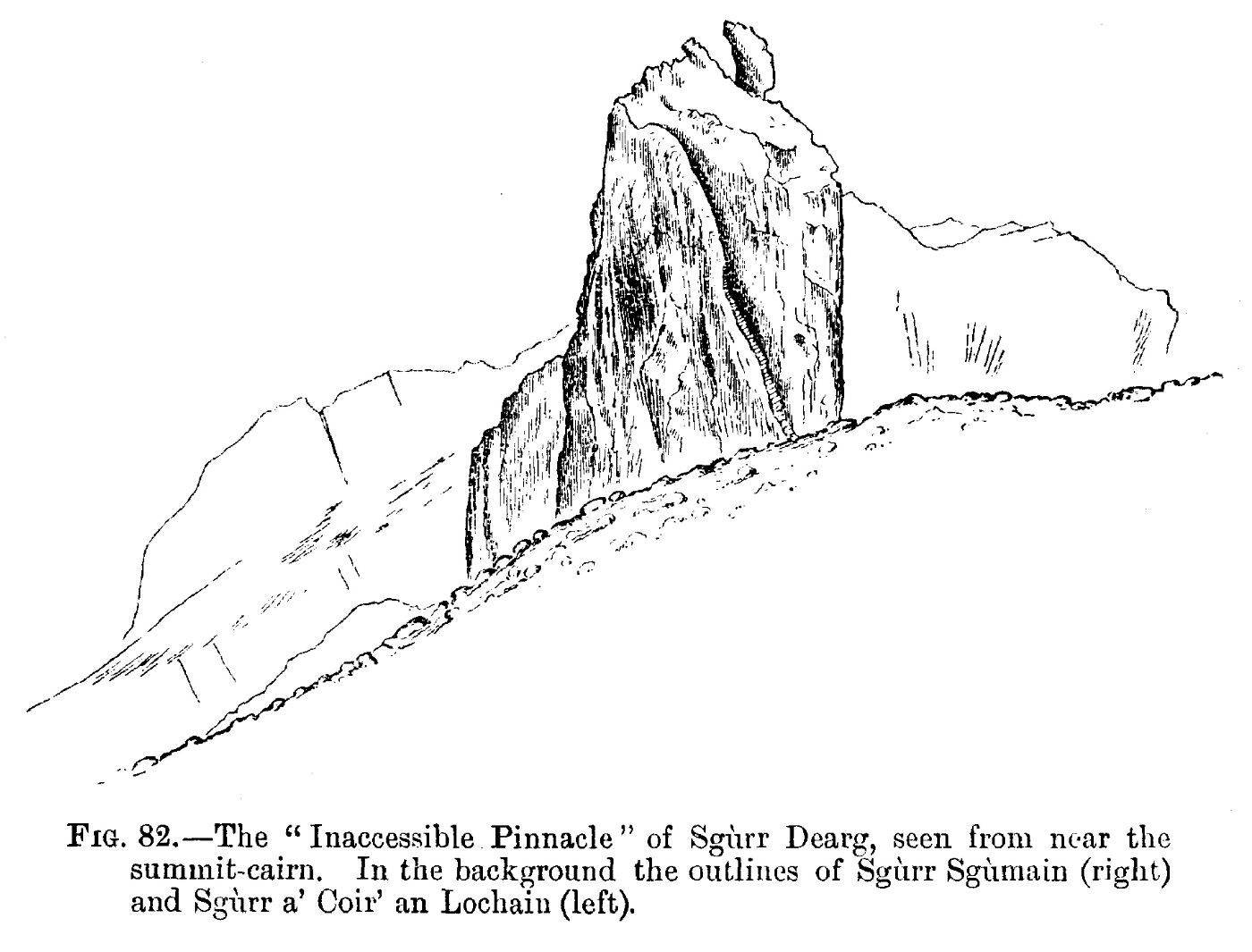
(Figure 82) The 'Inaccessible Pinnacle' of Sgùrr Dearg

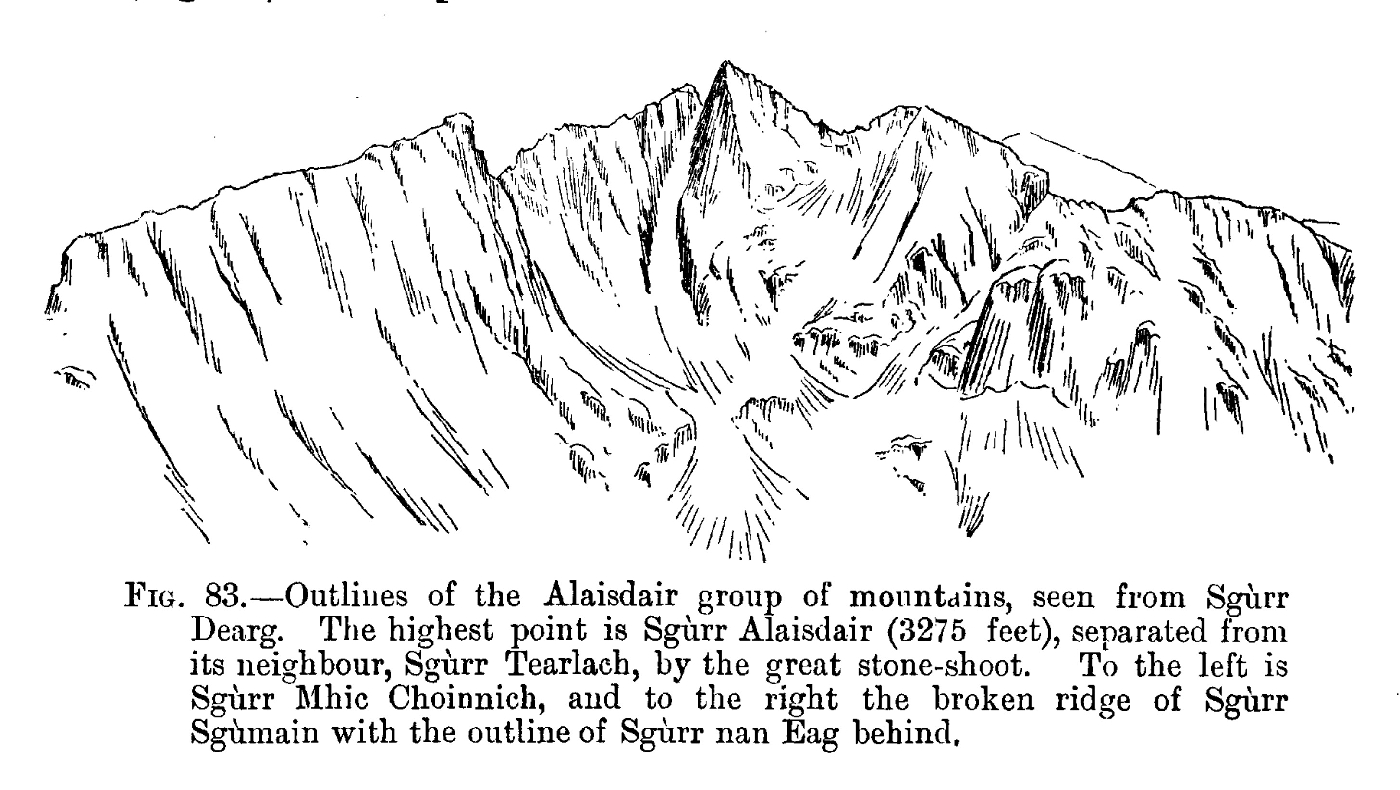
(Figure 83) Outlines of the Alaisdair group of mountains

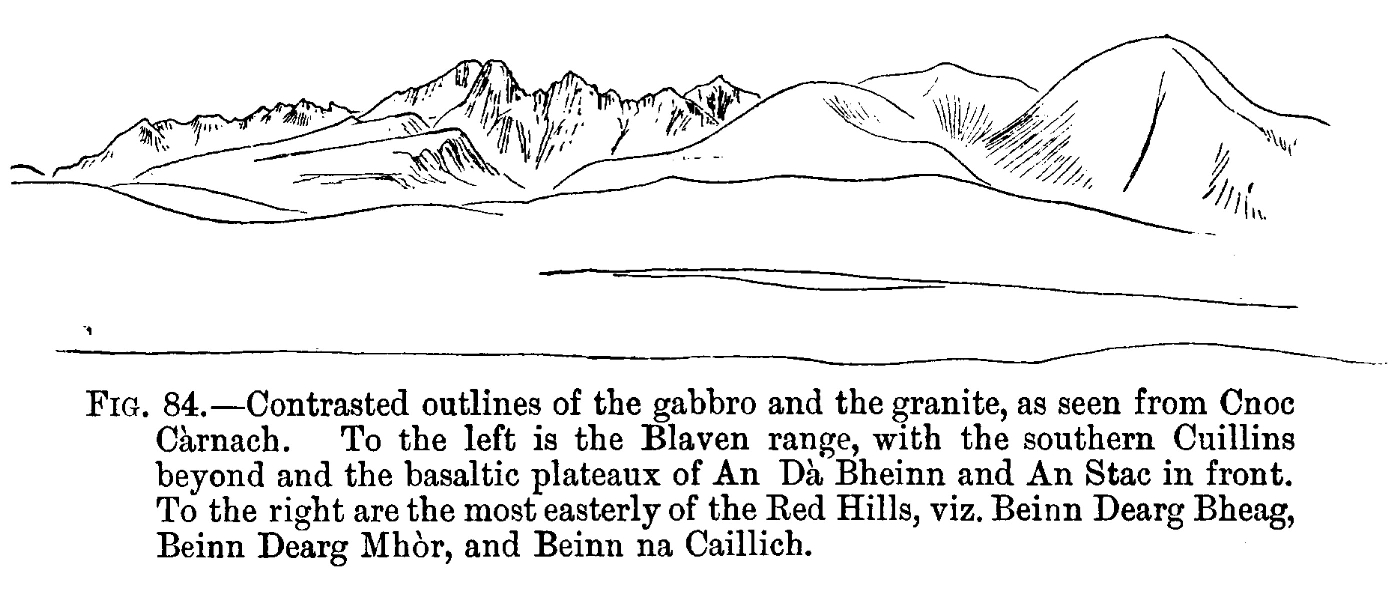
(Figure 84) Contrasted outlines of the gabbro and granite mountains

List of plates

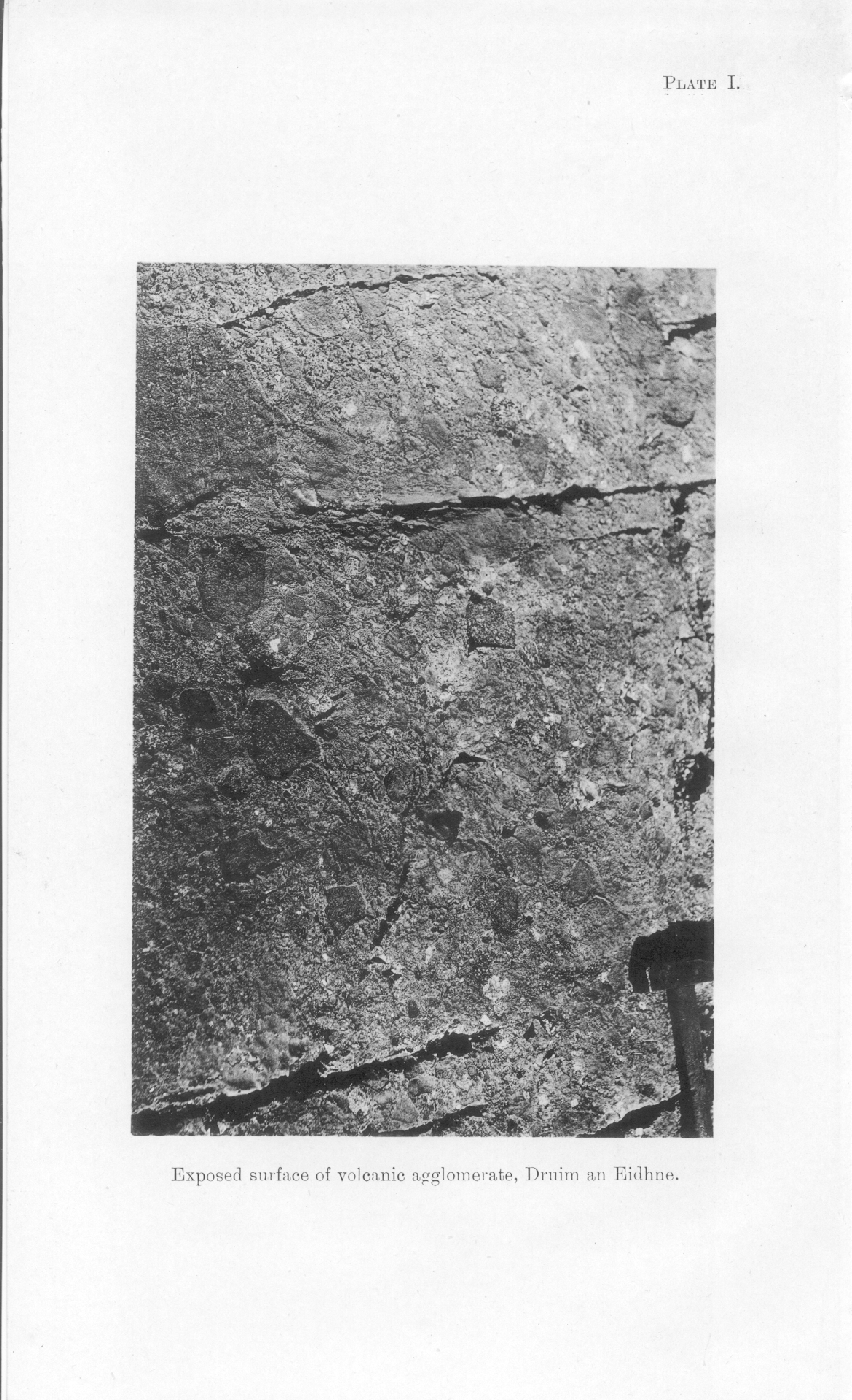
(Plate 1) Exposed surface of volcanic agglomerate, Druim an Eidhne

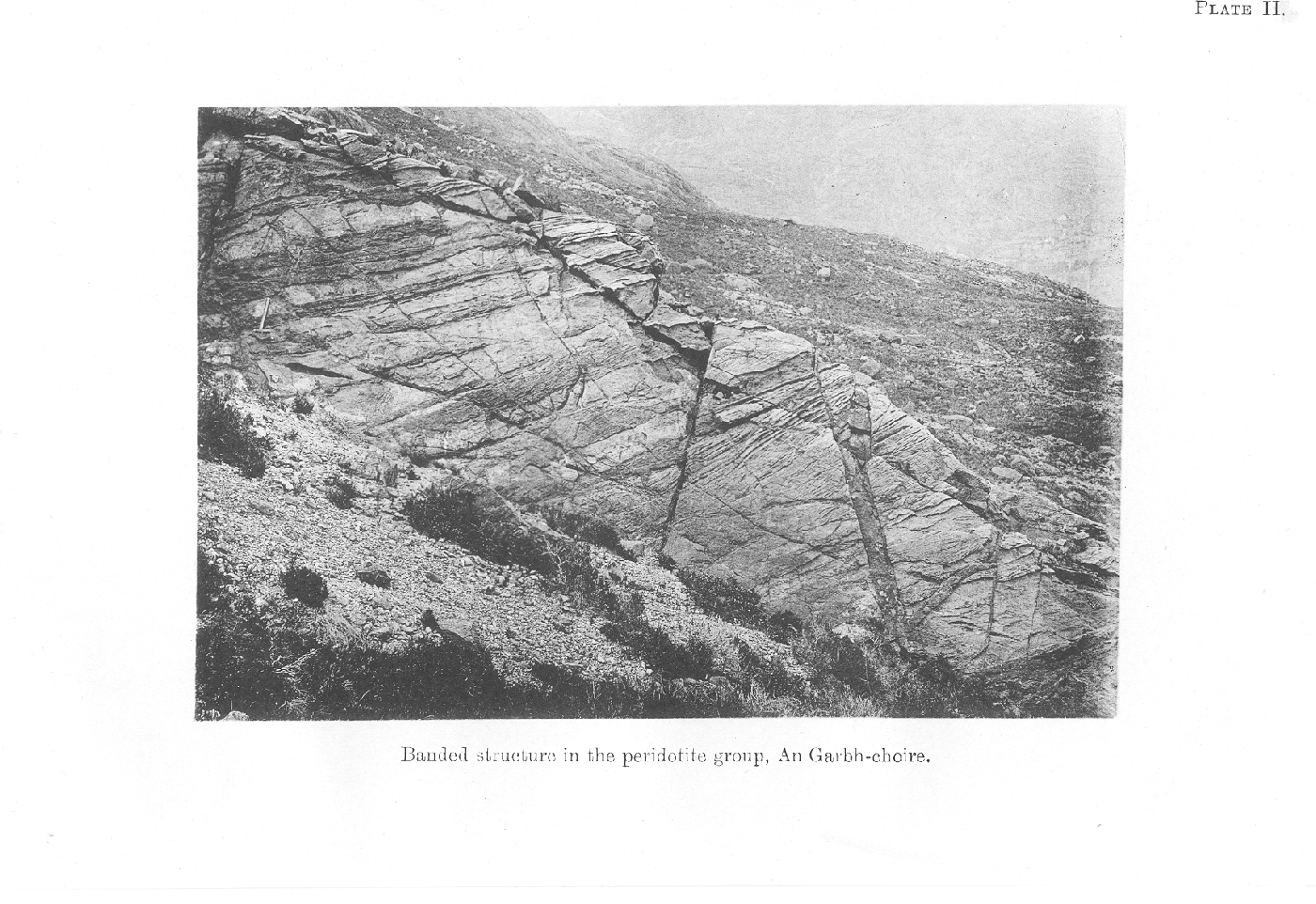
(Plate 2) Banded structure in the peridotite group, An Garbh-choire

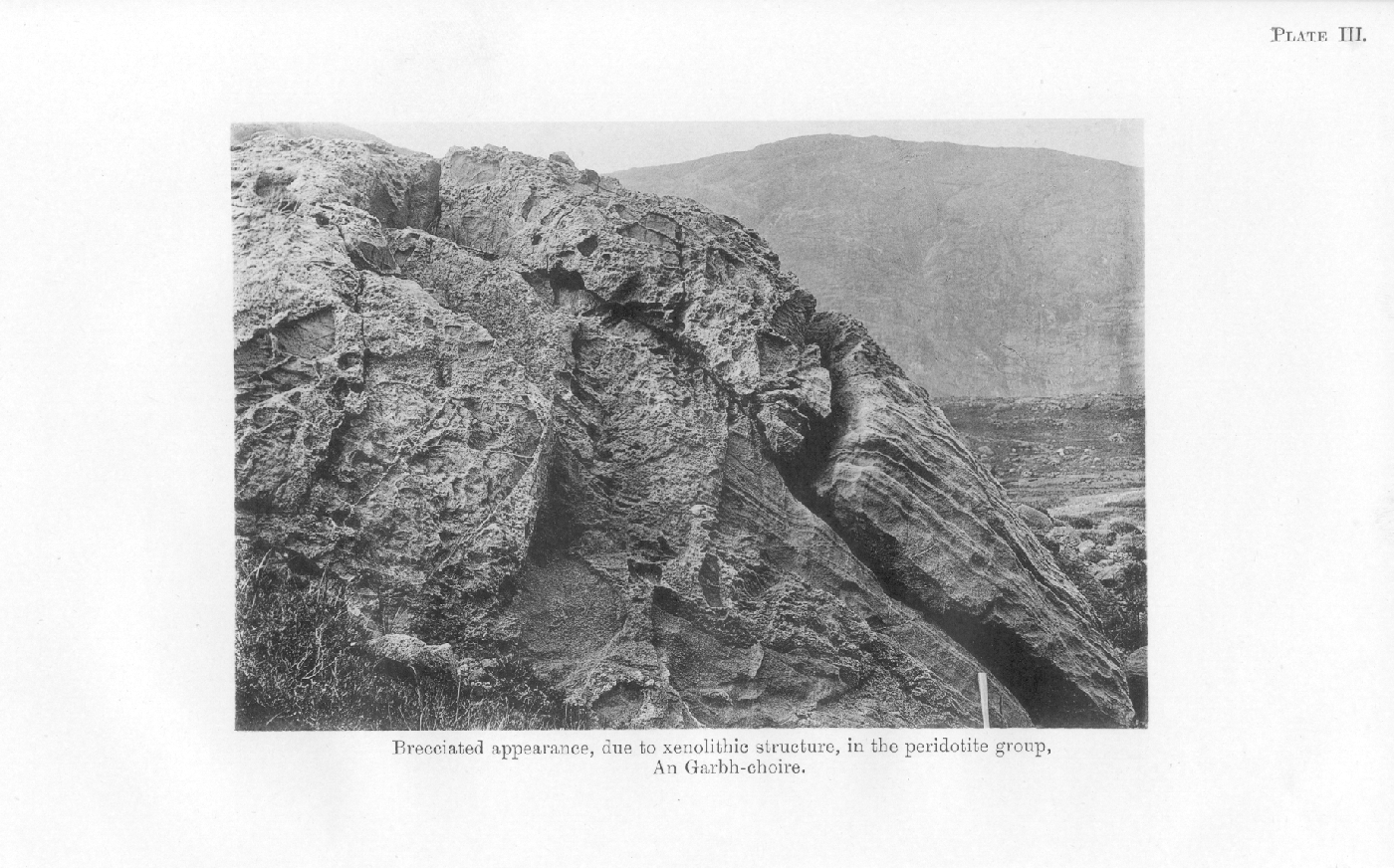
(Plate 3) Brecciated appearance, due to xenolithic structure,in the peridotite group, An Garbh-choire

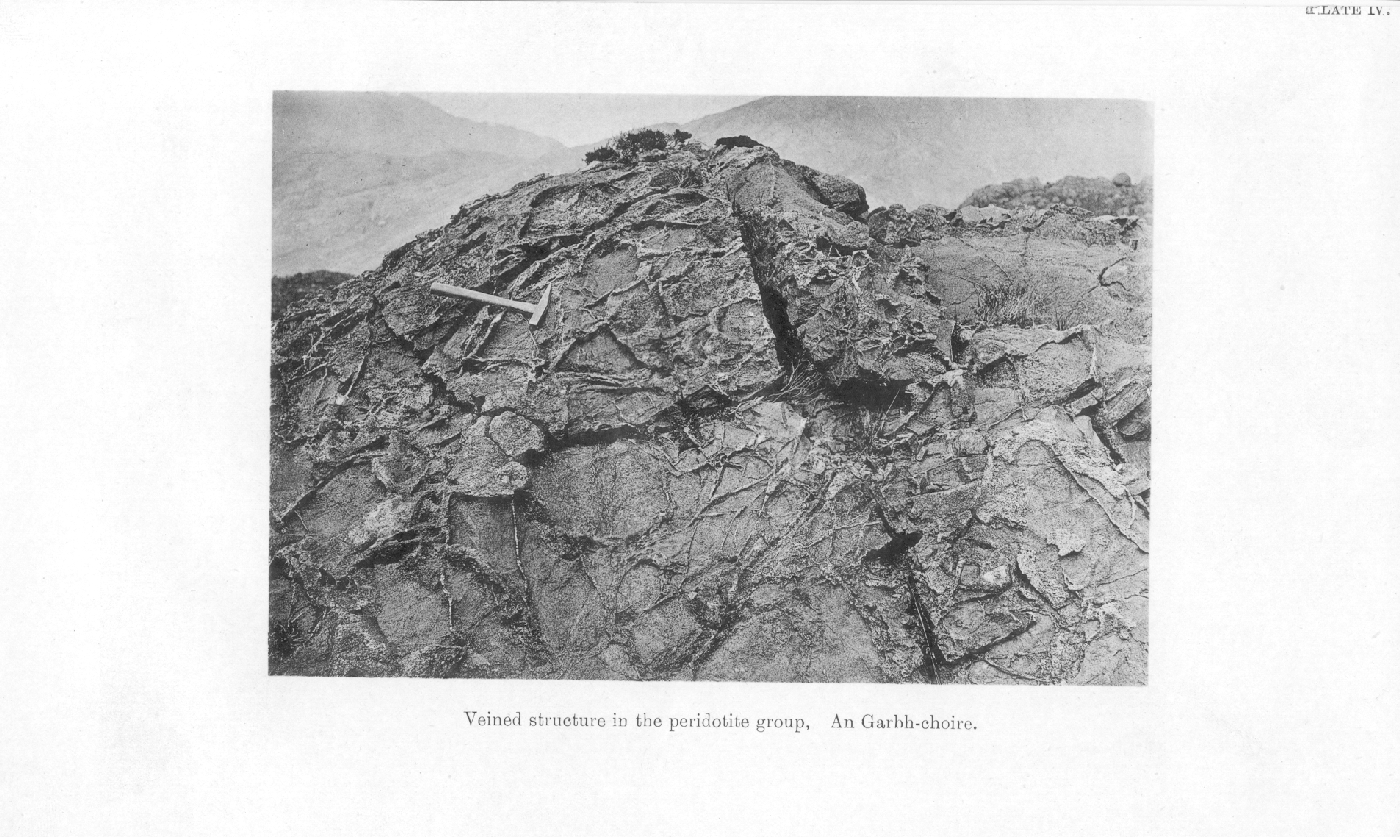
(Plate 4) Veined structure in the peridotite group, An Garbh-choire

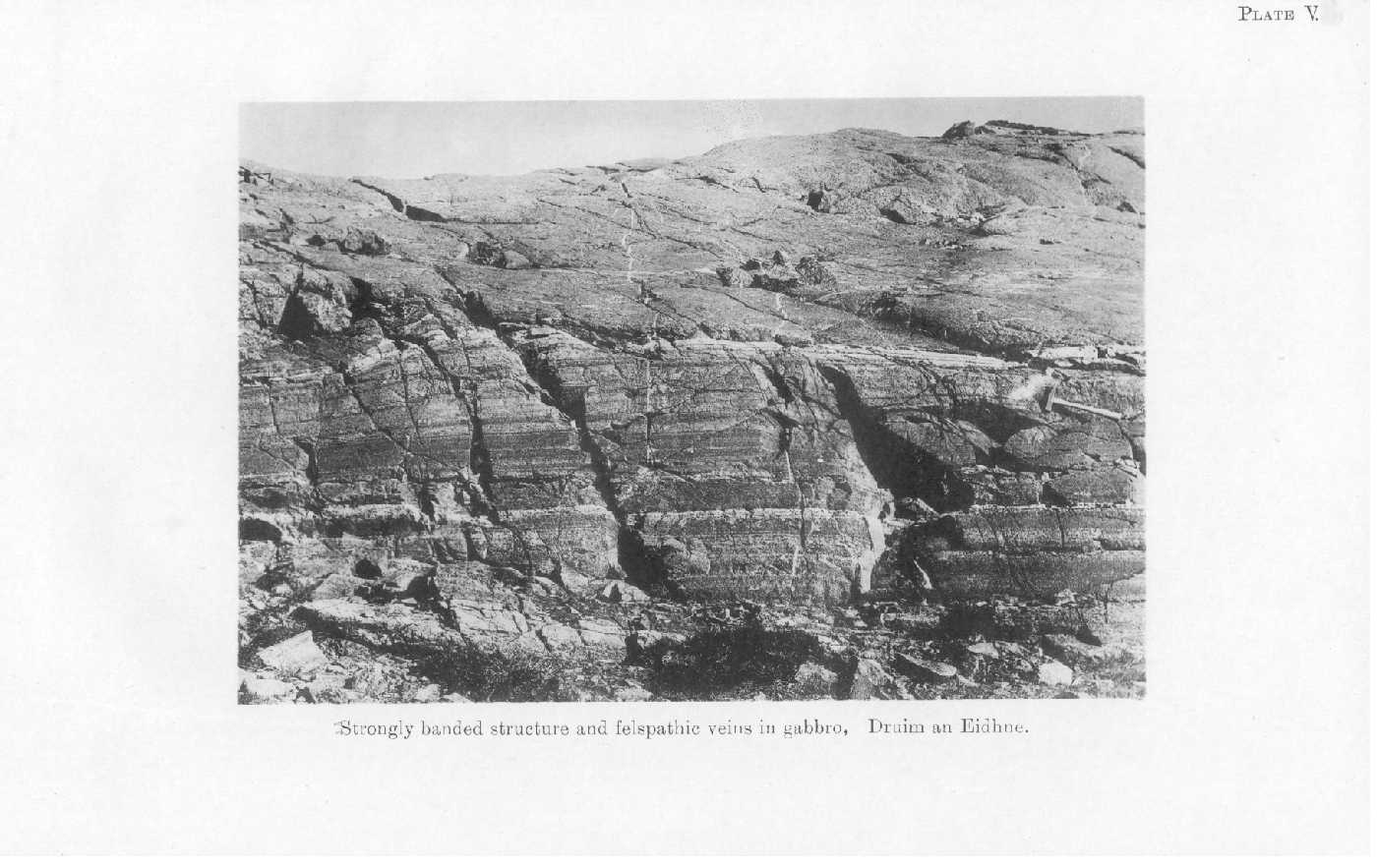
(Plate 5) Strongly banded structure and felspathic veins in gabbro, Druim an Eidhne

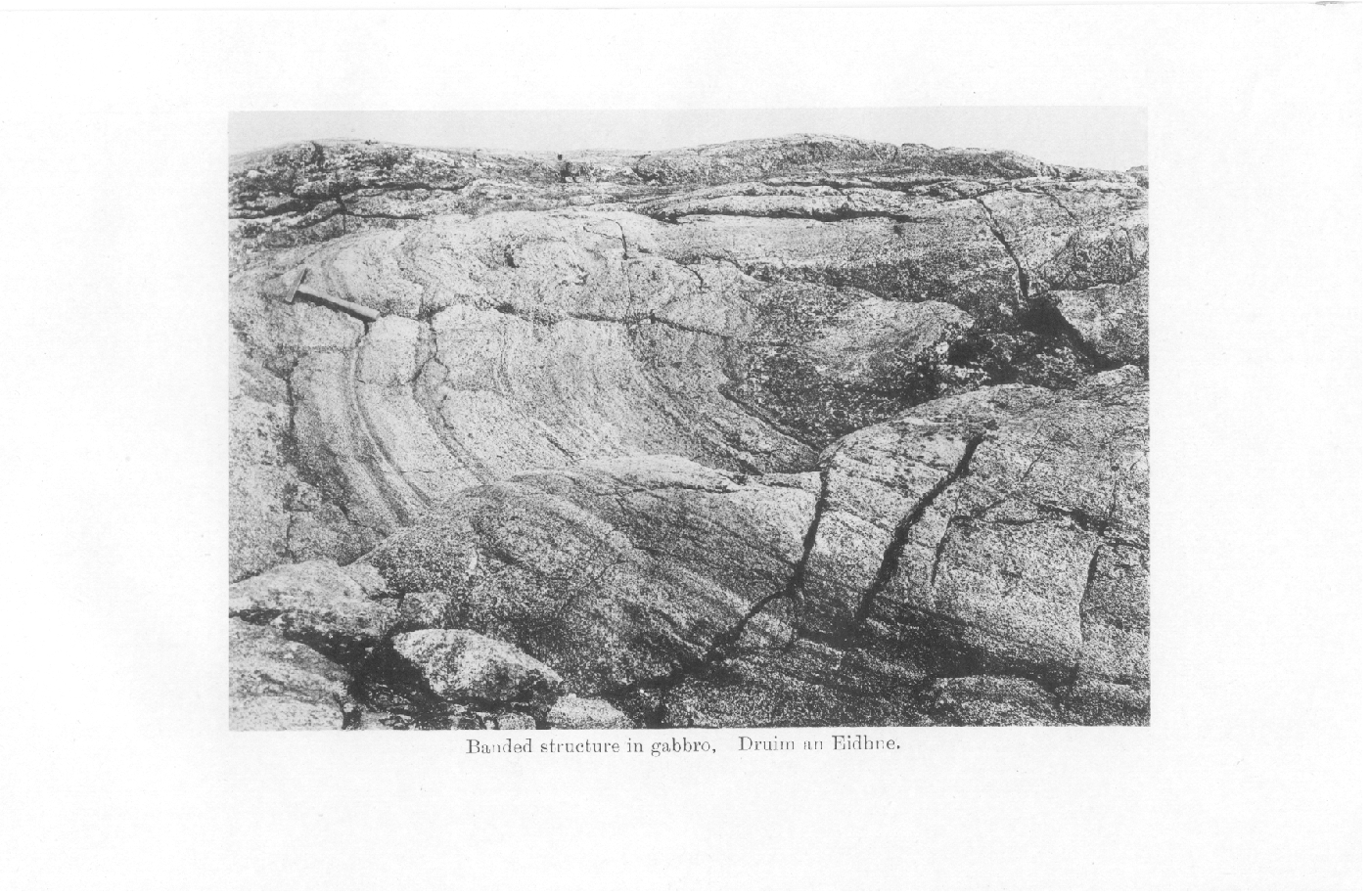
(Plate 6) Banded structure, showing curvature, in gabbro, Druim an Eidhne

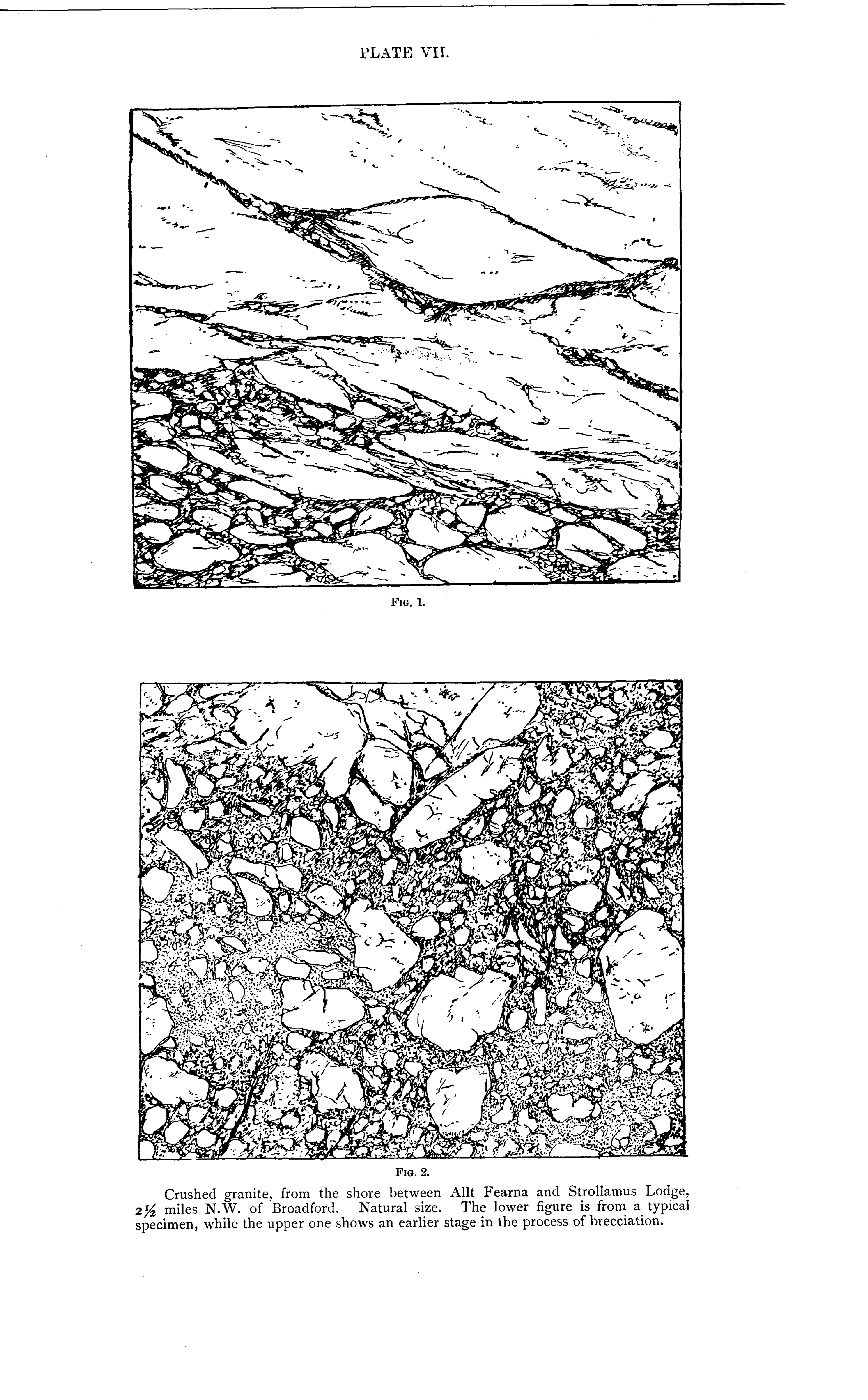
(Plate 7) Crushed granite, from the shore between Allt Fearna and Strollamus Lodge, 2½ miles N.W. of Broadford. Natural size. The lower figure is from a typical specimen, while the upper one shows an earlier stage in the process of brecciation

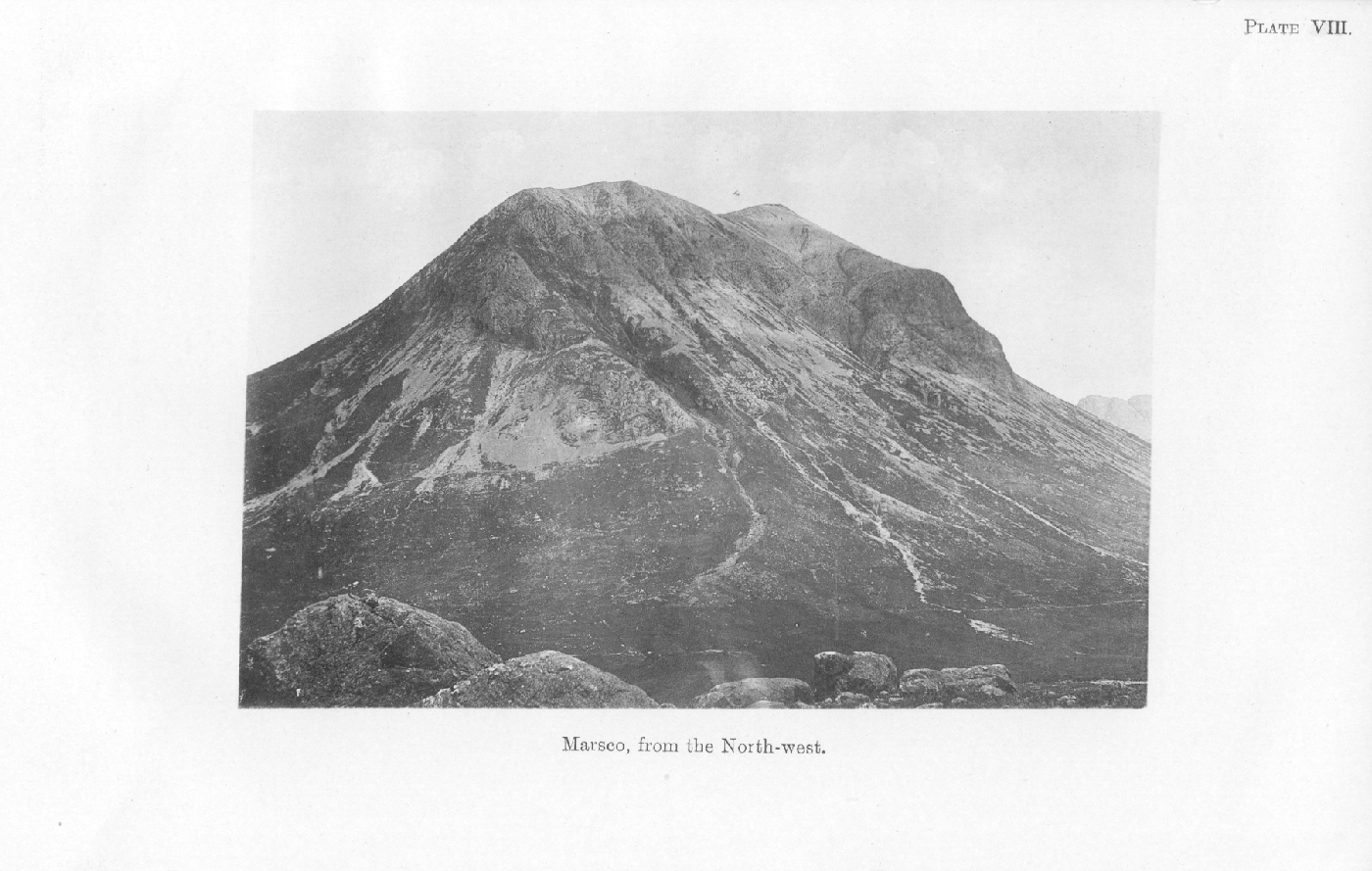
(Plate 8) Marsco, from the north-west

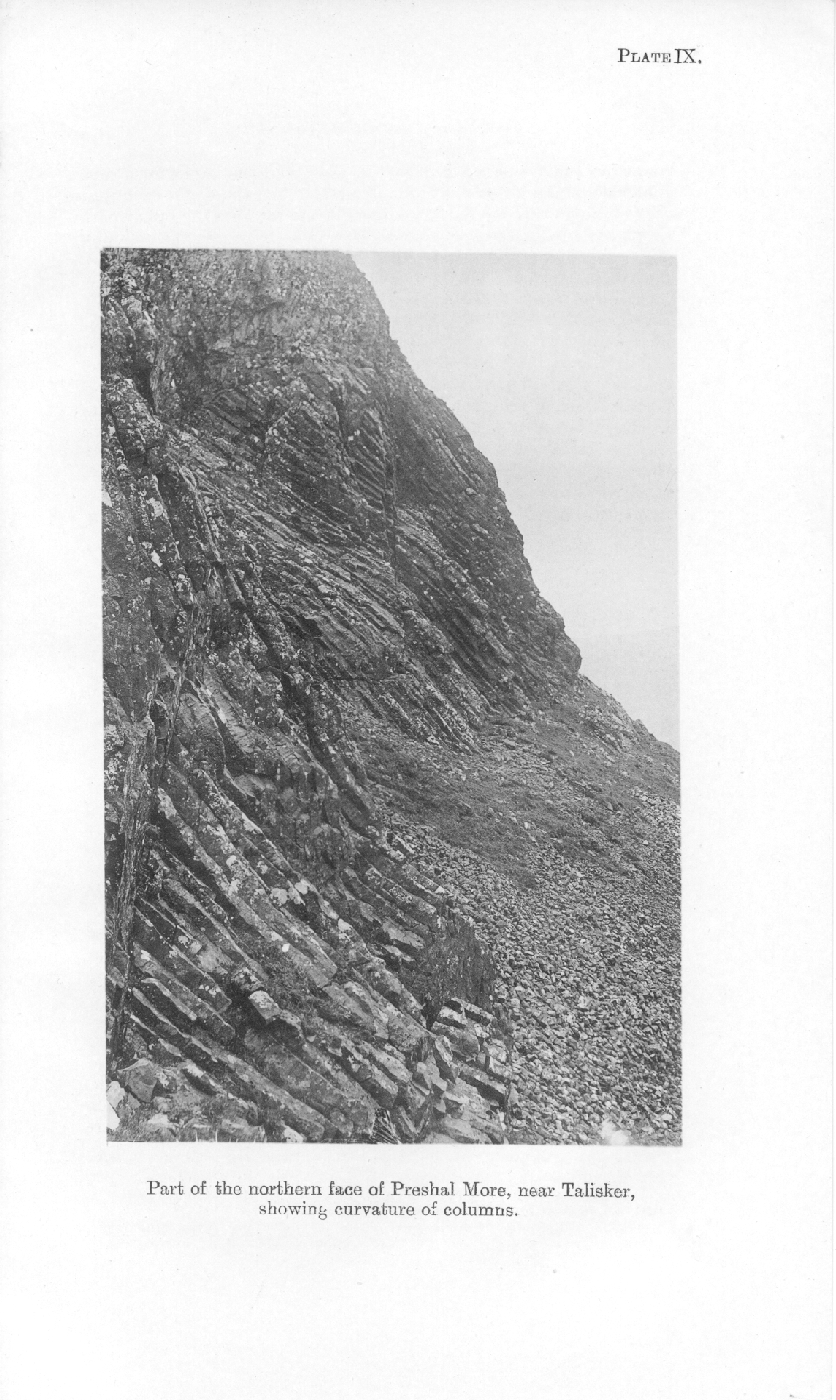
(Plate 9) Part of the northern face of Preshal More, near Talisker, showing curvature of columns in a dolerite sill

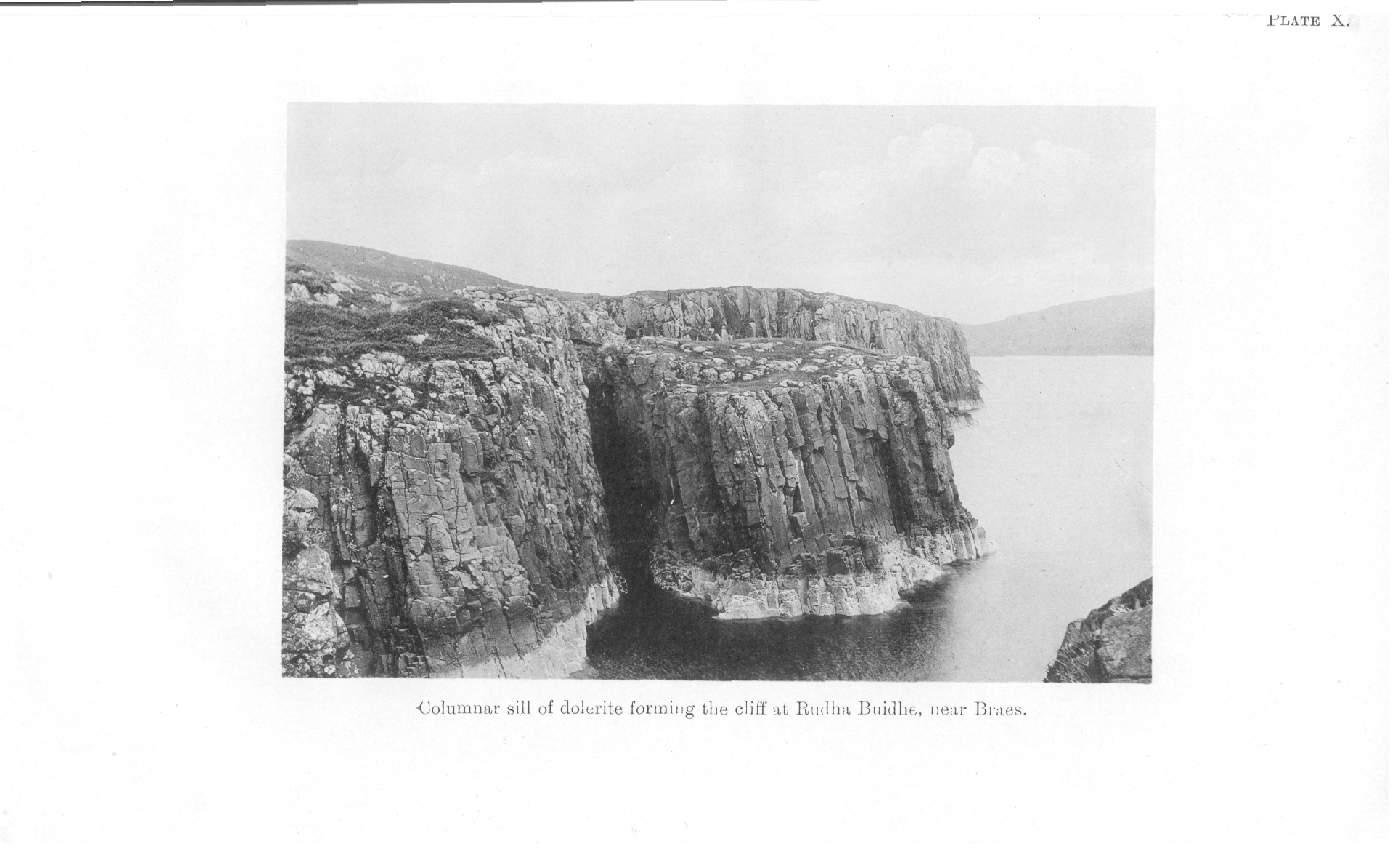
(Plate 10) Columnar sill of dolerite forming the cliff at Rudha Buidhne, near Braes, -

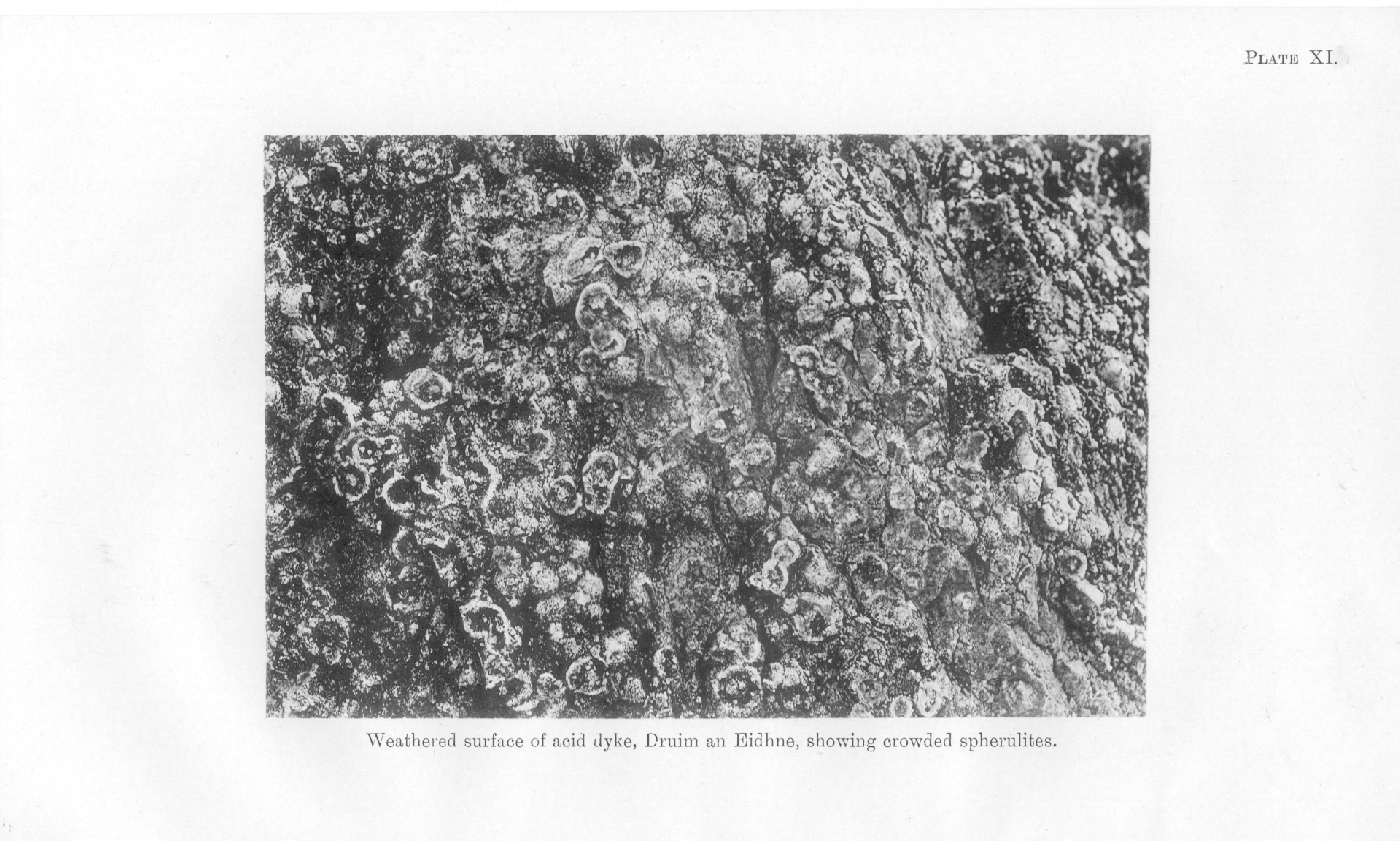
(Plate 11) Weathered surface of acid dyke, Druim an Eidhne, showing crowded spherulites: natural size

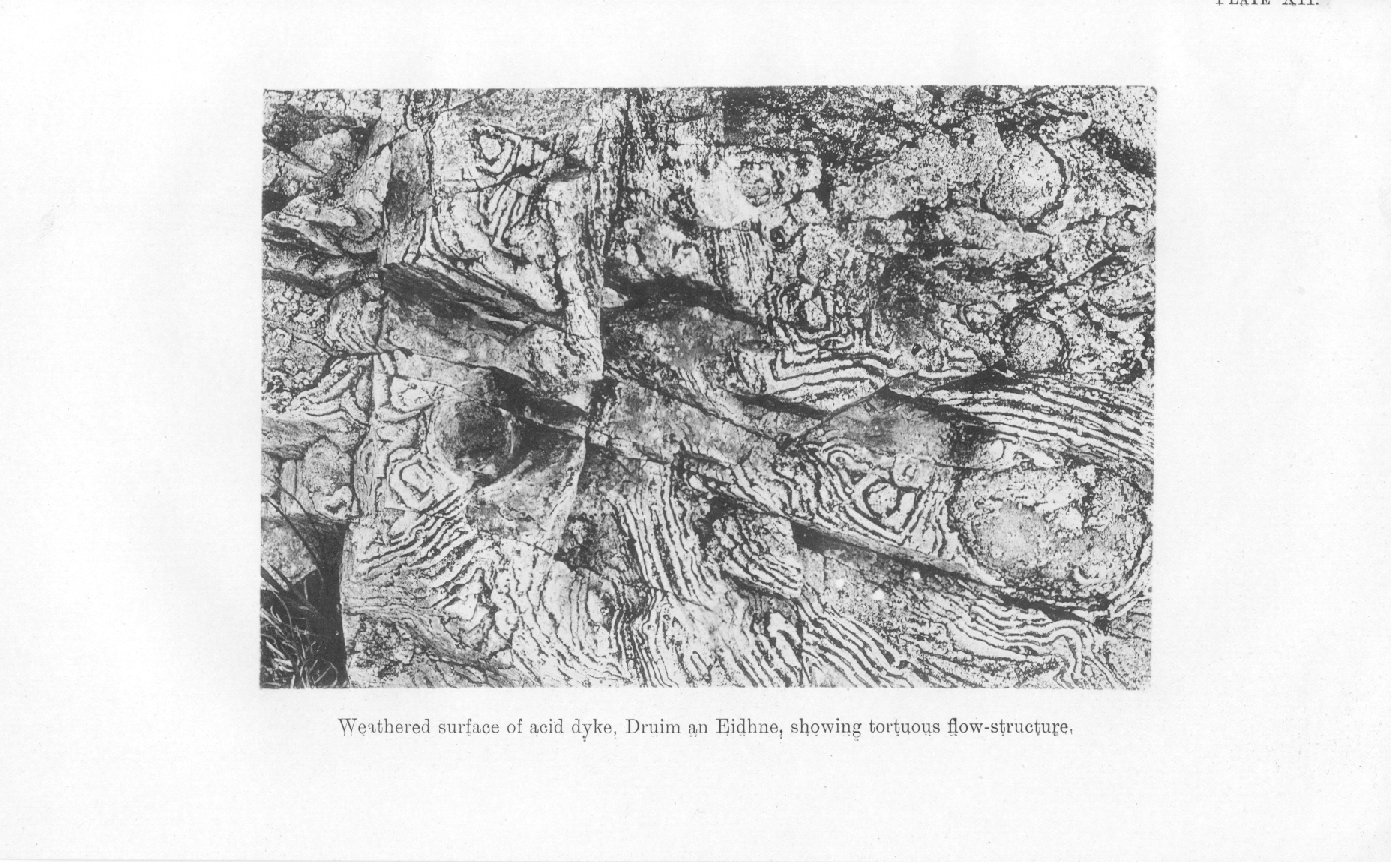
(Plate 12) Weathered surface of acid dyke, Druim an Eidhne, showing tortuous flow-structure: natural size

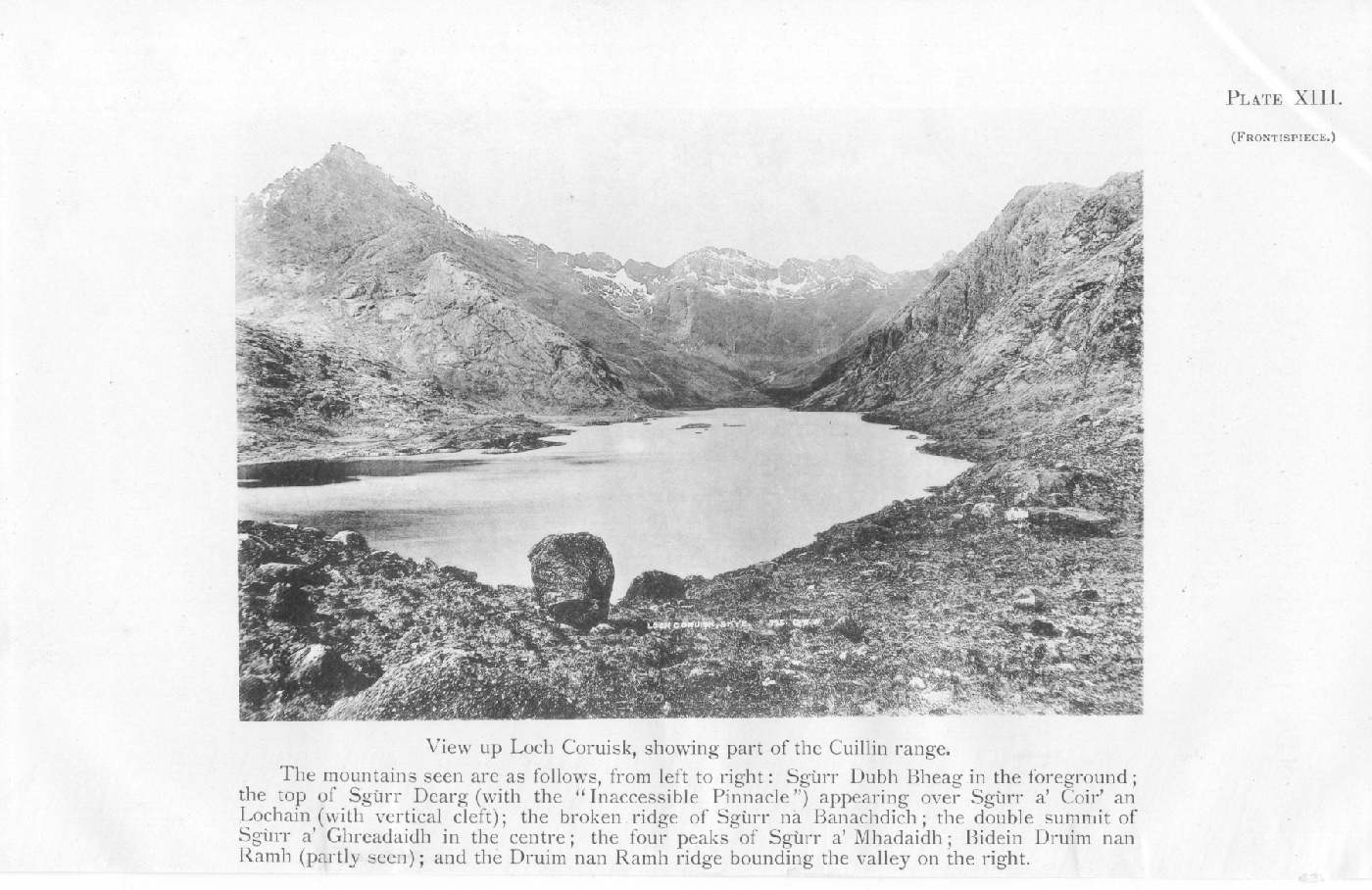
(Plate 13) View up Loch Coruisk, showing part of the Cuillin range — Frontisipiece

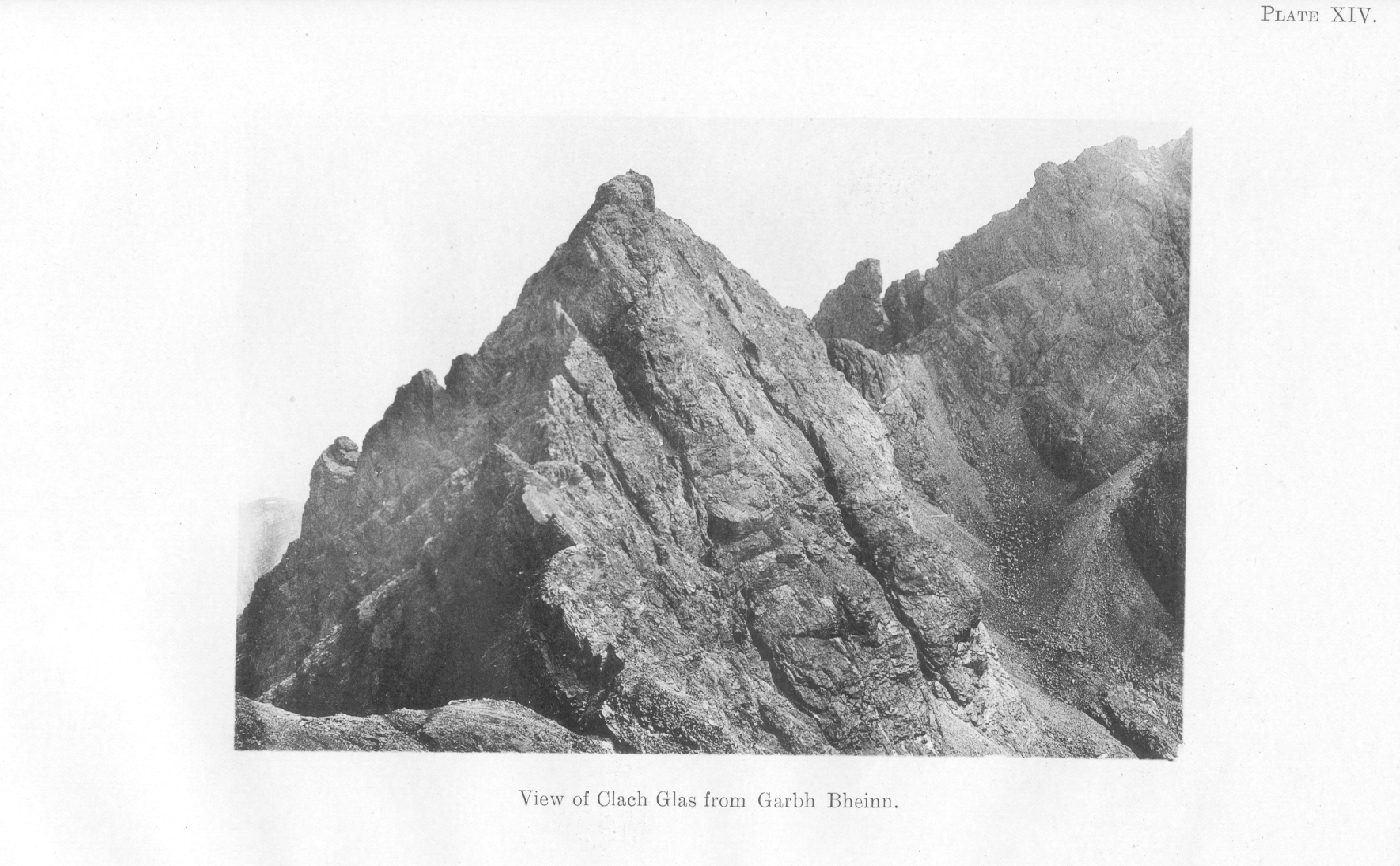
(Plate 14) View of Clach Glas from Garbh-bheinn, showing the northward prolongation of the Blath-bheinn ridge

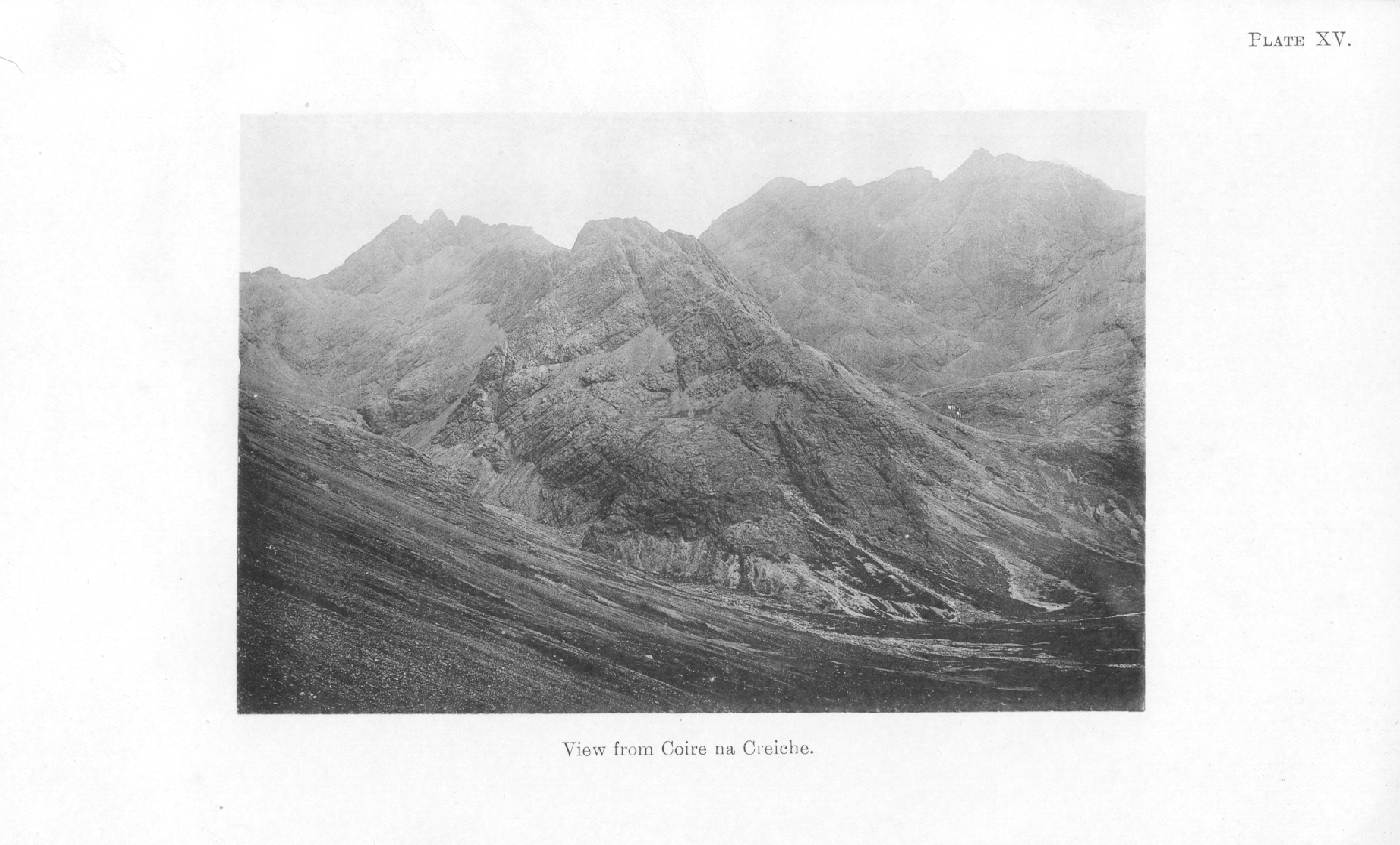
(Plate 15) View from Coire na Creiche. In the foreground is Sgùrr na Fheadain, the termination of a branch ridge running out from the triple-peaked Bidein Druim nan Ramh. It shows well the inclined sheets dipping to the left (east) and the fissures due to dykes running in the direction of the branch ridge itself. The four peaks of Sgùrr a' Mhadaidh are seen to the right

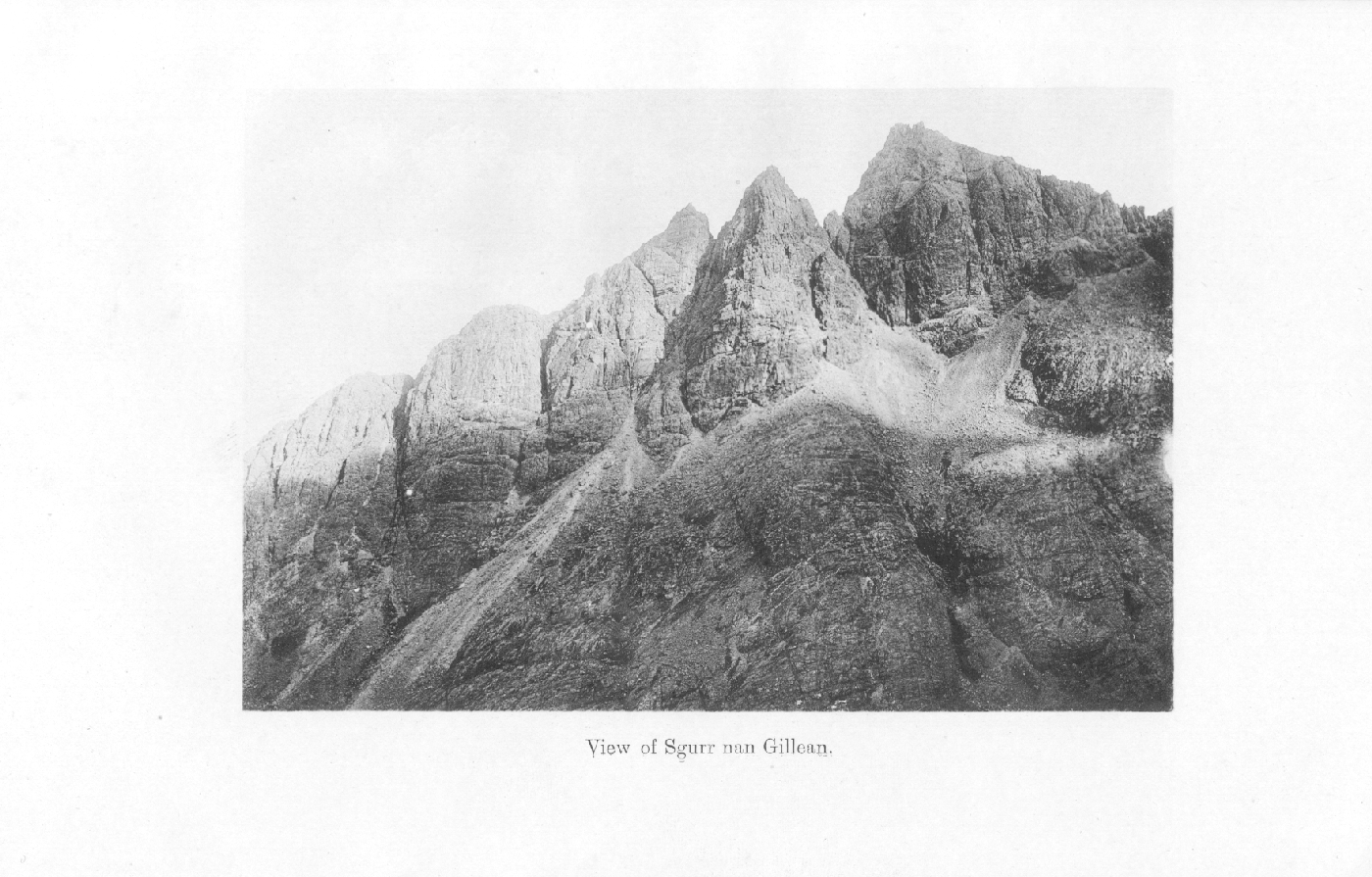
(Plate 16) View of the Pinnacle Ridge of Sgùrr nan Gillean. The notches and gullies, with other vertical fissures, are due to dykes. The outcrops of the inclined sheets of dolerite are seen running nearly horizontally along the steep slopes

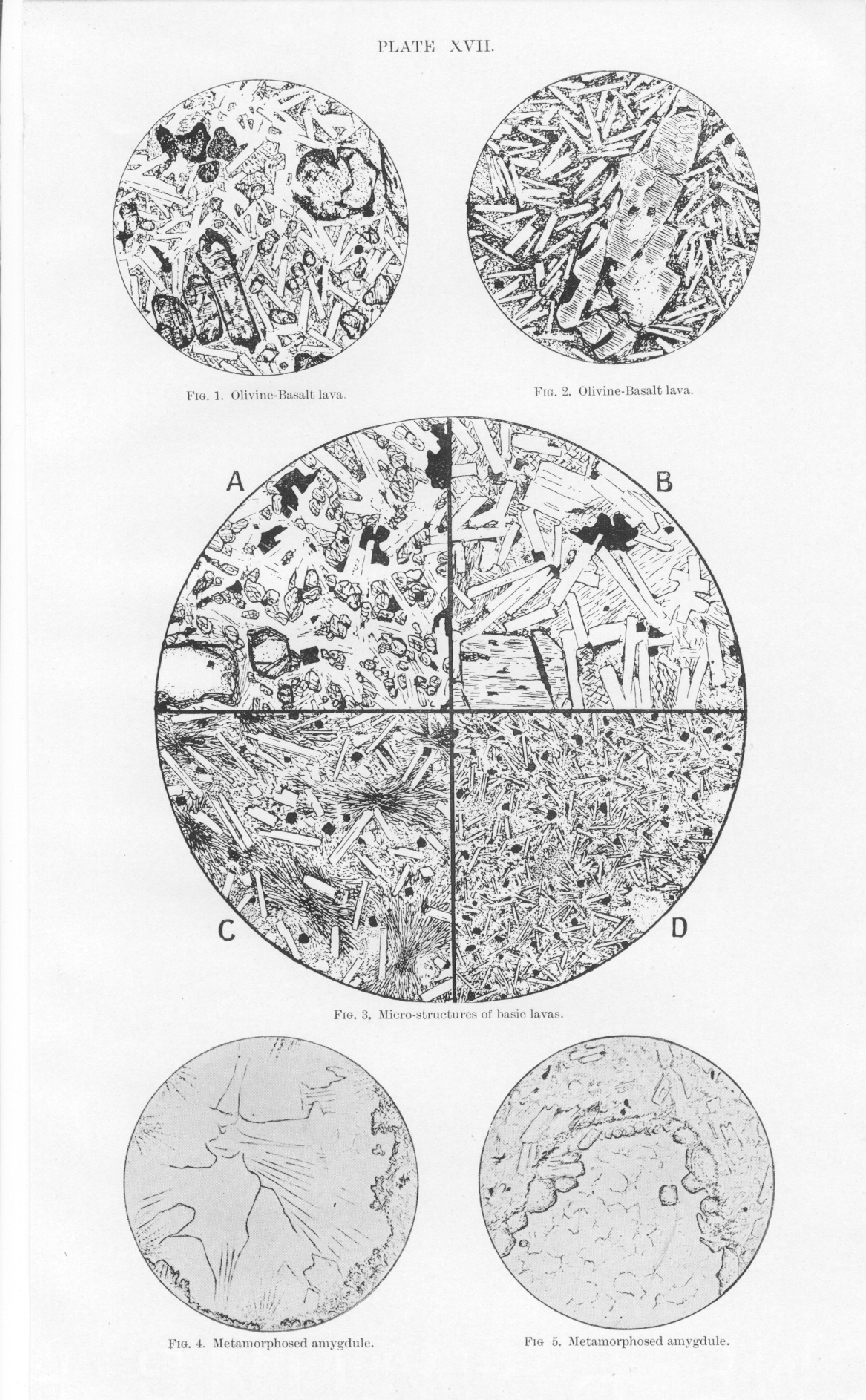
(Plate 17) to (Plate 27) Micro-sections of rocks. The explanation of these is given, with the plates, at the end of the volume.

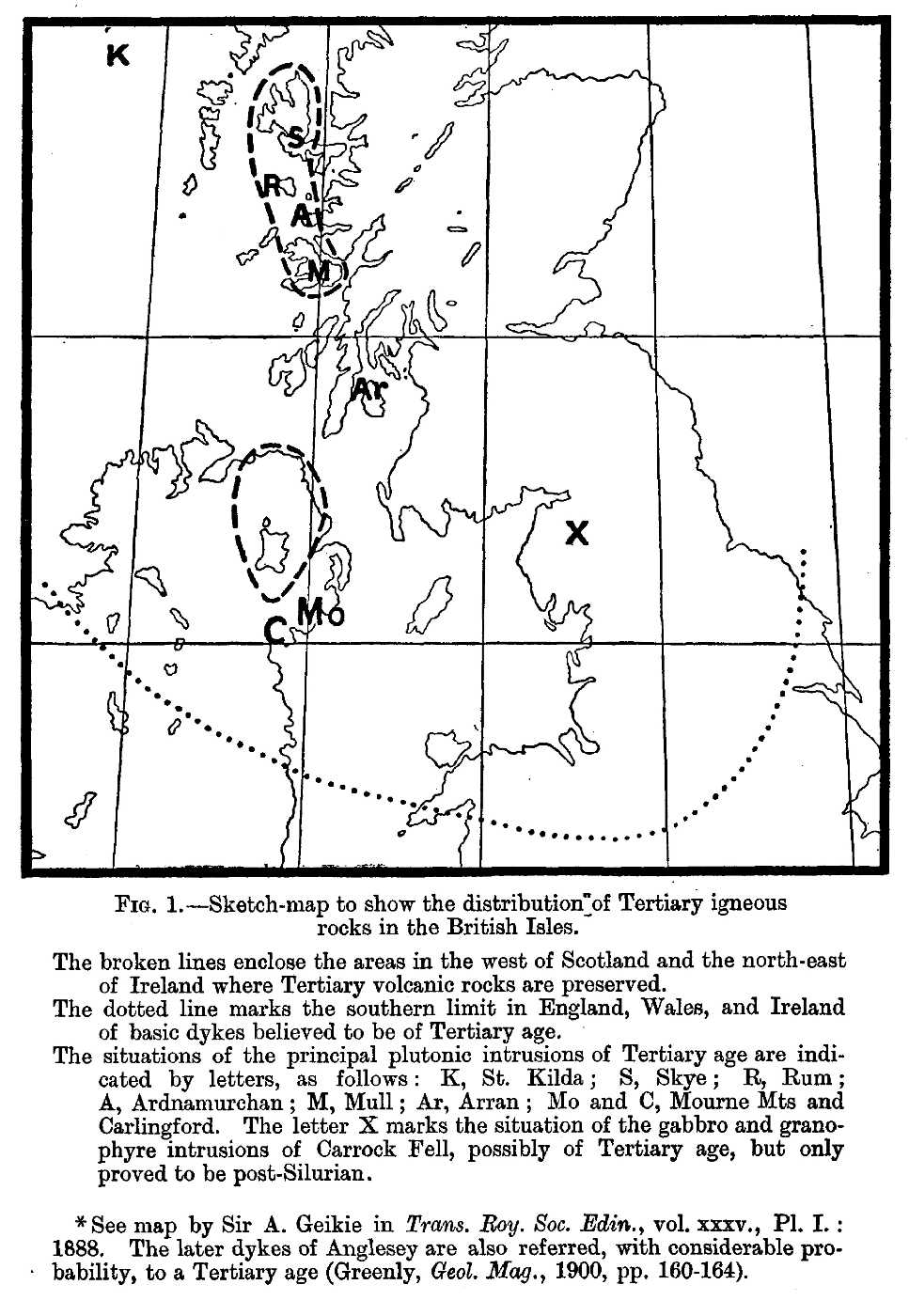
(Figure 1) Sketch-map to show the distribution of Tertiary igneous rocks in the British Isles. The broken lines enclose the areas in the west of Scotland and the north-east of Ireland where Tertiary volcanic rocks are preserved. The dotted line marks the southern limit in England, Wales, and Ireland of basic dykes believed to be of Tertiary age. The situations of the principal plutonic intrusions of Tertiary age are indicated by letters, as follows: K, St. Kilda; S, Skye; R, Rum; A, Ardnamurchan; M, Mull; Ar, Arran; Mo and C, Mourne Ma and Carlingford. The letter X marks the situation of the gabbro and granophyre intrusions of Carrock Fell, possibly of Tertiary age, but only proved to be post-Silurian.

(Figure 2) Section in the southern part of the Isle of Scalpay, showing a faulted area of the basaltic lavas, resting on Jurassic and Cretaceous strata and thrown against the Torridonian. Scale, 3 inches to a mile.

(Figure 3) Section from Talisker Bay through Preshal More and Stockval to the Eynort River, to illustrate the structure of the basalt plateaux. The general dip is westerly, while the important faults usually throw down to the east. It is probable that the base of the volcanic series is in no place very far below sea-level. Scale, 1 inch to a mile.

(Figure 4) Section across the volcanic vent of Kilchrist; showing the volcanic agglomerate breaking through a sharp anticline of Cambrian limestone, and itself invaded by a later intrusion of a peculiar granophyre, full of debris of gabbro, to be described later. Scale, 1½ inch to a mile.

(Figure 5) Contrasted outlines of volcanic agglomerate and granite, as seen from broadford. The low broken hills to the left mark the situation of the Kilchrist vent, and are composed of volcanic agglomerate. The smooth outline of the granite is seen in Beinn Dearg Bheag and Beinn na Caillich, which form part of the Red Hills. In one place on Beinn na Caillich this smooth outline is broken by the outcrop of a large dyke intersecting the granite.

(Figure 6) Cliff-section at Camas Bàn, on the south side of Portree Harbour; about 60 or 70 feet high. This shows the pyroclastic deposit covered by an intrusive sill of dolerite and invaded by two others.

(Figure 7) (S9359) [NG 457 280] × 20. Olivine-Basalt lava, in Allt Dearg Mòr, about 2 miles S.W. of Sligachan: showing pseudomorphs after olivine, composed. of carbonates with a border of iron-oxide.

(Figure 8) Section along Allt Dearg Mòr, near Sligachan: scale, 1½ inch to a mile. The general direction is N.E.–S.W., but the line is made to follow the principal bends of the stream. A number of dykes and a few thin sills are shown, the latter indicating the general dip of the lava-group. A. Amygdaloidal lavas, usually much decayed. B. Hypersthene-Basalt. C. Amygdaloidal Andesite. D. Basalt, very rich in olivine.

(Figure 9) Diagram matie representation of the relations of the trachytic and rhyolitic rocks to one another and to the basalts. The figure is an ideal general section of the group, not drawn to true scale.

(Figure 10) Section along the Sgùrr Dubh ridge, showing the principal laccolitic mass of peridotite and a smaller one to the east, and representing diagrammatically the partial destruction of the peridotite by the gabbro magma in which it became enveloped.

(Figure 11) Dykes or veins of gabbro traversing the peridotite group, in glen south of Allt a' Chaoich, Loch Scavaig: seen in ground-plan.

(Figure 12) Block of banded peridotite, 7 feet long, enclosed in gabbro, in glen south of Allt a' Chaoich, Loch Scavaig: seen in ground-plan. The gabbro is traversed by numerous fissures radiating from the enclosed block.

(Figure 13) (S9228) [NG 480 195] × 20. Dunite, rich in picotite, from the banded peridotites in the glen a little S. of Allt a' Chaoich, Loch Scavaig: consists wholly of fresh olivine and octahedra of picotite.

(Figure 14) (S9234) [NG 458 203] × 20. Peridotite, S.E. slope of Sgùrr Dubh na Dabheinn: chiefly of olivine (showing incipient serpentinisation), with some diallage and felspar (to the right) and opaque octahedra probably of chrome-magnetite.

(Figure 15) Sketch-map to show the shape of the gabbro laccolite of the Cuillins: scale, ½ inch to a mile. The boundary of the laccolite (omitting minor irregularities) is shown by the heavy line; the chief streams and lakes and the coast to the south by lighter lines. The dotted lines are intended to represent approximately the shape of the lower surface of the laccolite, being contour-lines of that surface at intervals of 500 feet, reckoned from sea-level.

(Figure 16) Section through Gars-bheinn, to illustrate alternations of basaltic lavas and gabbro, due to the successive intrusions of the latter rock having followed different bedding-planes in the lavas. Scale, 2 inches to a mile.

(Figure 17) Sketch-map showing the distribution of banded structures in the gabbros of the Cuillins. The strong line indicates the boundary of the gabbro itself: the dotted line encloses the area within which banding is most prevalent. The dip of the banding is shown by arrows. Scale, ½ inch to a mile.

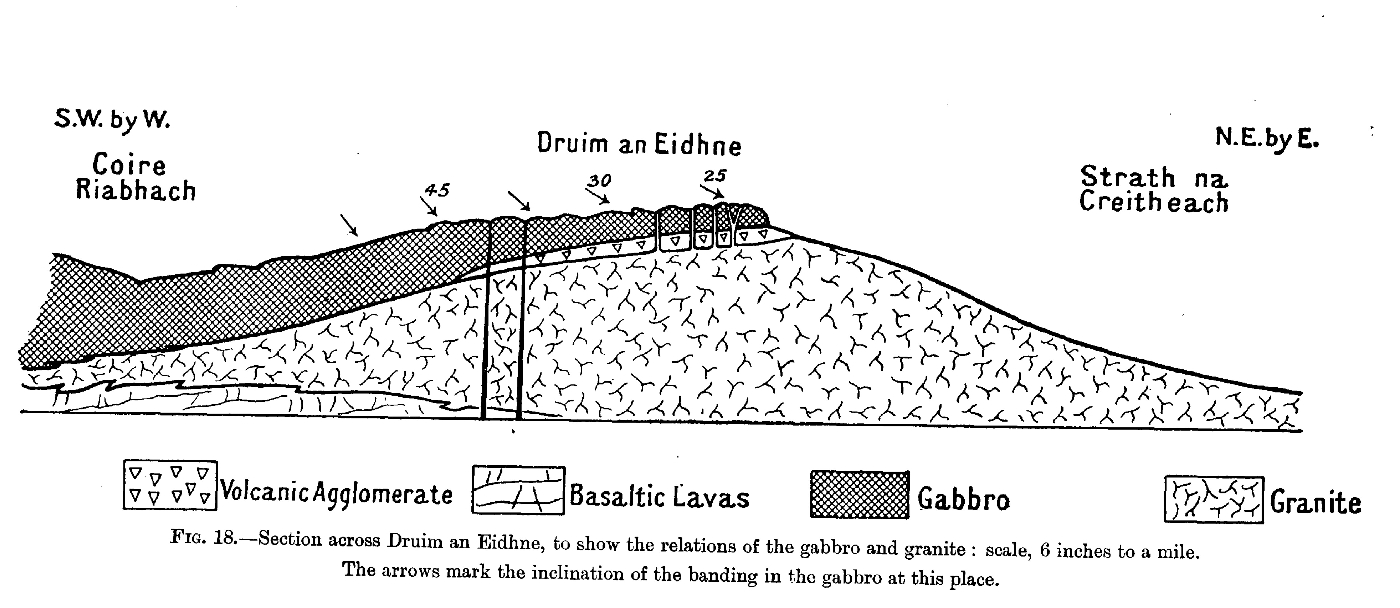
(Figure 18) Section across Druim an Eidhne, to show the relations of the gabbro and granite: scale, 6 inches to a mile. The arrows mark the inclination of the banding in the gabbro at this place.

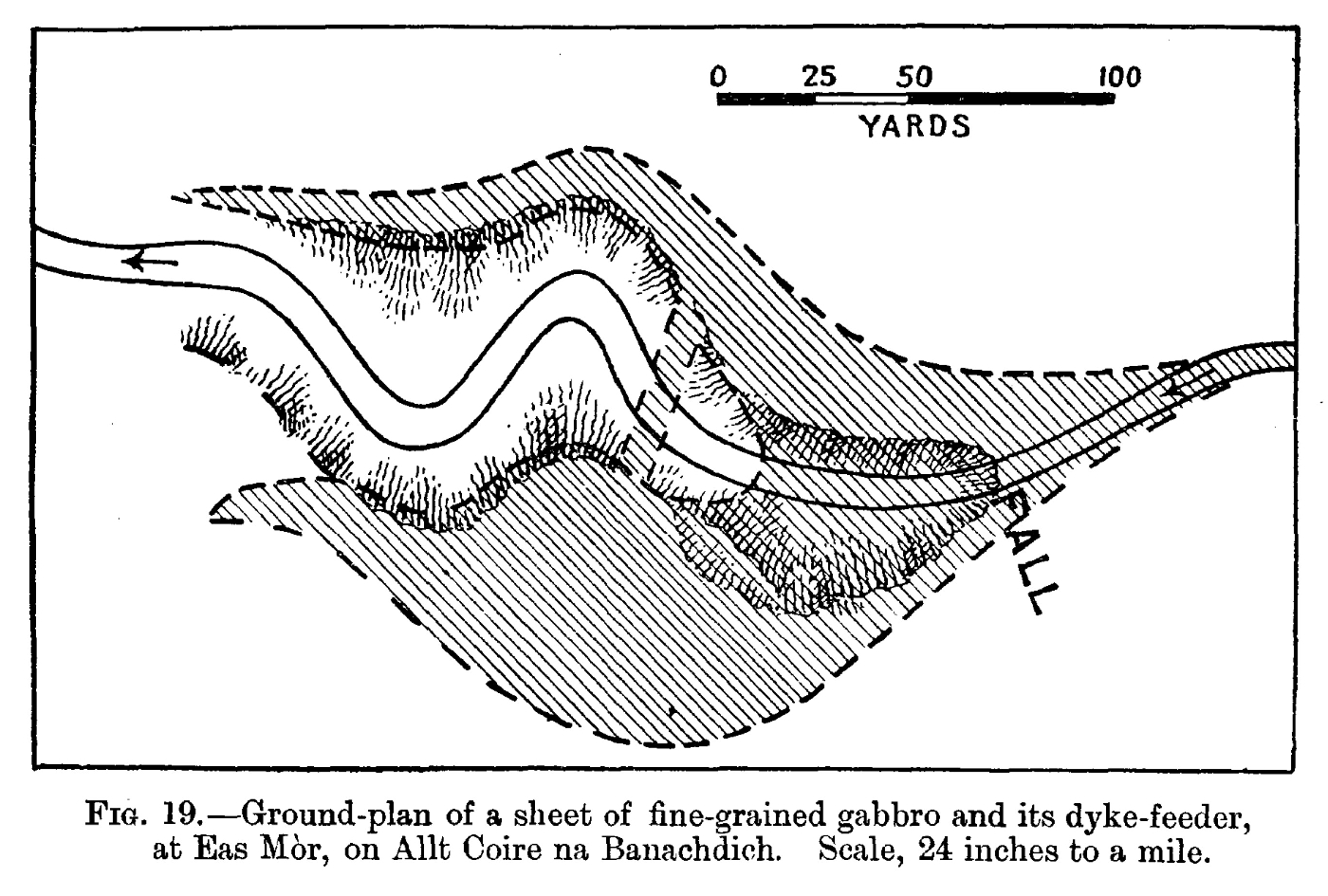
(Figure 19) Ground-plan of a sheet of fine-grained gabbro and its dyke-feeder, at Eas Mòr, on Allt Coire na Banachdich. Scale, 24 inches to a mile.

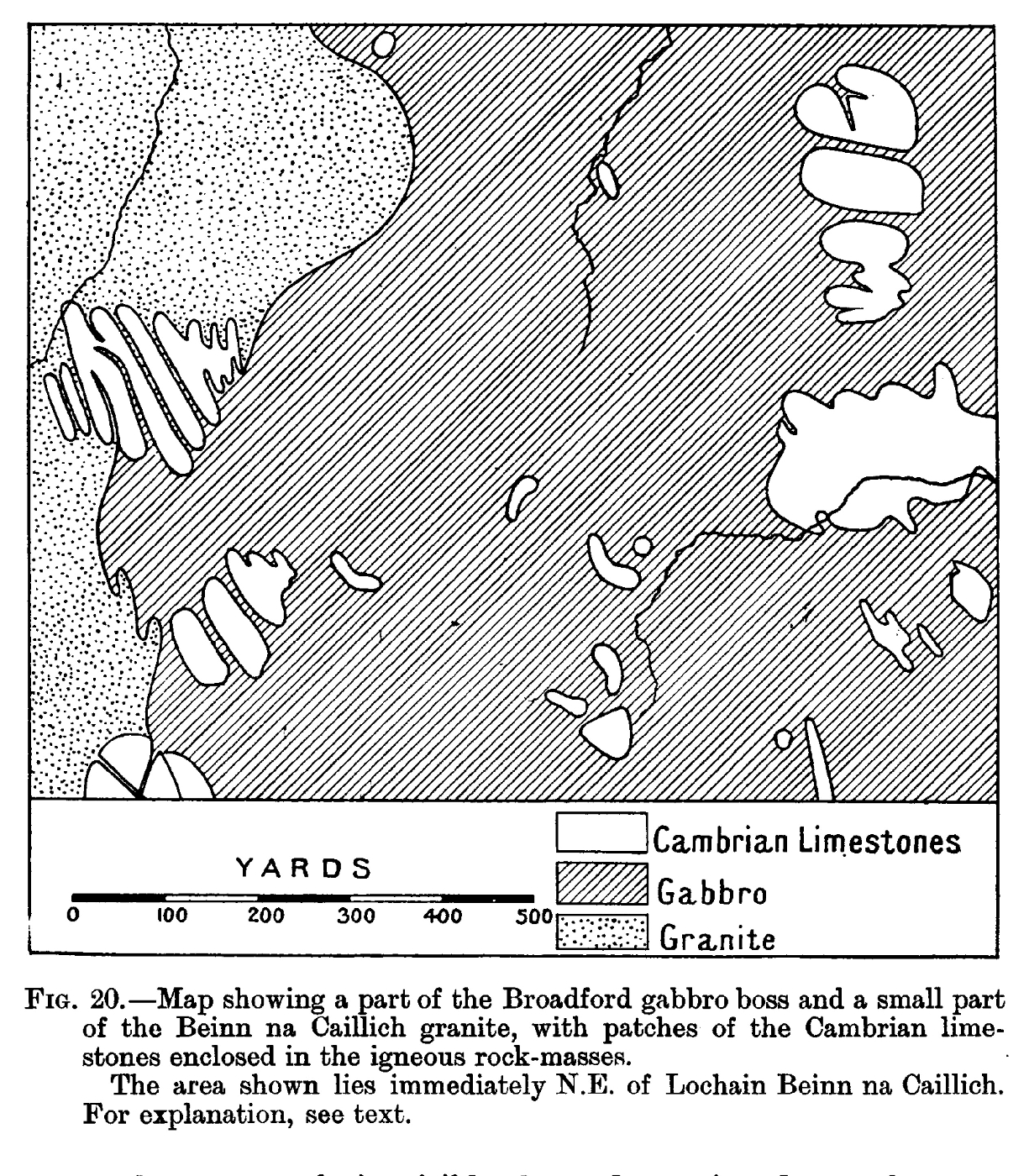
(Figure 20) Map showing a part of the Broadford gabbro boss and a small part of the Beinn na Caillich granite, with patches of the Cambrian limestones enclosed in the igneous rock-masses. The area shown lies immediately N.E. of Lochain Beinn na Caillich. For explanation, see text.

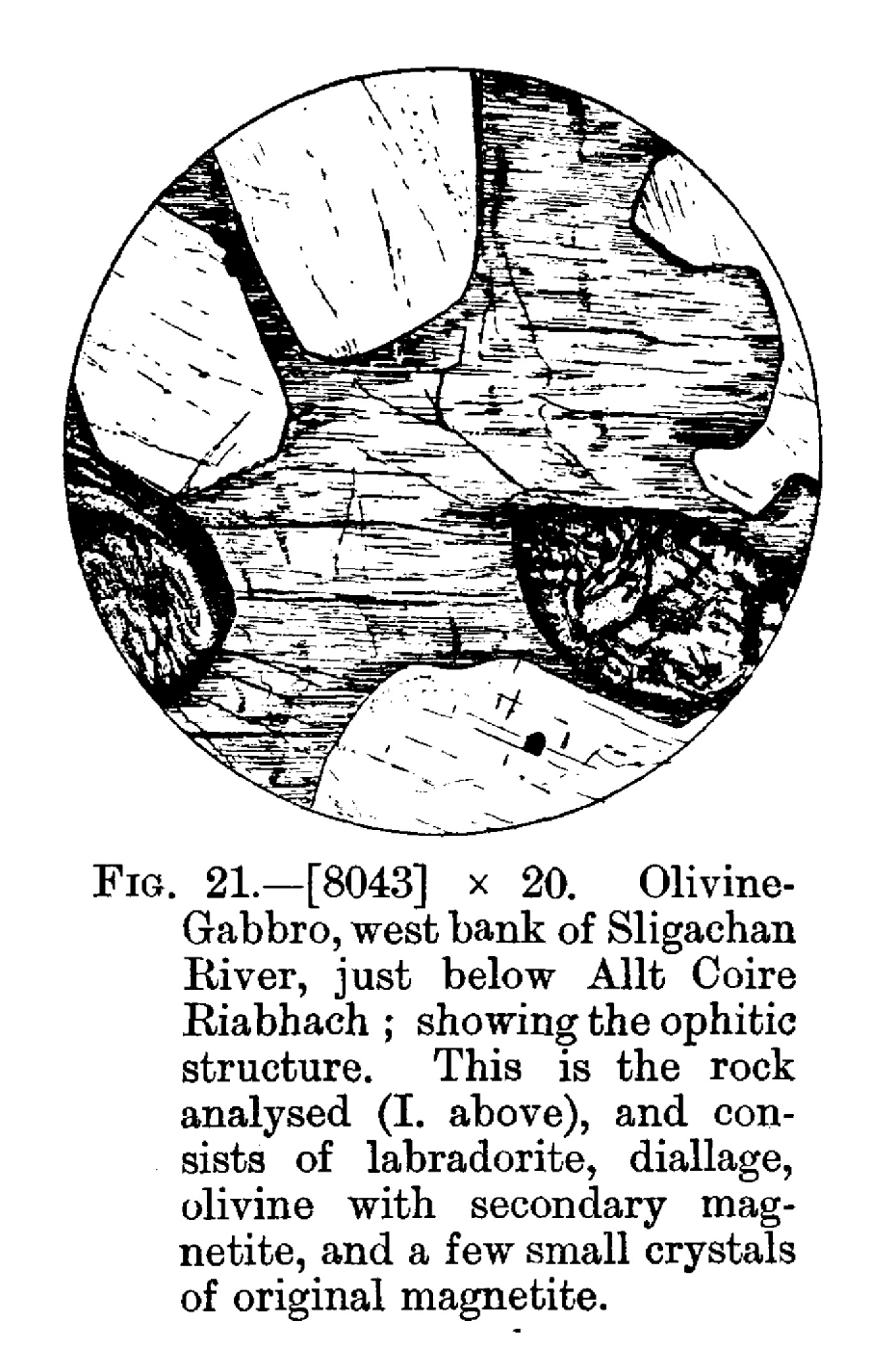
(Figure 21) (S8043) [NG 481 232] × 20. Olivine-Gabbro, west bank of Sligachan River, just below Allt Coire Riabhach; showing the ophitic structure. This is the rock analysed (I. above), and consists of labradorite, diallage, olivine with secondary magnetite, and a few small crystals of original magnetite.

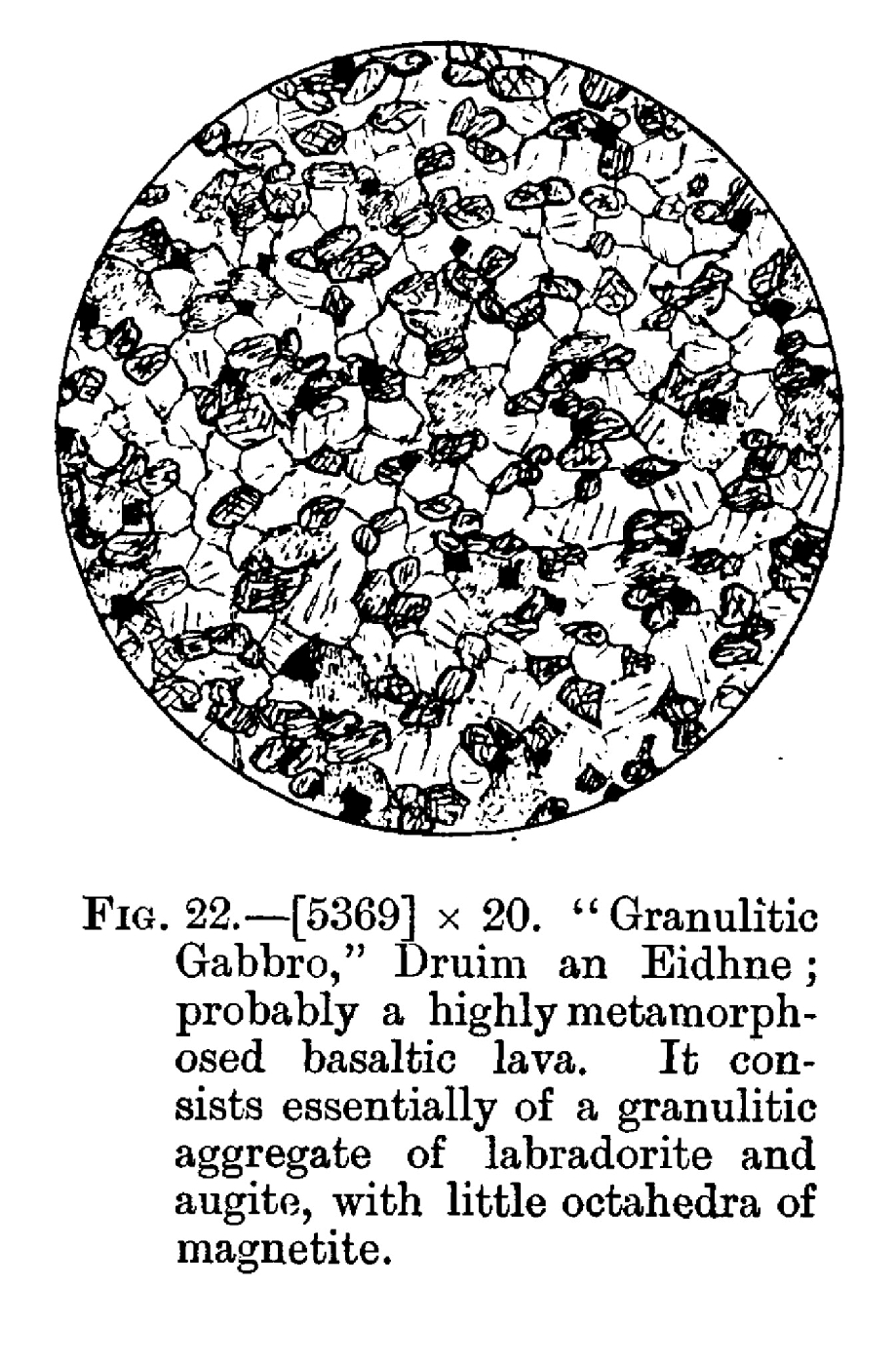
(Figure 22) (S5369) [NG 49 22] × 20. "Granulitic Gabbro", Druim an Eidhne; probably a highly metamorphosed basaltic lava. It consists essentially of a granulitic aggregate of labradorite and augite, with little octahedra of magnetite.

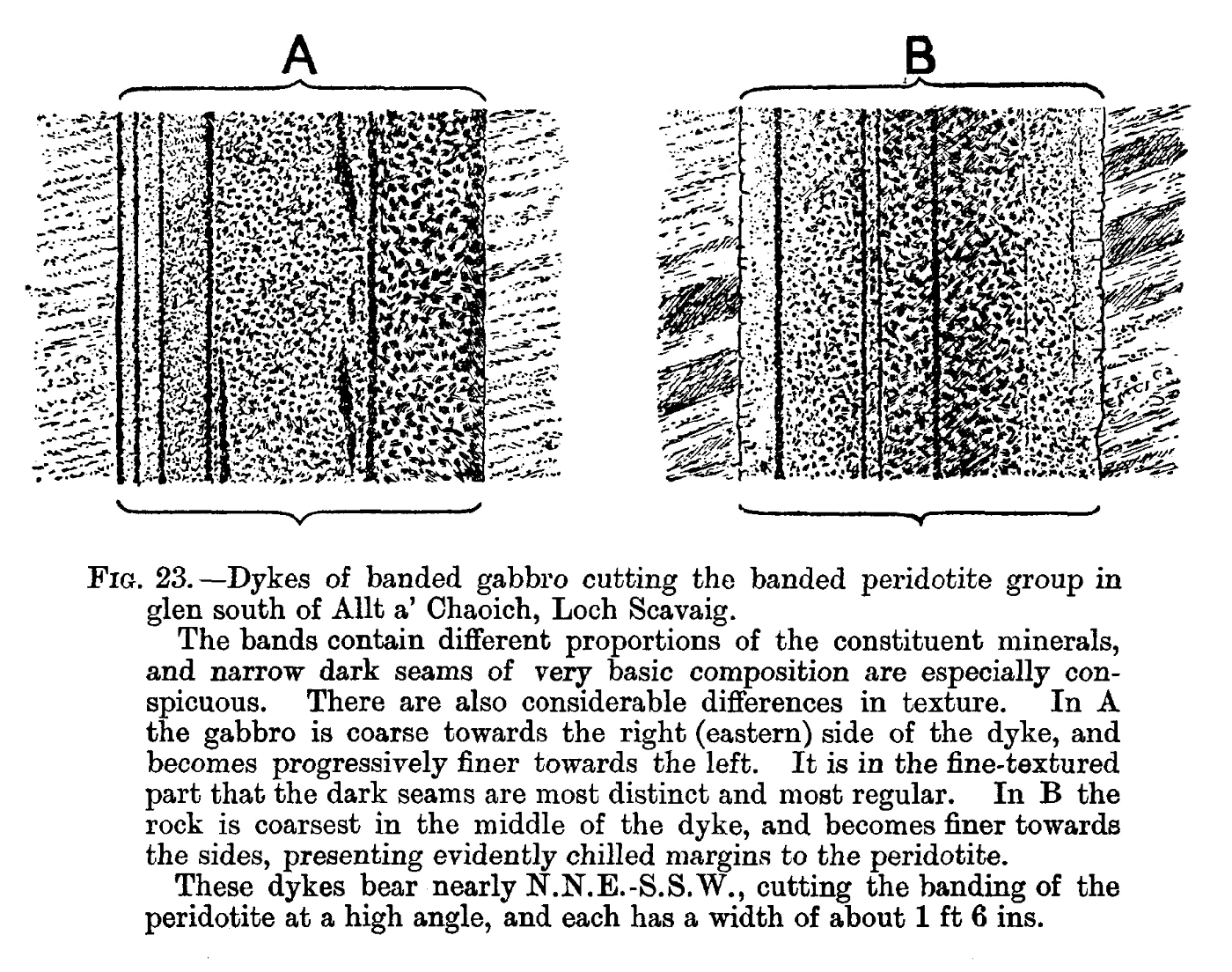
(Figure 23) Dykes of banded gabbro cutting the banded peridotite group in glen south of Allt a' Chaoich, Loch Scavaig.

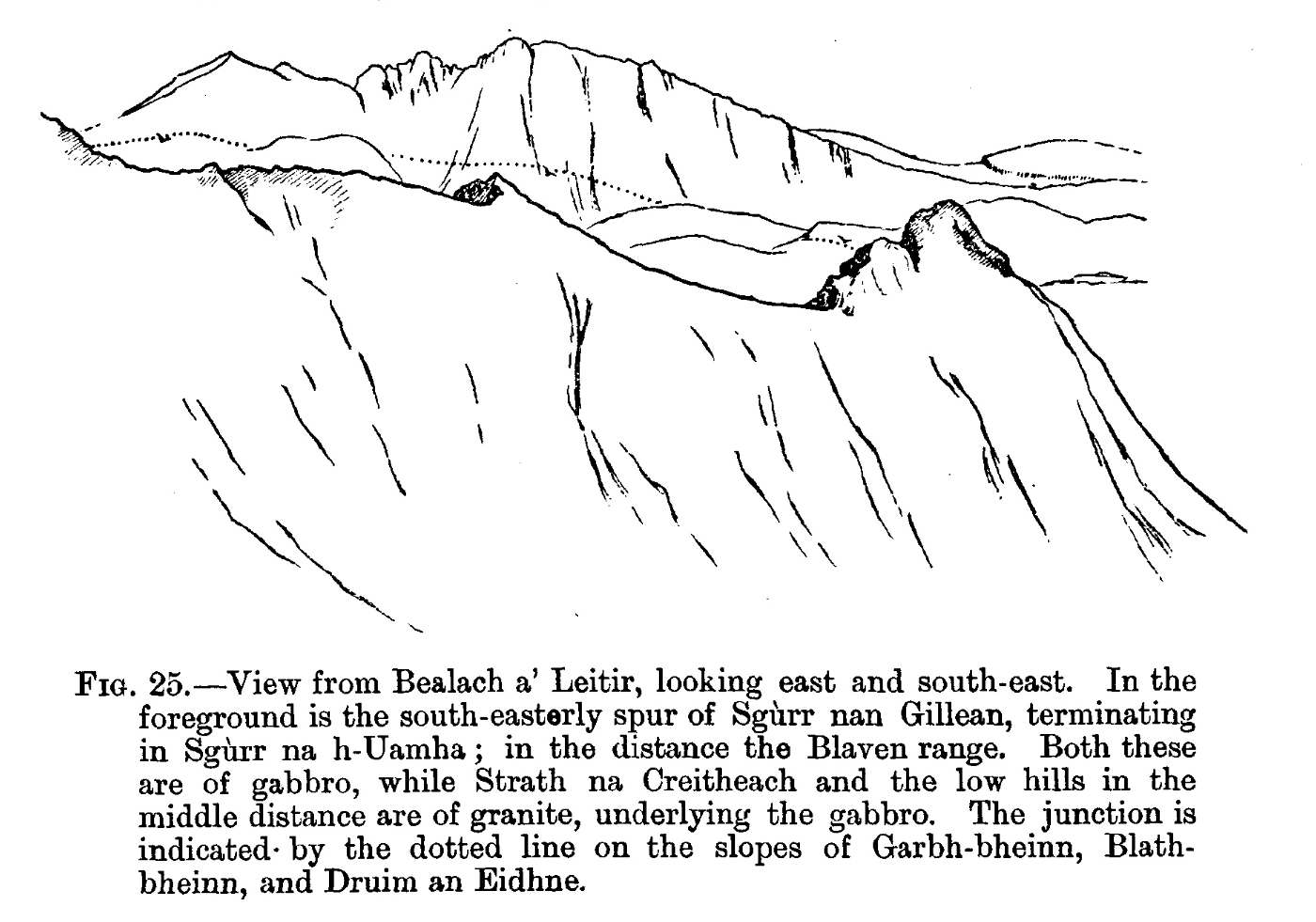
(Figure 25) View from Bealach a' Leitir, looking east and south-east. In the foreground is the south-easterly spur of Sgùrr nan Gillean, terminating in Sgùrr na h-Uarnha; in the distance the Blaven range. Both these are of gabbro, while Strath na Creitheach and the low hills in the middle distance are of granite, underlying the gabbro. The junction is indicated. by the dotted line on the slopes of Garbh-bheinn, Blath-bheinn, and Druim an Eidhne.

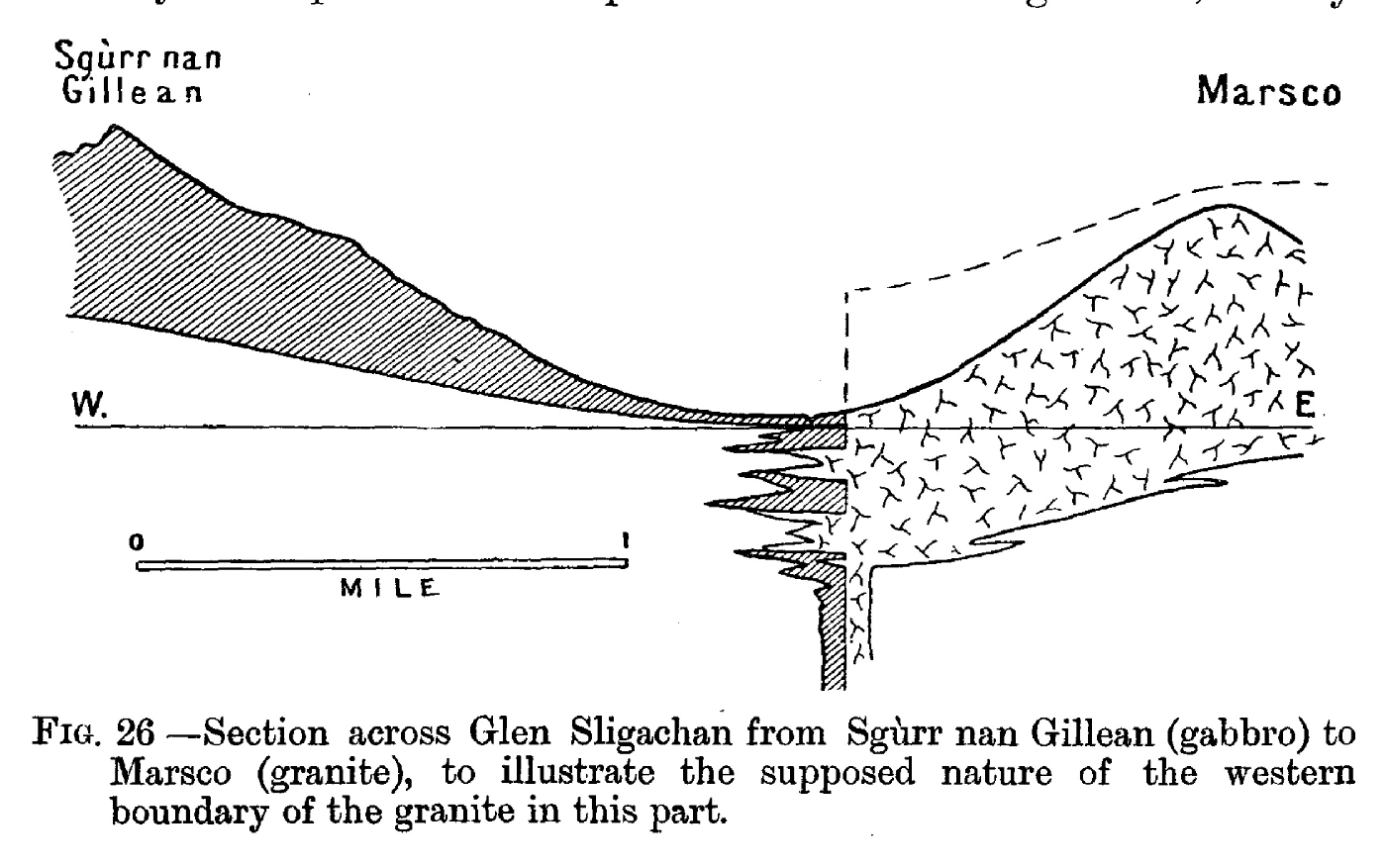
(Figure 26) Section across Glen Sligachan from Sgùrr nan Gillean (gabbro) to Marsco (granite), to illustrate the supposed nature of the western boundary of the granite in this part.

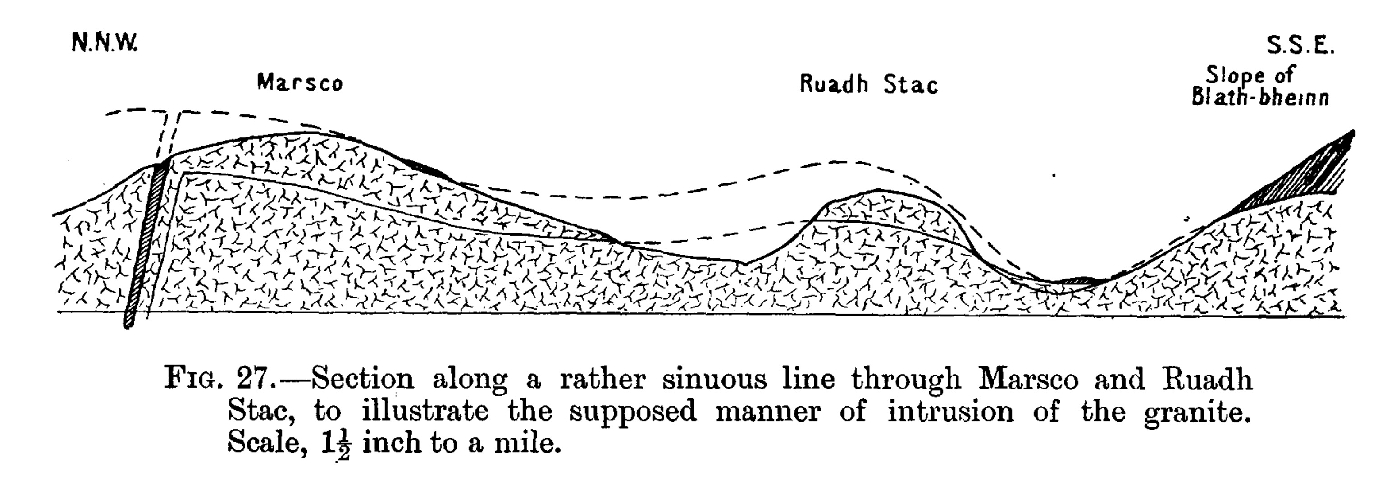
(Figure 27) Section along a rather sinuous line through Marsco and Ruadh Stac, to illustrate the supposed manner of intrusion of the granite. Scale, ½ inch to a mile.

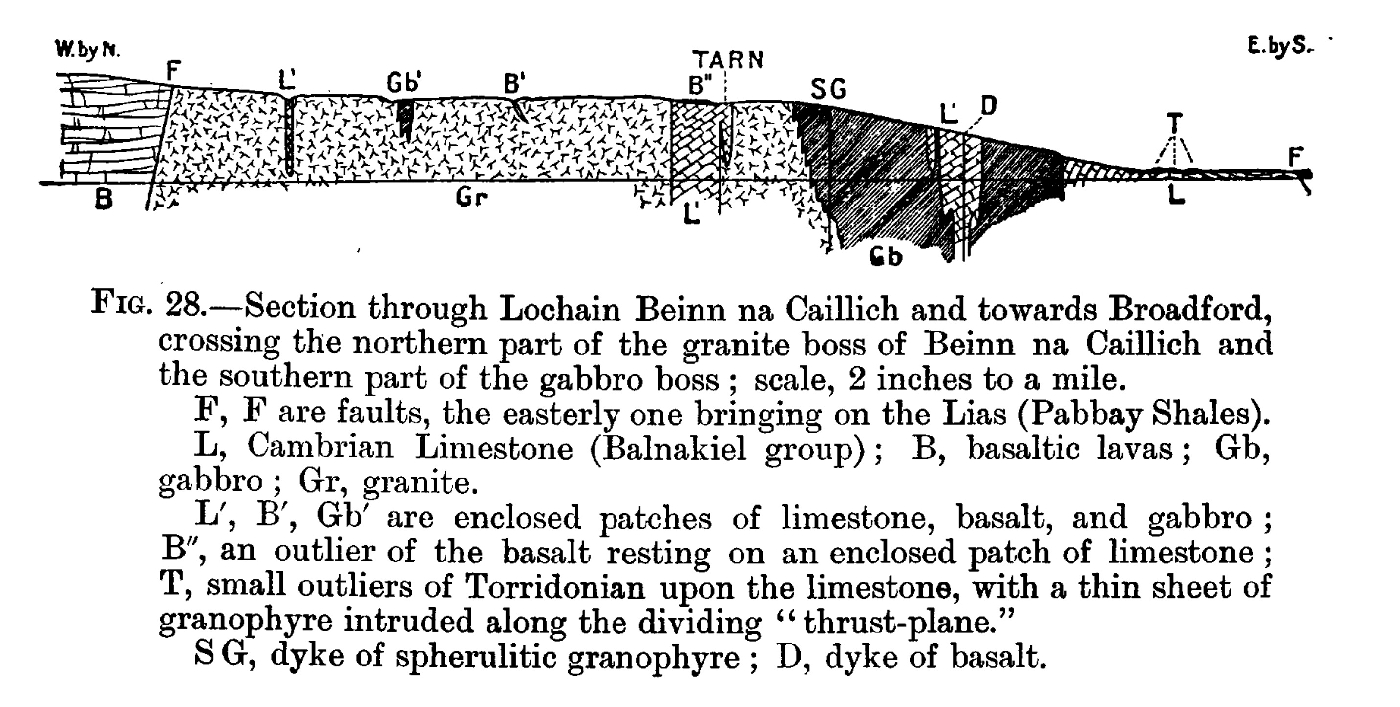
(Figure 28) Section through Lochain Beinn na Caillich and towards Broadford, crossing the northern part of the granite boss of Beinn na Caillich and the southern part of the gabbro boss; scale, 2 inches to a mile. F, F are faults, the easterly one bringing on the Lias (Pabbay Shales). L, Cambrian Limestone (Balnakiel group); B, basaltic lavas; Gb, gabbro; Gr, granite. L′, B′, Gb′ are enclosed patches of limestone, basalt, and gabbro; B″, an outlier of the basalt resting on an enclosed patch of limestone; T, small outliers of Torridonian upon the limestone, with a thin sheet of granophyre intruded along the dividing "thrust-plane". S G, dyke of spherulitic granophyre; D, dyke of basalt.

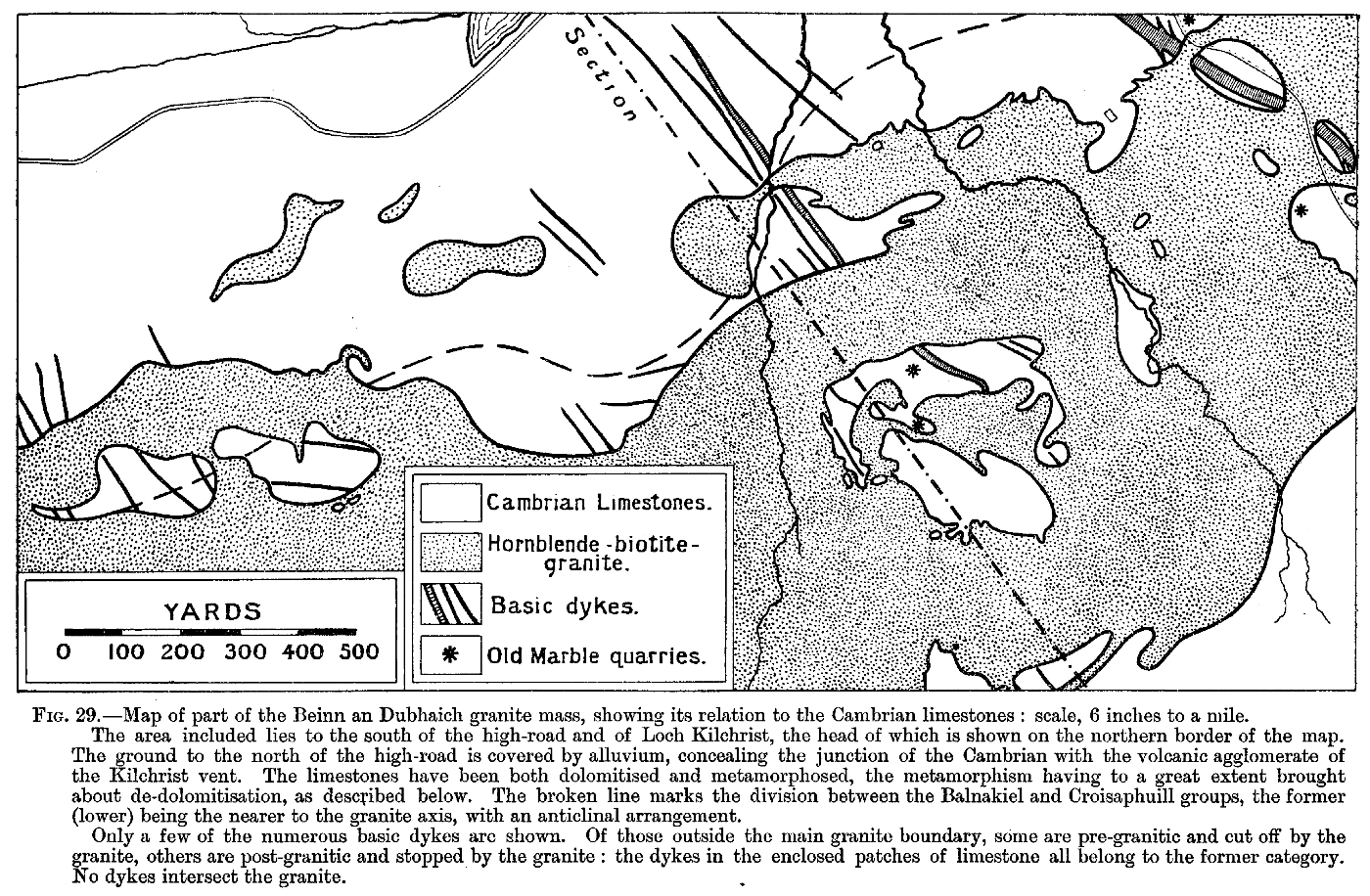
(Figure 29) Map of part of the Beinn an Dubhaich granite mass, showing its relation to the Cambrian limestones: scale, 6 inches to a mile. The area included lies to the south of the high-road and of Loch Kilchrist, the head of which is shown on the northern border of the map. The ground to the north of the high-road is covered by alluvium, concealing the junction of the Cambrian with the volcanic agglomerate of the Kilchrist vent. The limestones have been both dolomitised and metamorphosed, the metamorphism having to a great extent brought about de-dolomitisation, as described below. The broken line marks the division between the Balnakiel and Croisaphuill groups, the former (lower) being the nearer to the granite axis, with an anticlinal arrangement. Only a few of the numerous basic dykes are shown. Of those outside the main granite boundary, some are pre-granitic and cut off by the granite, others are post-granitic and stopped by the granite: the dykes in the enclosed patches of limestone all belong to the former category. No dykes intersect the granite.

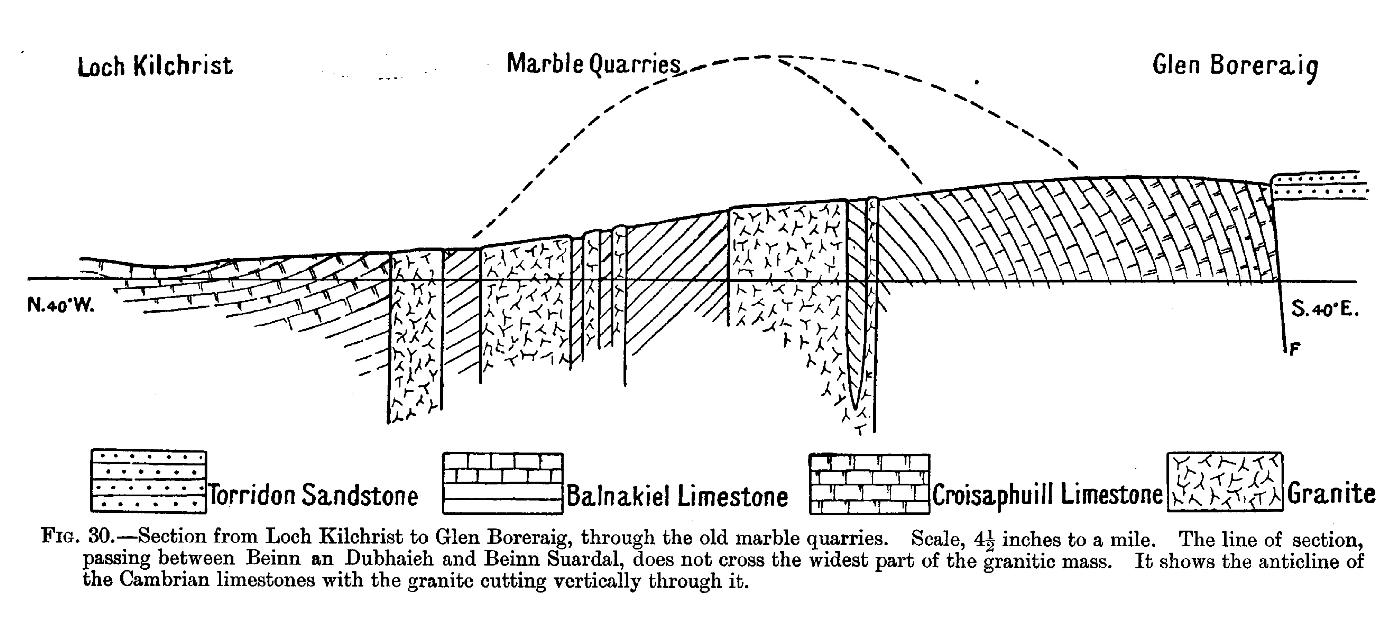
(Figure 30) Section from Loch Kilchrist to Glen Boreraig, through the old marble quarries. Scale, 4½ inches to a mile. The line of section,  passing between Beinn an Dubhaich and Beinn Suardal, does not cross the widest part of the granitic mass. It shows the anticline of the Cambrian limestones with the granite cutting vertically through it.

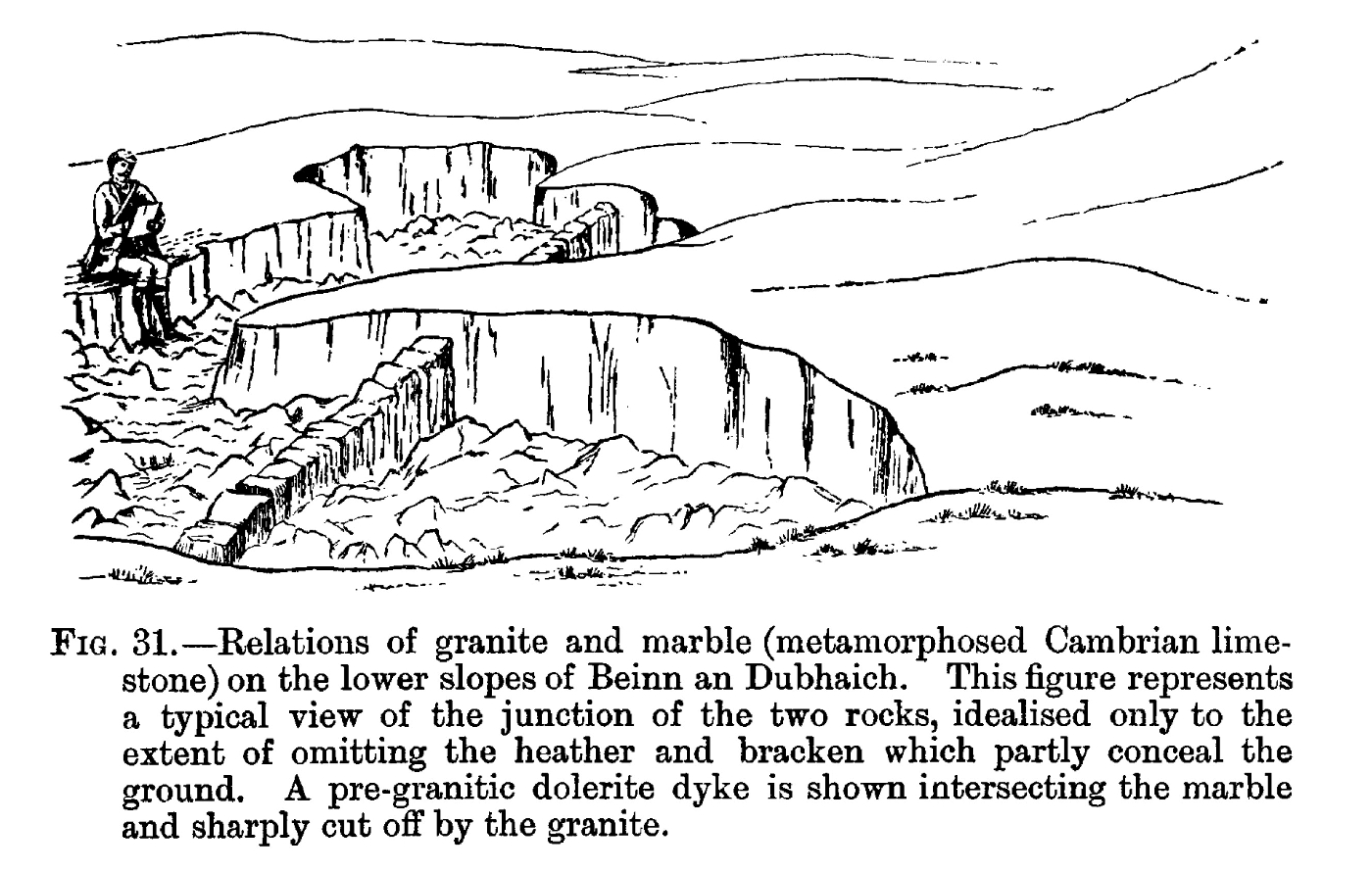
(Figure 31) Relations of granite and marble (metamorphosed Cambrian limestone) on the lower slopes of Beinn an Dubhaich. This figure represents a typical view of the junction of the two rocks, idealised only to the extent of omitting the heather and bracken which partly conceal the ground. A pre-granitic dolerite dyke is shown intersecting the marble and sharply cut off by the granite.

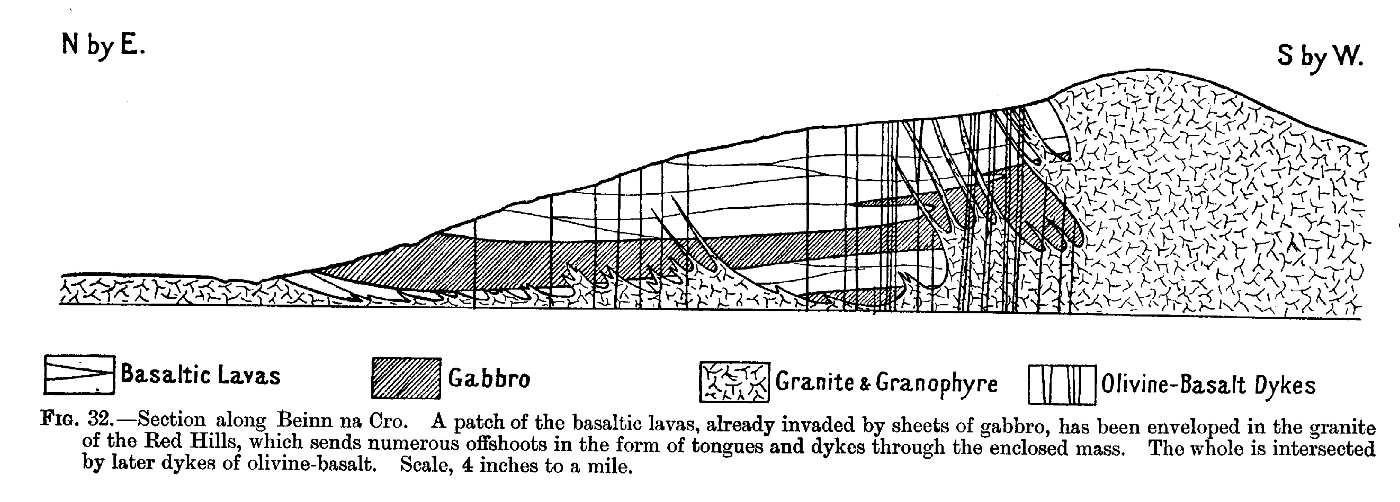
(Figure 32) Section along Beinn na Cro. A patch of the basaltic lavas, already invaded by sheets of gabbro, has been enveloped in the granite of the Red Hills, which sends numerous offshoots in the form of tongues and dykes through the enclosed mass. The whole is intersected by later dykes of olivine-basalt. Scale, 4 inches to a mile.

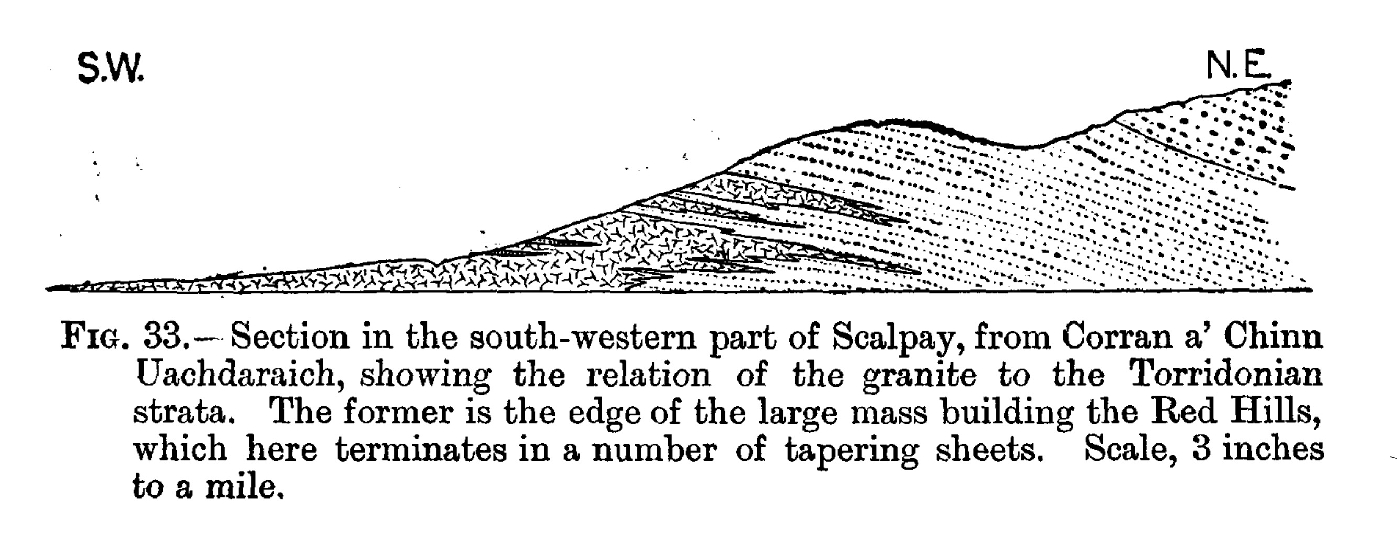
(Figure 33) Section in the south-western part of Scalpay, from Corran a' Chinn Ijachclaraich, showing the relation of the granite to the Torridonian strata. The former is the edge of the large mass building the Red Hills, which here terminates in a number of tapering sheets. Scale, 3 inches to a mile.

(Figure 34) Some rarer minerals of the granophyres. A to D × 30, E to H × 100. A to D are riebeckite crystals from the granophyre of Meall Dearg, illustrating the allotriomorphic habit of the larger and the idiomorphic shape of the smaller crystals (S8856) [NG 495 227]. E and F show an unidentified brown mineral intergrown with green horneblende in a granophyre from Druim na Cleochd (S3198). G and H are twinned crystals of allanite(?) in the granophyre of Allt Fearna, near Broadford. In the former are shown the approximate positions of the axes of strongest absorption for the two individuals.

(Figure 35) Section across the deep gully on the N.W. slope of Marsco. Explanation in the text. K is granite of pegmatoid and gneissic structure veining the gabbro as exposed in the bed of the stream a little lower down. Its connection with the granite to the south is only conjectural.

(Figure 36) Sketch-map to illustrate the relations of the enclosed bodies of gabbro and of the rock here styled "marscoite" on the slopes of Marsco. Scale, 3 inches to a mile.

(Figure 37) Outlines of Glamaig and Beinn Dearg, seen from the road a mile north of Sligachan. The broken north face of Glamaig, on the extreme left, consists largely of metamorphosed basaltic lavas. Beinn Dearg illustrates the characteristic rounded outlines of the granite hills; while, in strong contrast with this, the abrupt knoll of Sròn a' Bhealain is seen towards the right of the sketch.

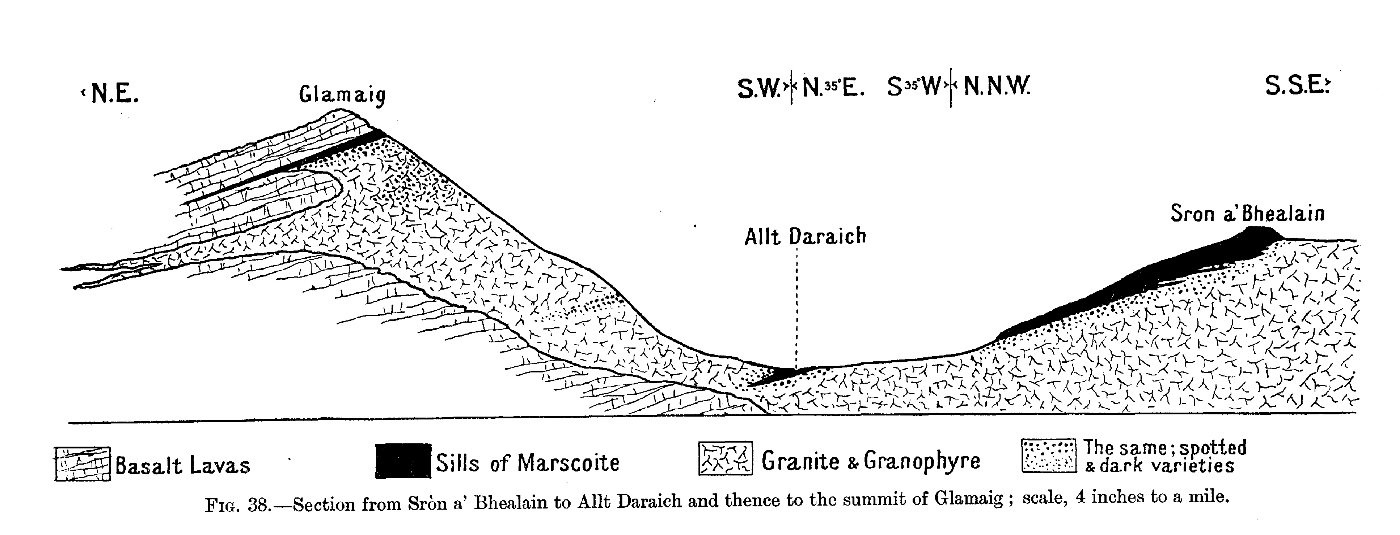
(Figure 38) Section from Sròn a' Bhealain to Allt Daraich and thence to the summit of Glamaig; scale, 4 inches to a mile.

(Figure 39) Section through the summit of Glamaig and westward to the Sligachan estuary; scale, 4 inches to a mile.

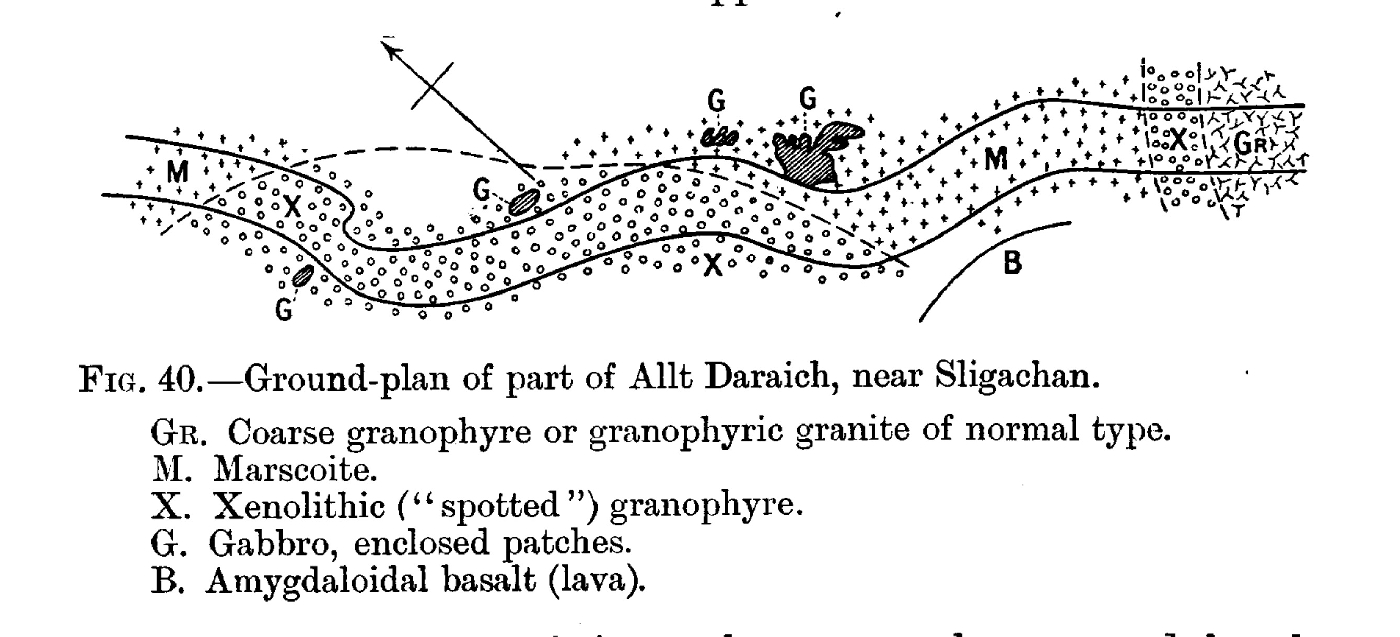
(Figure 40) Ground-plan of part of Allt Daraich, near Sligachan. Ga. Coarse granophyre or granophyric granite of normal type. M. Marscoite. X. Xenolithic ("spotted") granophyre. G. Gabbro, enclosed patches. B. Amygdaloidal basalt (lava).

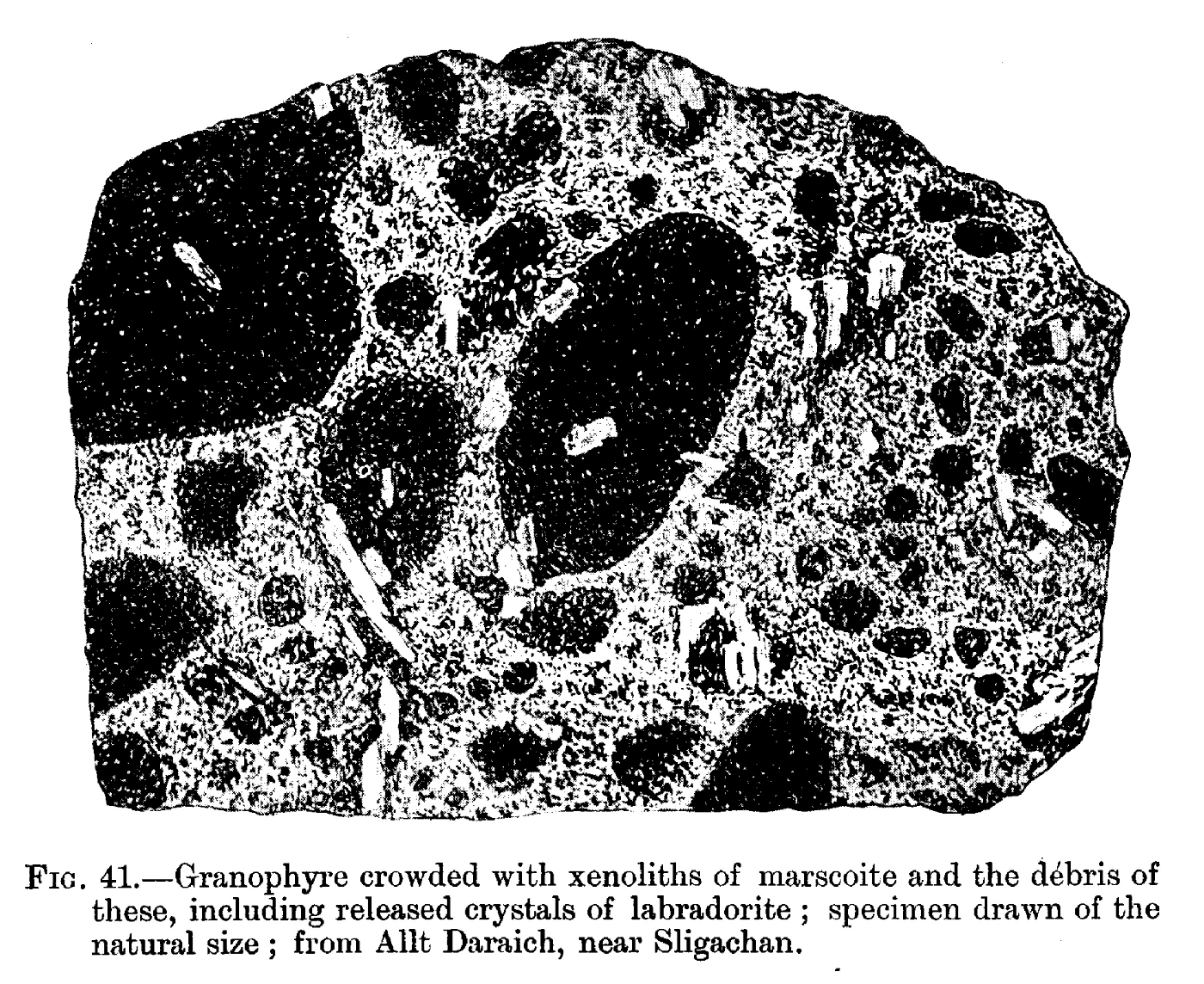
(Figure 41) Granophyre crowded with xenoliths of marscoite and the debris of these, including released crystals of labradorite; specimen drawn of the natural size; from Allt Daraich, near Sligachan.

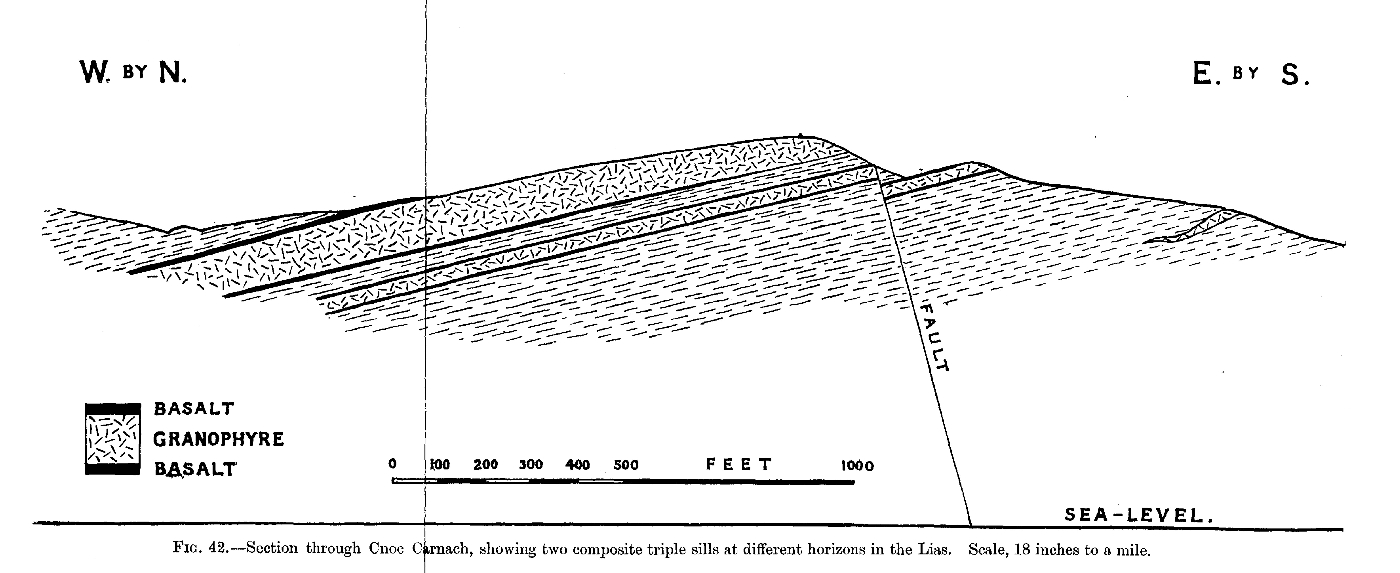
(Figure 42) Section through Cnoc Càrnach, showing two composite triple sills at different horizons in the Lias. Scale, 18 inches to a mile.

(Figure 43) Section of triple composite sill intruded in the coarse pebbly felspathic sandstones of the Torridonian (Applecross Grits) on the southern shore of Camas na Geadaig, in the N.W. of Scalpay. The middle and principal member of the sill is a spherulitic granophyre; above is basalt, 4 ft thick, with a sharp junction; below is basalt, 2 ft thick, with the appearance of a more gradual transition. The junctions show reactions between the basic and acid rocks of the kind described below.

(Figure 44) Section across Allt an 't-Sithean and through Cnoc an 't-Sithean, about 1¼ mile N.N.W. of Sligachan, to show the relations of the basalt (black) and granophyre (white) in the quintuple composite laccolite. The intrusion occurs in the basaltic lava group, and one of the ordinary dolerite sills is shown lower down. The triple composite dyke which has probably fed the laccolite does not appear in this section, but some later basic dykes of simple habit are shown, and these in some cases have failed to penetrate the thick mass.

(Figure 45) Section across the composite sill of Carn Dearg, near Suishnish. Scale, 6 inches to a mile. G, granophyre of sill; B, lower basalt member; D, supposed dyke-feeder of sill; P, later independent intrusion of rock varying from olivine-gabbro to picrite (see Chapter 22).

(Figure 46) Sketch-map of a small area in the interior of the Isle of Scalpay: explanation in the text.

(Figure 47) Altered phenocrysts and xenocrysts in the basalt of the composite sills; × ca. 10. A (S6735) [NG 655 197]. Labradorite phenocryst in upper basalt of Cnoc Mrnach; the cleavage cracks opened probably by heat due to the succeeding acid intrusion. B (S6735) [NG 655 197]. Labradorite phenocryst in the same rock; showing peripheral fissures with a tendency to concentric arrangement. C (S7071) [NG 632 174]. Labradorite phenocryst in lower basalt of Beinn a' Chaìrn; showing opening of cleavage cracks and glass-inclusions, probably of secondary origin, in interior of crystal. D (S6735) [NG 655 197]. Orthoclase xenocryst in upper basalt of Cnoc Chrnach; turbid owing to secondary glass-inclusions. E (S6732) [NG 660 204]. Oligoclase xenocryst in lower basalt of Creag Bhriste; showing similar turbidity and also rounding of the angles by magmatic corrosion. F (S7069) [NG 625 168]. Oligoclase xenocryst in basalt xenolith enclosed in acid rock of Beinn a' Chaìrn; showing a more advanced stage of corrosion, affecting the interior as well as the border of the crystal. G (S6735) [NG 655 197]. Oligoclase xenocryst in upper basalt of Cnoc Càrnach; showing a very advanced stage of corrosion, with formation of new felspar microlites in the interior of the crystal. H (S7069) [NG 625 168]. Quartz xenocryst in basalt xenolith at Beinn a' Chaìrn; rounded, and with border of granular augite (now decayed). K (S7066) [NG 638 181]. Quartz xenocryst in basalt xenolith at same place; showing more advanced corrosion and a deeper border composed of larger granules. L (S6733) [NG 660 204]. Quartz xenocryst in acidified basalt xenolith at Creag Bhriste; showing more advanced corrosion, but the augite border has been resorbed with increasing acidification of the matrix. M (S6731) [NG 645 247]. Xenocryst of alkali-felspar in lower basalt of Rudh' an Eireannaich; showing the margin honeycombed by secondary inclusions.

(Figure 48) Section of composite sill in the Lias at Rudh' an Eireannaich, Broadford Bay. A, a fault; its fissure occupied by a double basalt dyke. B, a small fault. C, escarpment running out to sea eastward, and forming the actual headland. D and E, thin sills, 1½ ft and 1 ft respectively, referred to below.

(Figure 49) Enlarged section of composite sill of Rudh' an Eireannaich, taken at the low escarpment on the shore, the eastward continuation of C in the preceding figure. The numbers indicate the specific gravities of specimens from different parts of the section.

(Figure 50) Ideal curve of variation of magnesia, PpP1. Here PM and P1M1 represent the percentages of magnesia in a basic and an acid rock; p1m, that in a hybrid rock formed by the admixture of the two; and pm, that in a normal rock having the same silica-percentage as the hybrid. The latter has thus an excess of magnesia.

(Figure 51) Ideal curve of variation of lime. The diagram is lettered to correspond with the preceding, lime being understood instead of magnesia. It is seen that the hybrid rock has a deficiency of lime as compared with the natural rock of the same silica-percentage.

(Figure 52) Sketch-map illustrating the distribution of the basic sills, and also of the multiple basic dykes, in relation to the large plutonic intrusions. Scale, ¼ inch to a mile. (a) The heavy dotted line indicates the area (embracing the plutonic intrusions with a narrow surrounding belt) which is free from sills belonging to the great group. The lighter dotted line marks the limit (in this part the eastern limit) of multiple sills. This depends partly upon the general attenuation of the group in this direction, but partly also upon the progress of erosion, since the multiple sills are developed chiefly in the upper portion of the lava group. (b) The heavy broken line indicates the distribution of the principal multiple basic dykes. They are found within an elongated oval tract, about eleven miles long, centring in the great gabbro laccolite and having its long axis in the general direction of the dykes themselves. This oval tract, however, is divided into two detached areas by the plutonic masses. It is not improbable that better exposures might enable us to join these two areas on the west side of the Cuillins, but on the east side the granite has offered an impenetrable resistance (see Chapter 17).

(Figure 53) Section through Monadh Meadale and Beinn Totaig; showing intrusive sills (indicated by vertical hading) in the basaltic lavas, and showing how these run together to form double and multiple sills. Scale, 4 inches a mile.

(Figure 54) Preshal More, near Talisker, seen from the south-west.

(Figure 55) Section through Druim na Crìche, about 5½ miles S.S.W. of Portree and 5½ miles N.W. of Sligachan; showing composite double sills or laccolites of the Roineval type. Scale: 6 inches to a mile. The prolongation below the surface is partly conjectural.

(Figure 56) Geological map of Roineval, showing the composite double sills. Scale: 4½ inches to a mile.

(Figure 57) Section through Roineval, showing the double sill at the summit and the lower mugearite sill; Mugearlte dyke-feeders. also conjectural relation of the sills to Scale: 4½ inches to a mile.

(Figure 58) Sketch-map illustrating the distribution of certain groups of acid intrusions in relation to the granite of the Red Hills. Scale, ¼ inch to a mile. (a.) The line (of small circles connected by dashes) in the gabbro area indicates the western limit of granite and granophyre veins, in so far at least as they are locally abundant and noticeable, in the gabbro of the Cuillins. It may probably be taken as showing, with rough approximation, the concealed extension of the granite beneath the gabbro laccolite. (b.) The roughly semicircular belt, enclosed by a line of dots and dashes, marks the distribution of the peculiar composite (basic and acid) intrusions of the symmetrical kind, which we have distinguished as the Cnoc Càrnach type. (c.) The heavy broken line indicates the area of distribution of the minor acid intrusions in general. It is an irregular oval, about 24 miles long, centring in the granite of the Red Hills, and having its long axis in a direction nearly agreeing with that of the dykes. (d.) The short heavy line at A marks the position of the peculiar felsite of the Alaisdair Stone-shoot.

(Figure 59) Section across circus north of Rudha Chinn Mhòir, in the N.W. of Scalpay. T, Torridonian sandstone; C, Triassic conglomerate; G, granophyre sill; G′, granophyre dyke; S, basalt sill; B, B, basalt dykes.

(Figure 61) [SS71]. Thin slice from one of the rhyolitic dykes, apophyses from the granite, intersecting the gabbro of Druim an Eidhne; magnified four diameters. To the left are seen a number of coalescing spherulites. These have grown in one place round a group of felspar crystals, in other places round micropegmatite phenocrysts, which have in part the outlines of felspar crystals but are crowded with inclusions of quartz in micrographic intergrowth. The general mass of the rock has a strongly marked flow-structure, and in the right-hand half of the figure the fluxion-lines are seen to diverge in a fashion which indicates discontinuous flowing movement in the mass.

(Figure 62) Ground-plan of a small area in the lower part of Tairneilear, showing dykes terminating abruptly against volcanic agglomerate.

(Figure 63) Sketch-map illustrating the bearings of the basic dykes in different parts of Skye. The letters C and R mark the situations of the Cuillins and the Red Hills respectively.

(Figure 64) Ground-plan on shore west of Broadford Bay; to show the abrupt breaking off and lateral shifting of a dyke.

(Figure 67) Ground-plan on shore west of Broadford Bay; to show a number of associated dykes sharply deviated for a short distance.

(Figure 68) (S6421) [NX 12 89] × 30. Diabase or coarse dolerite, dyke ½ mile E.S.E. of summit of Ben Aslak and 2 miles S.W. of Kylerhea. Typical ophitic structure. The felspar crystals in this and numerous similar rocks show between crossed nicols a strong zonary banding, which does not disappear with the albite-lamellation, and is therefore due to the marginal portion being of different composition from the interior.

(Figure 69) Sheaths and cores on surface of a basaltic sheet, rather more than ⅓ mile S.W. of Cnoc a' Chàise Mòr, near Knock. Scale, ¼ of natural size. (C. T. C.)

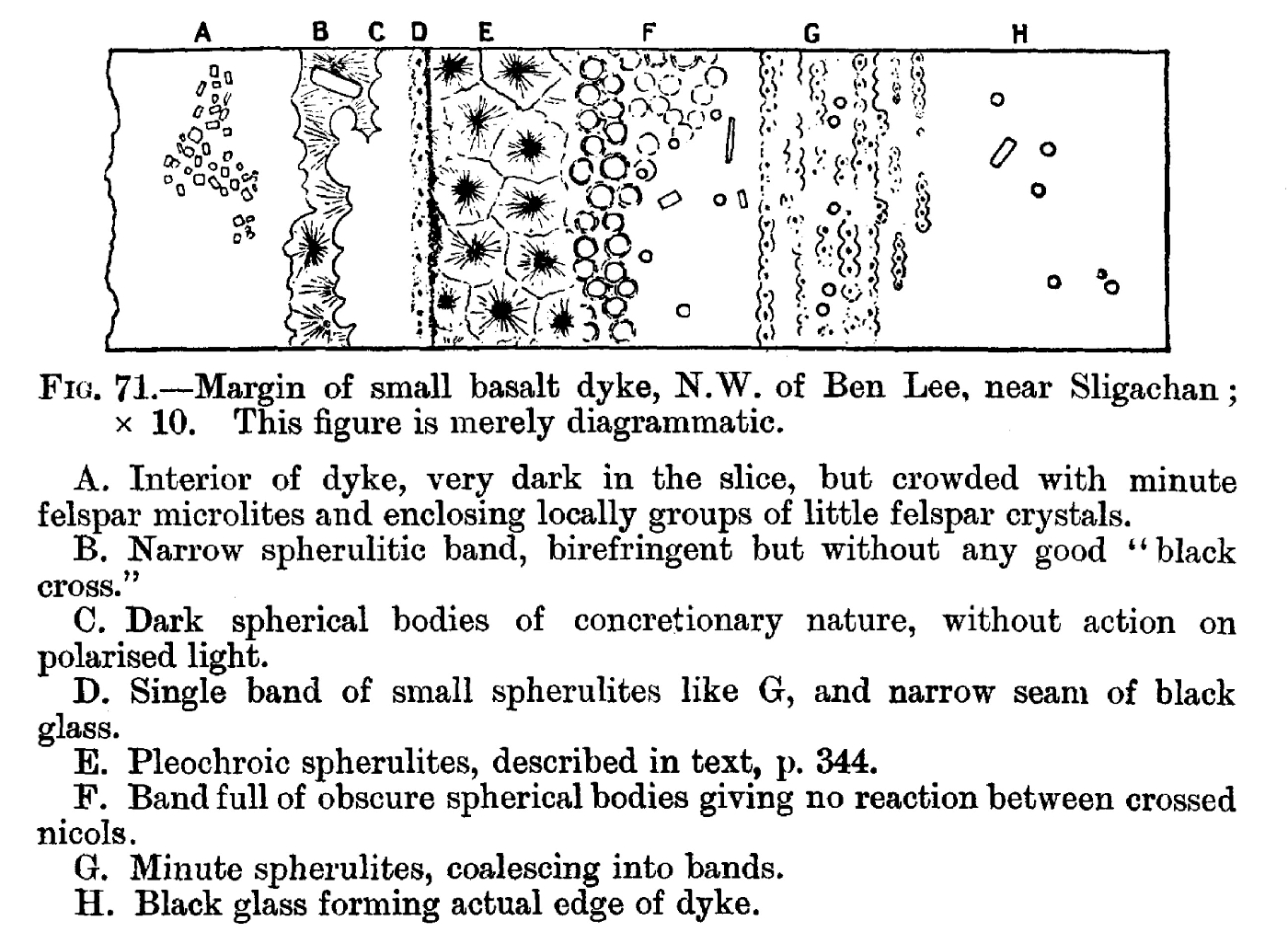
(Figure 71) Margin of small basalt dyke, N.W. of Ben Lee, near Sligachan; × 10. This figure is merely diagrammatic. A. Interior of dyke, very dark in the slice, but crowded with minute felspar microlites aud enclosing locally groups of little felspar crystals. B. Narrow spherulitic band, birefringent but without any good "black cross". C. Dark spherical bodies of concretionary nature, without action on polarised light. D. Single band of small spherulites like G, and narrow seam of black glass. E. Pleochroic spherulites, described in text, p. 344. F. Band full of obscure spherical bodies giving no reaction between crossed nicols . G. Minute spherulites, coalescing into bands. H. Black glass forming actual edge of dyke.

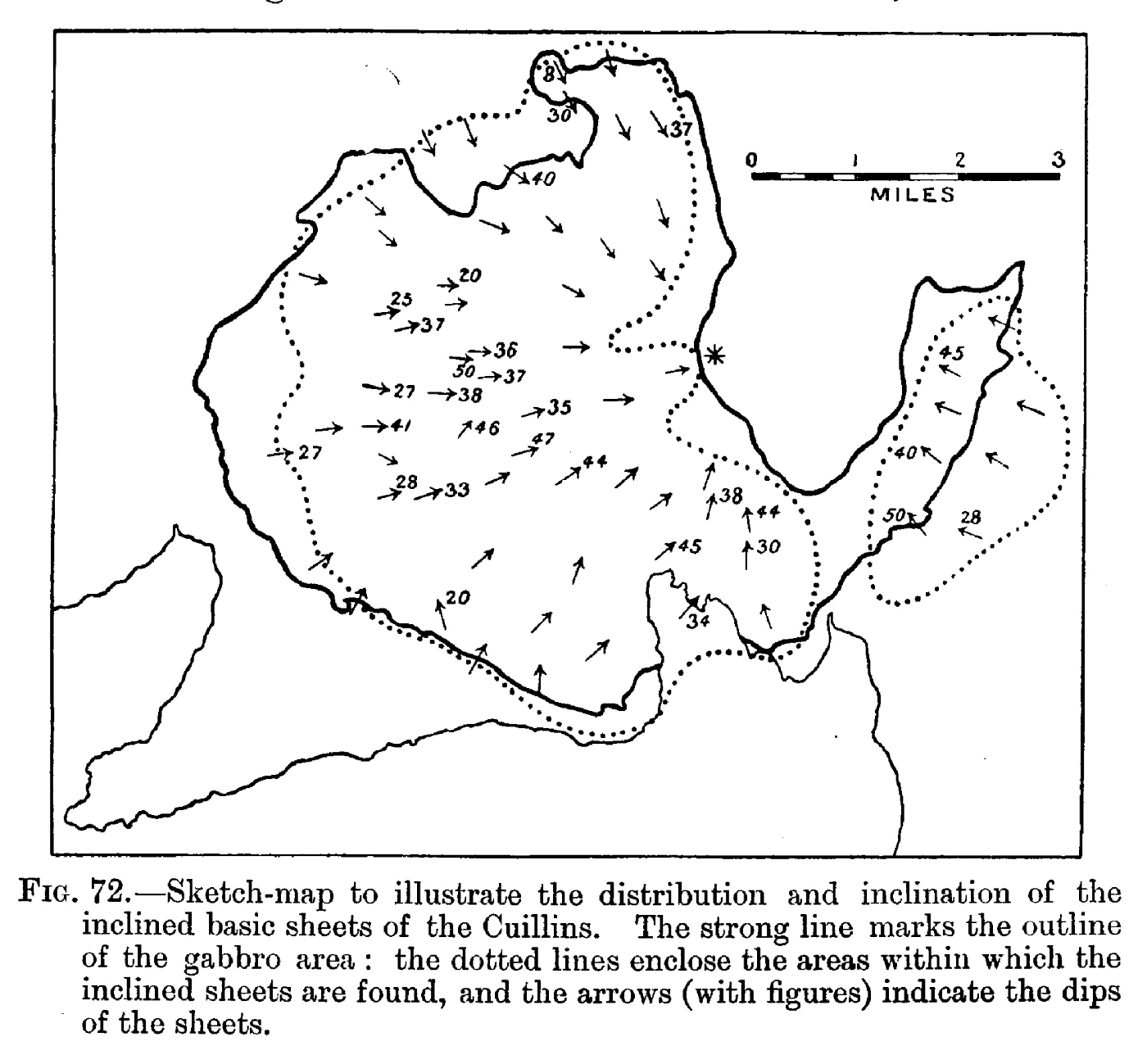
(Figure 72) Sketch-map to illustrate the distribution and inclination of the inclined basic sheets of the Cuillins. The strong line marks the outline of the gabbro area: the dotted lines enclose the areas within which the inclined sheets are found, and the arrows (with figures) indicate the dips of the sheets.

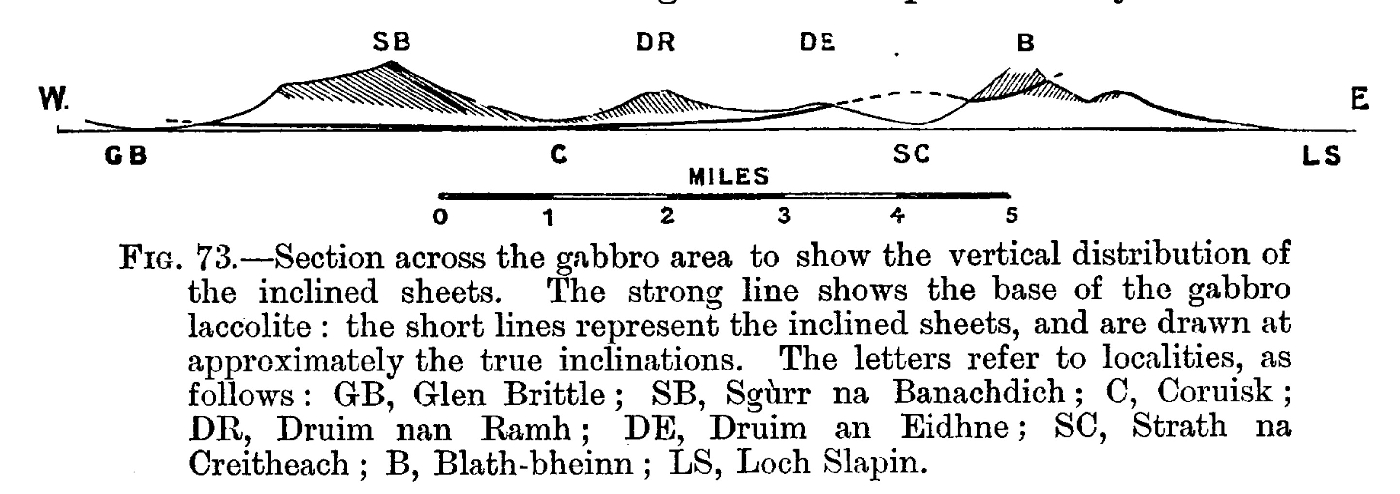
(Figure 73) Section across the gabbro area to show the vertical distribution of the inclined sheets. The strong line shows the base of the gabbro laccolite: the short lines represent the inclined sheets, and are drawn at approximately the true inclinations. The letters refer to localities, as follows: GB, Glen Brittle; SB, Sgùrr na Banachdich; C, Coruisk; DR, Druim nan Ramh; DE, Druim an Eidhne; SC, Strath na Creitheach; B, Blath-bheinn; LS, Loch Slapin.

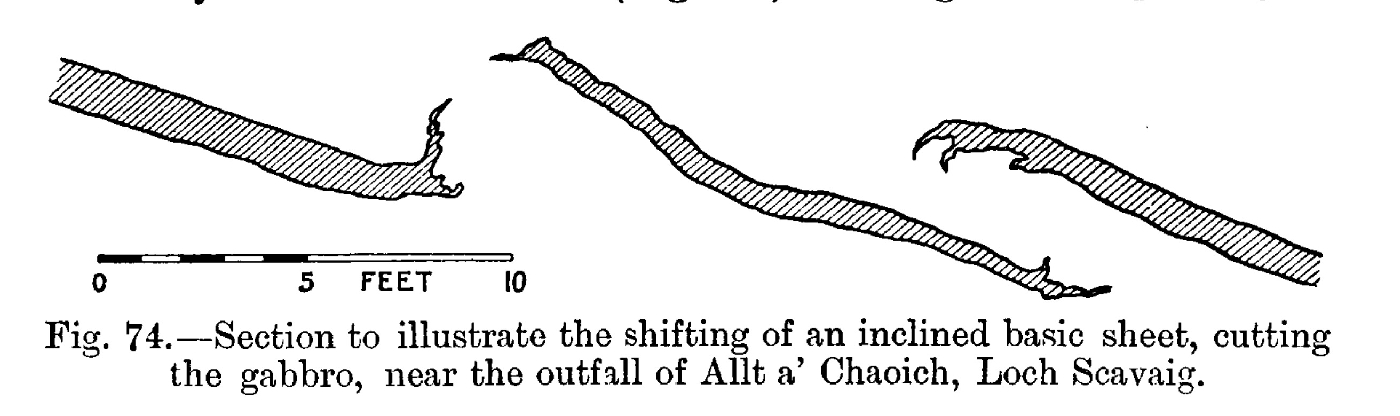
(Figure 74) Section to illustrate the shifting of an inclined asic sheet, cutting the gabbro, near the outfall of Allt a’ Chaoich, Loch Scavaig.

(Figure 75) Sketch-Map to illustrate the distribution of the peridotites, older and younger. Scale, ¼ inch to a mile. The older plutonic laccolites of the south-western Cuillins (with one in the Isle of Soay) are marked in black. The large crescentic area enclosed by a dotted boundary embraces the younger peridotite dykes of the Cuillins and the Strathaird peninsula. The only peridotite dykes outside this area are a group on the coast of Loch Brittle at B, but peridotite sills occur in Soay as indicated. The boss of An Sgùman is situated at the point marked S, and the intrusions of Glamaig and Carn Dearg at G and D, on the prolongations of the two horns of the crescent.

(Figure 76) Sketch-Map to show the distribution of some trachytic and other dykes. (CL) The broken line encloses the oval area of distribution of the Drynoch group of trachytes. (b.) The line made up of dots and dashes marks the limits of distribution in Skye of the trachytic and allied dykes of Sleat and the Broadford district. (c.) The small circles connected by straight lines indicate the known localities of acid pitchstone dykes. (d ) The small oval enclosed by the dotted line shows the area affected by the Coirechatachan type of dykes, probably altered pitchstones. It falls in the middle of the narrow strip of country including the occurrences under (c).

(Figure 77) Diagram to show the varying inclination of the "rodding" in the dykes of the Broadford and Sleat districts. Explanation in the text. Del. C. T. C. a. Trachyte. Allt Mòr, about two miles S.E. of Drochaid Lusa. In amygdules also. b. Trachyte. Burn about a mile W. of the top of An Sgulan, Kinloch. c. Trachyte. Allt Cùl Airidh Lagain, nearly three-quarters of a mile above the road. d. Trachyte. Allt Réidhe Ghlais, nearly three-quarters of a mile above the road. In amygdules also. e. Trachyte. Rather more than half a mile S.E. of Broadford Bridge. f. Trachyte. Allt Cùl Airidh Lagain. Nearly a third of a mile below the road. In amygdules also. g. Trachyte. Allt a Choin, about 200 yards slightly E. of N. of Kinloch. In amygdules also. h. Trachyte. Near the foot of Allt Lochan Sgeir, near Kinloch. In amygdules also. i. Felsite. Burn E. of Cnoc na Cubhaige, Broadford. j. Felsite. Burn about half a mile slightly E. of S. of Cnoc na Cubhaige. k. Trachyte. About two-thirds of a mile E.N.E. of Ben Suardal. 1. Trachyte. Coast, about 200 yards E.N.E. of Ardnameacan, Loch na Dal. In amygdules also. m. Acid Pitchstone. Allt Duisdale, nearly 1500 yards above the road. In amygdules also. n. Dyke of doubtful character, with oligoclase, hornblende, and biotite (S6855) [NG 672 083]. Rather more than half a mile S. of Cnoc a' Chaìse Mòr, Knock. In amygdules also. o. Basaltic: S.G. 2.87. Rudha Dubh Ard, near Ord. p. Basaltic. Coast about 330 yards N.E. of Inver Aulavaig. q. Trachyte. Coast, nearly half a mile S.S.E. of Ostlig House. In amygdules also. r. Trachyte. Nearly a mile E.S.E. of Meall Buidhe (S.W. of Armadale). In amygdules also.

(Figure 78) Dyke with "rodded" structure, near the river and foot-path, E. of Coire-chatachan, near Broadford. The figure shows the southerly face of the dyke as exposed, w-ith the rodding, the inclination of which to the horizon changes in a length of five yards from 8° to 52°.

(Figure 79) Terraced hills on the west side of GIen Varragill; outline view, looking northward to the Storr which is seen in the distance (right). The terraces are caused by the very numerous intrusive sills intercalated in the dasaltic lavas.

(Figure 80) Outlines of hills on the west side of Glen Brittle, seen from near Bealach a' Mhaìm. The terraced appearance is due to the intrusive sills, and the long straight gullies are determined by the weathering of dykes.

(Figure 81) View of Blath-bheinn, looking west from near Kilchrist. Above the drift-covered Jurassic rocks of the foreground, An Carnach, formed by strong intrusive sills in the basalt group, illustrates the plateau type of scenery. Behind this rise Slat-bheinn and An Stac, in which the sills rapidly die out, and the indurated basalt lavas themselves constitute marked features, the bedding being sharply turned up towards the mountains. Blath-bheinn and Clach Glas in the background are characteristic gabbro mountains. (Del. C. B. Phillip.)

(Figure 82) The "Inaccessible Pinnacle" of Sgùrr Dearg, seen from near the summit-cairn. In the background the outlines of Sgùrr Sgùmain (right) and Sgùrr a' Coir' an Lochaiu (left).

(Figure 83) Outlines of the Alaisdair group of mountains, seen from Sgùrr Dearg. The highest point is Sgùrr Alaisdair (3275 feet), separated from its neighbour, SgùrrTearlach, by the great stone-shoot. To the left is Sew Choinnich, and to the right the broken ridge of Sgùrr Sginnain with the outline of Sgùrr nan Eag behind,

(Plate 1) Exposed surface of volcanic agglomerate,  Druim an Eidhne.

(Plate 2) Banded structure in the peridotite group, An Garbh-choire.

(Plate 3) Brecciated appearance, due to xenolithic structure, in the peridotite group, An Garbh-choire.

(Plate 4) Veined structure in the peridotite group, An Garhh-choire.

(Plate 5) Strongly banded structure and felspathic veins in gabbro, Druim an Eidhne.

(Plate 6) Banded structure in gabbro, Druim an Eidhne.

(Plate 7) Crushed granite, from the shore between Allt Fearna and Strollamus Lodge, 2½ miles N.W. of  Broadford. Natural size. The lower figure is from a typical specimen, while the upper one shows an earlier stage in the process of brecciation,

(Plate 8) Marsco, from the North-west.

(Plate 9) Part of the northern face of Preshal More, near Talisker, showing curvature of columns.

(Plate 10) Columnar sill of dolerite forming the cliff at Rudha Buidhe, near Braes.

(Plate 11) Weathered surface of acid dyke, Druim an Eidhne, showing crowded spherulites.

(Plate 12) Weathered surface of acid dyke, Druim an Eidhnei slowing tortuous flow-structure,

(Plate 13) (Frontispiece) View up Loch Coruisk, showing part of the Cuillin range. The mountains seen are as follows, from left to right: Sgùrr Dubh Bheag in the foreground; the top of Sgùrr Dearg (with the "Inaccessible Pinnacle") appearing over Sgùrr a' Coir' an Lochain (with vertical cleft); the broken ridge of Sgùrr na Banachdich; the double summit of Sgùrr a' Ghreadaidh in the centre; the four peaks of Sgùrr a' Mhadaidh; Bidein Druim nan Ramh (partly seen); and the Druim nan Ramh ridge bounding the valley on the right.

(Plate 14) View of Clach Glas from Garbh Bheinn.

(Plate 15) View from Coire na Creiche.

(Plate 16) View of Sgùrr nan Gillean.

(Plate 17) Fig. 1. × 20. Olivine-basalt lava, above schoolhouse, Braes, S. of Portree: showing olivine replaced by a mineral comparable with iddingsite. See p. 34. Fig 2. (S6772) [NG 520 363] × 20. Olivine-basalt lava, Rudha Buidhe, near Braes, S. of Portree: showing another type of pseudomorph after olivine. See p. 34. Fig 3. × 40. Microstructures of the basic lavas. A. (S8185) [NG 42 28] "Granulitic" structure in olivine-basalt, near bridge over Allt Fionnfhuachd, Drynoch; the rock analysed. See pp. 31, 36. B. (S9246) [NG 47 29] Ophitic structure in hypersthene-basalt, lower part of Allt Dearg Mòr, near Sligachan. A bastite pseudomorph after hypersthene appears in the lower left-hand corner. See pp. 36, 38. C. Ocellar structure in basalt at base of group, S. of Sgùrr nan Each: a type rich in augite and without olivine. See p. 37. D. (S9366) [NG 614 273] Microlitic structure in augite-andesite, S. coast of Scalpay: the augite is mostly chloritised. See p. 37. Fig. 4. (S7460) [NG 537 196] × 10. Metamorphosed amygdule in basalt, close to granite on E. side of Blath-bheinn; showing a crystalline aggregate of new plagioclase felspar, partly with radiate grouping, replacing zeolites. See p. 51. Fig. 5. (S2700) [NG 587 240] × 10. Metamorphosed amygdule in basalt, near granite, Creagan Dubha, N. of Beinn Dearg Mhòr (of Strath): showing a granular crystalline aggregate of new felspar, derived from zeolites, with a border of epidote grains. See pp. 51, 52.